The UK modular construction market generated close to £17 billion in revenue in 2025, and industry forecasts point to sustained growth of over 8% annually through the rest of the decade. Behind that number sits a less-discussed engineering reality: every volumetric module, precast panel, or steel-framed unit that leaves a factory floor and lands on a UK building site has passed through a chain of lifting equipment that most people never think about until something goes wrong.
For manufacturers setting up or expanding modular production lines, the crane system isn’t a peripheral purchase — it’s what determines whether a factory can hit its takt time. A production hall retrofitted with underslung overhead crane systems can often outperform a hall built around a traditional top-running bridge crane, simply because underslung designs mount directly to existing roof trusses rather than requiring dedicated support columns — a detail that matters enormously when a manufacturer is converting an existing warehouse rather than building from scratch, which is common practice as UK modular firms scale up quickly to meet housing targets.
Why Modular Manufacturing Changes the Equipment Brief
Traditional construction moves materials in relatively small, irregular batches. Modular manufacturing is closer to a production line: the same lifting move — hoisting a wall panel, rotating a module, transferring a completed unit to the yard — happens dozens of times a day, at a consistent weight and geometry. That repetition changes what “the right crane” actually means.
A facility casting precast panels or assembling volumetric steel modules typically needs several distinct types of lifting coverage working together, not one universal machine:
Bay-wide coverage for heavy, repetitive lifts. Single or double girder overhead cranes running the length of a production bay handle the core workflow — lifting rebar cages into forms, moving cast panels after demoulding, and transferring completed modules toward the loading area. Because these lifts happen continuously through a shift, duty class matters more here than in general industrial use; equipment rated for high-cycle operation holds up far better under sustained daily use than machinery specified for occasional lifting.
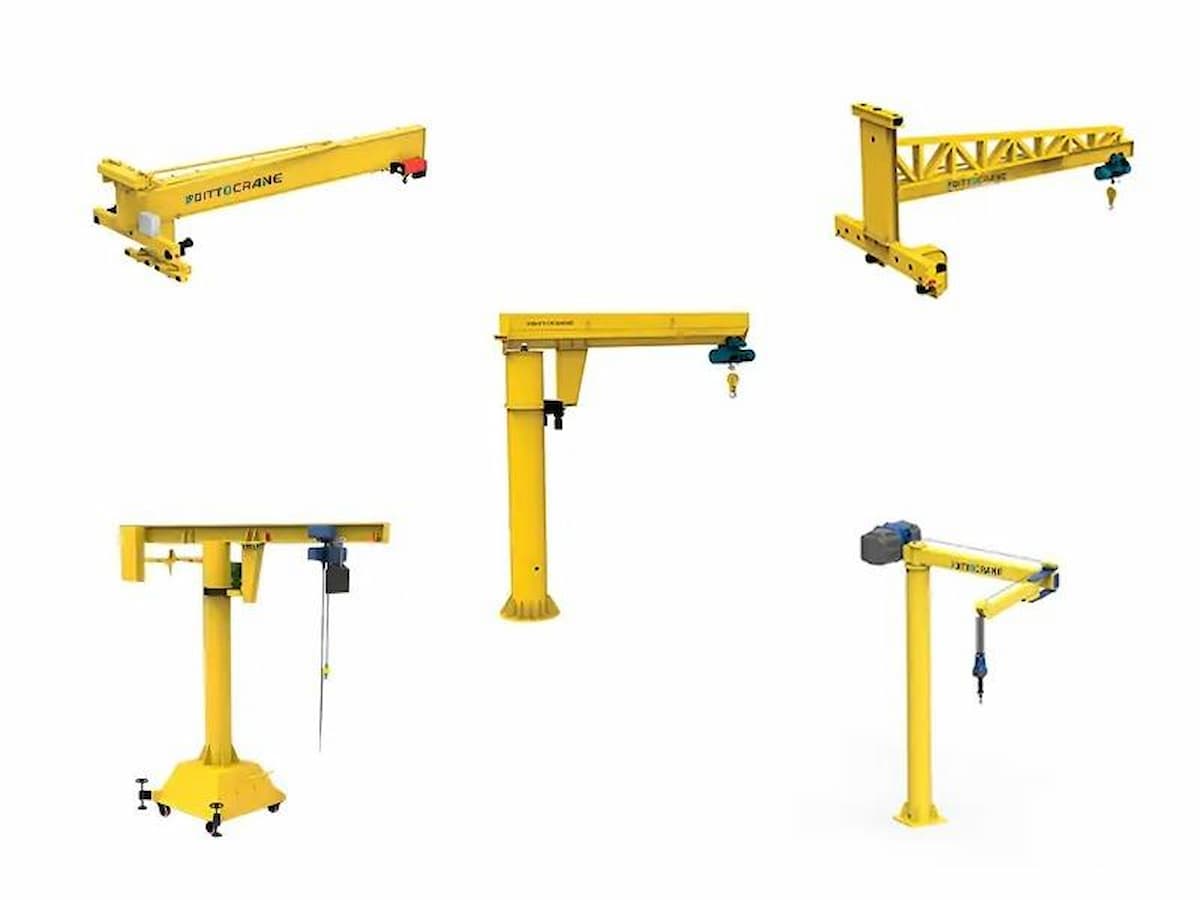
Station-level lifting that doesn’t tie up the main crane. Not every lift in a modular factory needs the full-span crane. Rebar tying stations, embedded-fitting placement, and finishing work are better served by jib cranes or flexible light-crane track systems installed at the individual workstation. This keeps the main overhead crane free for the heavy, scheduled moves rather than getting queued behind smaller tasks — a bottleneck that shows up quickly once a factory scales past a single production line.
Environmental resilience. Precast and modular production environments are rarely clean — concrete dust, humidity from curing processes, and near-continuous operation all shorten the service life of standard-duty equipment. This is where duty-rated hoisting components, built specifically for demanding industrial cycles rather than light commercial use, start to matter for total cost of ownership rather than just upfront price.
The Harder Problem: Getting the Module Onto Site
Factory output is only half the equation. UK modular sites present a lifting challenge that factories don’t: space is almost always constrained, and it’s rarely available for long. A residential infill site in a dense urban area, a school extension built around an operating campus, or a healthcare project with active clinical space next door all share the same limitation — there’s no room, and no time, for a permanent gantry structure.
For open, accessible sites, a single girder gantry crane remains the practical default. Its free-standing legs mean it doesn’t depend on existing building structure the way an overhead crane does, and it can be erected, used through the installation phase, and struck once the module lifts are complete — a workflow that suits a construction programme far better than fixed infrastructure would.
But plenty of UK modular sites don’t have that luxury. Where a full gantry footprint isn’t practical — narrow urban plots, sites with limited crane hardstanding, or projects surrounded by existing structures — contractors are increasingly relying on electric wire rope hoists rigged to temporary beams or existing structural steel, rather than defaulting to a full crane installation that the site geometry simply can’t accommodate. It’s a less glamorous solution than a tower crane, but for the final positioning of a module weighing several tonnes into a tight urban gap, it’s often the only one that fits.
What This Means for Specification Decisions
The practical takeaway for contractors and manufacturers evaluating modular projects is that “crane requirements” isn’t a single line item — it’s at least two separate specifications with different constraints. Factory-side equipment gets selected for duty cycle, environmental durability, and how well it integrates with an existing building shell. Site-side equipment gets selected almost entirely around footprint, erection time, and how quickly it can be removed once the lift is done.
Getting either one wrong has a cost that’s easy to underestimate at the planning stage. Undersized factory cranes create bottlenecks that erode the speed advantage modular construction is supposed to deliver in the first place. Oversized or impractical site equipment can turn a straightforward module placement into a logistics problem that eats into the tight installation windows most modular programmes are built around.
As the UK’s housing targets keep pressure on the sector to deliver faster with less on-site labour, the manufacturers and contractors who treat lifting equipment as part of the design brief — rather than an afterthought once the factory or site plan is finished — are the ones best positioned to keep that promise of speed intact.