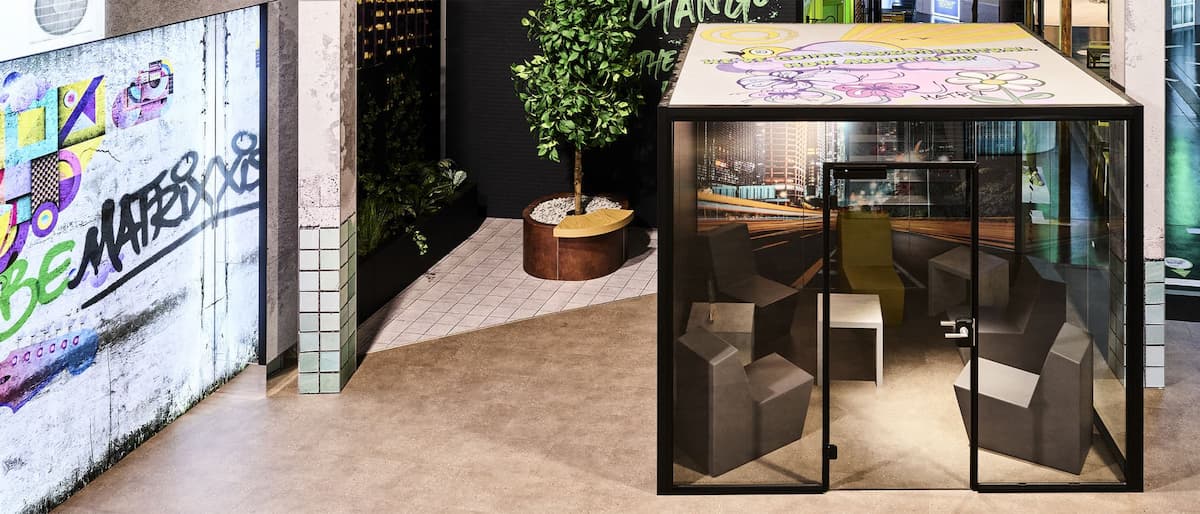
When people think about sustainable construction, exhibition stands probably aren’t the first thing that comes to mind.
But step inside a major exhibition hall during build-up and you’ll see just how much temporary construction takes place. Timber and MDF walls are built, surfaces are painted or finished with laminates, sub-floors and floor coverings are laid, and overhead structures are installed. Lighting, graphics, furniture, displays and AV then transform these temporary structures into complete branded environments.
A few days later, it all comes back down.
For years, much of exhibition stand construction followed a fairly simple model. Build for one show, use it for a few days and dismantle it afterwards. Large quantities of timber, MDF, laminates, paints, plastics and other materials could have little purpose once the event finished.
This approach is often referred to within the exhibition industry as “build and burn”, and it’s becoming increasingly difficult to justify.
The industry is changing. Reusable aluminium frameworks, modular construction and materials designed for reuse or recycling are reducing the need for traditional single-use construction.
The same principles are also moving beyond the exhibition hall. Systems such as Aluvision Outdoor Flexbox use reusable modular frameworks to create temporary outdoor structures for brand activations, hospitality spaces and events.
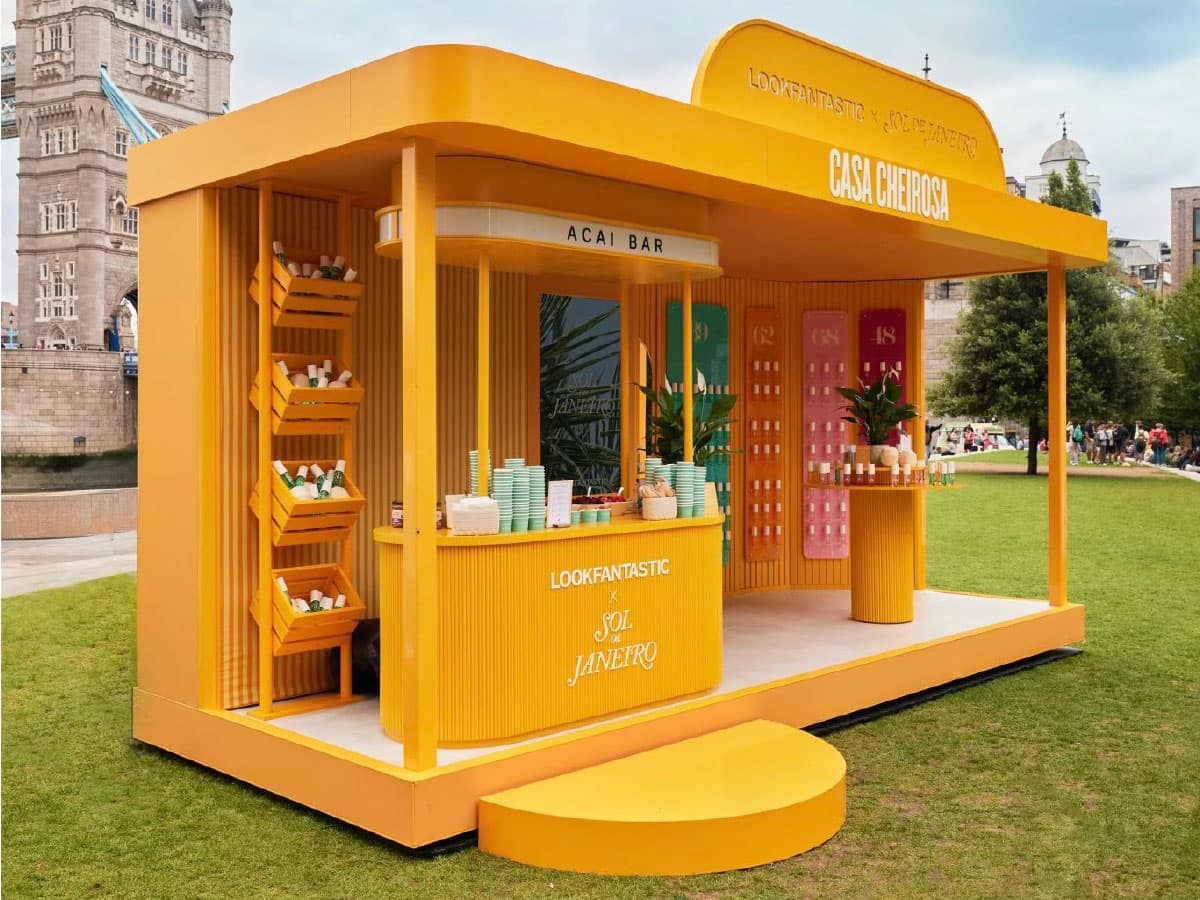
But what does reusable exhibition construction actually look like in practice? We’ll look at why the industry is changing, how Better Stands measures reuse, what it takes to reach a Gold Certification and how modular construction is helping make single-use stands increasingly unnecessary.
Why Exhibition Stand Construction Is Changing
The scale of waste generated by exhibitions helps explain why stand construction is changing.
The UK exhibition industry generates over 100,000 tonnes of waste each year. A typical disposable stand contributes approximately 4 tonnes of waste — the equivalent of 10 average households’ annual waste output.
For a structure that may only be standing for a few days, that is a significant amount of material with a very short working life.
Reducing that waste requires more than individual exhibitors choosing reusable stands. It needs a wider change in how events are planned, specified and delivered.
That change is already underway.
Venues, event organisers and service providers are placing greater emphasis on sustainable exhibition stand construction. Exhibitors are also being encouraged to consider what happens to their stand materials once an event finishes.
This matters because responsibility is shared across the supply chain. Organisers can set expectations for their events. Venues can support more sustainable working practices. Exhibition stand designers can design for reuse, while exhibitors ultimately influence what gets specified and purchased.
For exhibitors, this has also changed what a more sustainable stand can look like. Modern reusable construction methods make it possible to reduce waste without sacrificing the design, finish or impact expected from a traditionally constructed and fabricated exhibition stand.
This is particularly evident with sustainable exhibition stands built around reusable modular frameworks. Structures can be dismantled, stored and reconfigured, while graphics and other elements can be updated independently.
The challenge is creating a consistent way for everyone to understand what “reusable” actually means.
That is where Better Stands comes in.
Better Stands: A Framework for Reuse
Better Stands is an industry-wide programme designed to move the exhibitions sector away from single-use, disposable stands.
Its 10-point framework assesses the main elements used to construct and finish an exhibition stand. Rather than relying on broad sustainability claims, it provides a consistent way to measure how reusable a stand actually is.
The result is a common approach that can be understood by venues, organisers, service providers and exhibitors.
At 5 Studio UK, we’re an approved member of the Better Stands Programme and committed to supporting the move towards reusable stand construction. For us, that means considering reuse from the earliest stages of design, rather than looking at sustainability once a stand has already been built.
We’ve also seen these principles work in practice. Exhibition stands we’ve delivered have achieved Better Stands Gold, demonstrating that high levels of reuse can be achieved without compromising design, quality or visitor experience.
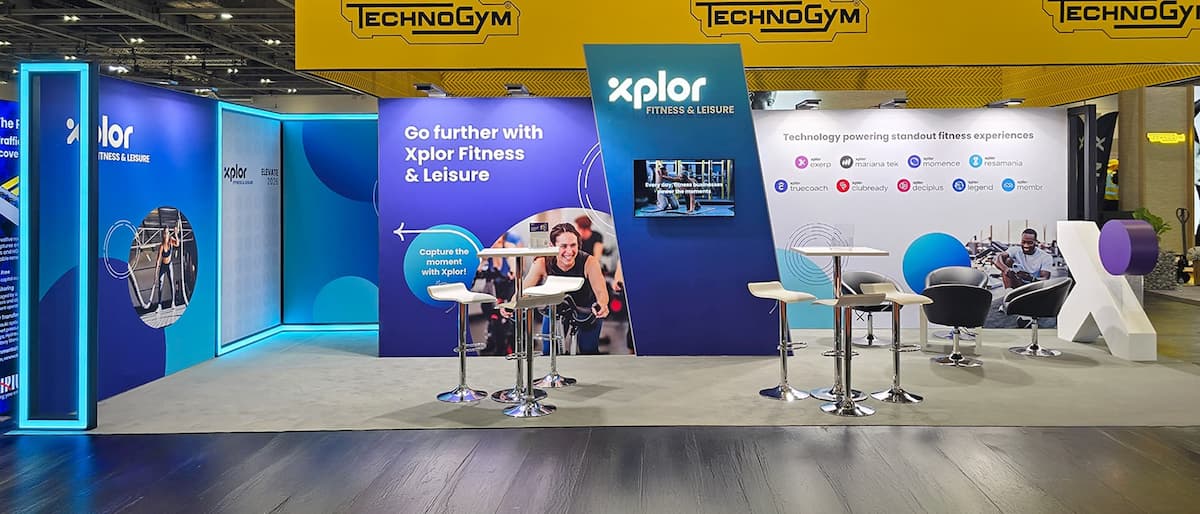
From Bronze to Gold: How Better Stands Measures Reuse
The Better Stands framework assesses 10 key elements of an exhibition stand, from the main stand structure and walls through to flooring, lighting, displays and graphics.
The framework looks at whether these elements are designed for reuse or, where permitted, recycling. The overall stand is then assessed against Bronze, Silver or Gold criteria.
The 10 elements are:
- Stand structure and walls
- Platform or raised flooring
- Furniture and equipment
- Lighting
- Fascia and overhead signage
- Rigged structures
- Ceilings
- Display facilities
- Floor coverings
- Graphics and decorative items
Bronze
Bronze is the first level within the Better Stands framework and focuses on some of the most significant elements of the stand.
To achieve Bronze, the stand structure and walls, platform or raised flooring, furniture and equipment, and lighting must be reusable.
This immediately addresses several areas where traditional exhibition stand construction can generate significant waste after a show.
Silver
Silver builds on the Bronze criteria by extending reuse across more of the stand.
Alongside the Bronze requirements, fascia and overhead signage, rigged structures, ceilings and display facilities must also be reusable.
This means reuse is considered beyond the main structure and across many of the architectural and functional elements of the stand.
Gold
Gold is the highest level within the Better Stands framework.
In addition to meeting the Bronze and Silver criteria, floor coverings must be reused or recycled, while graphics and decorative items must also be reused or recycled.
Achieving Gold therefore means considering what happens to almost every assessed element once the exhibition closes.
Importantly, the framework doesn’t simply look at whether an exhibition stand contains recyclable materials. It considers how individual elements are constructed, how they can be dismantled, whether they can be used again and what happens to them at end-of-life.
These are principles that extend beyond exhibition stands. Designing for disassembly, reducing reliance on single-use materials and considering future reuse from the outset are becoming increasingly important across temporary construction.
For exhibition stands, this changes the design process completely. The structure isn’t designed simply to survive the event. It’s designed around what happens next.
What Does Reusable Exhibition Stand Construction Look Like?
Reusable construction doesn’t mean simplifying the design. Modern modular systems can create large structures, feature walls, curves, angles and significant height using aluminium frameworks designed to be dismantled and used again.
The same principle can be applied throughout the stand. Modular sub-floors can replace traditional timber sub-floors, while lighting, furniture, product displays and rigged structures can all be retained for future events.
Graphics and finishes also play an important role. Tension fabric graphics can produce large, seamless displays, while being easy to remove, fold, transport and reuse. Many are manufactured from 100% recyclable PET and printed using dye-sublimation, providing a more sustainable alternative to traditional rigid graphics.
The CMG stand below demonstrates this approach in practice. Multiple structures and functional areas were brought together within one reusable exhibition stand, including a hospitality and networking zone, private meeting room, presentation theatre and live branded demonstration zone. The completed stand achieved Better Stands Gold.
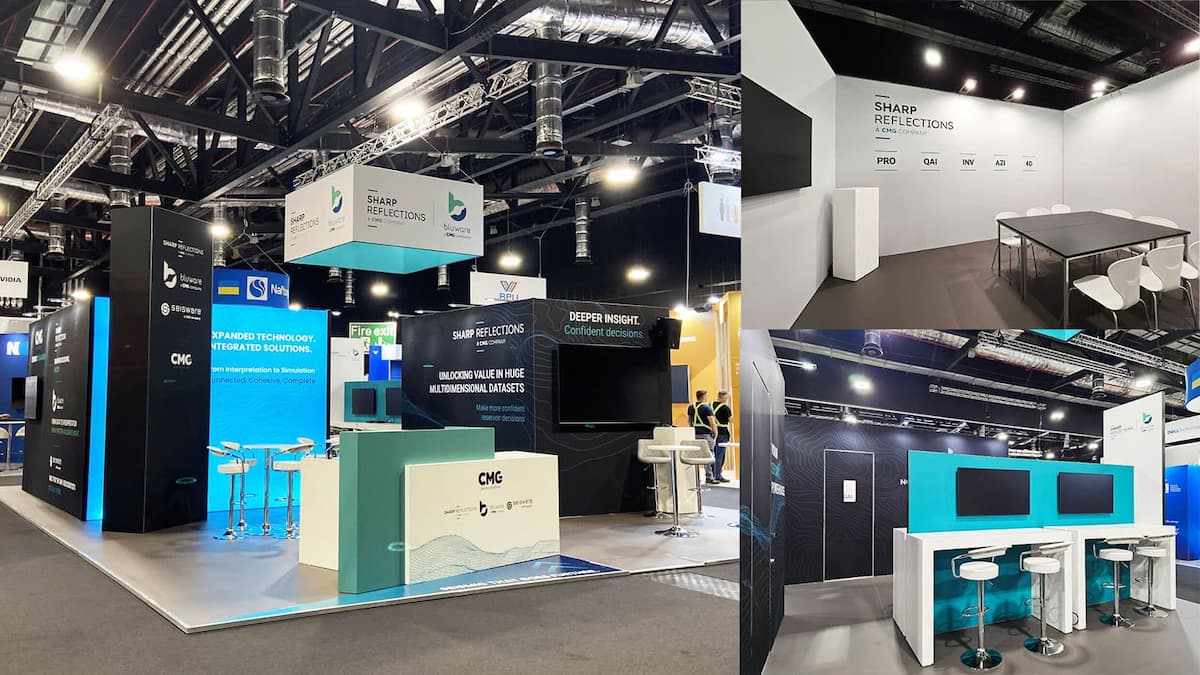
This is where modular construction changes the traditional model. A temporary exhibition stand no longer needs to be a disposable structure.
The Future of Exhibition Stand Construction
Exhibition stands will always be temporary structures. That doesn’t mean the materials used to build them need to be temporary too.
Better Stands is helping move the industry towards a model where reuse is considered from the beginning. Modular construction provides a practical way to achieve that, without limiting the scale, creativity or functionality of the finished stand.
For exhibitors, venues, organisers and contractors, the direction is becoming increasingly clear. The future of exhibition stand construction is reusable, adaptable and designed for what happens next.