Wet ground stops a groundworks programme faster than almost anything else. A trench fills overnight, a welfare tank reaches capacity on a Friday, or an old septic tank turns out to sit exactly where the new footings go. None of it is dramatic, but all of it costs days.
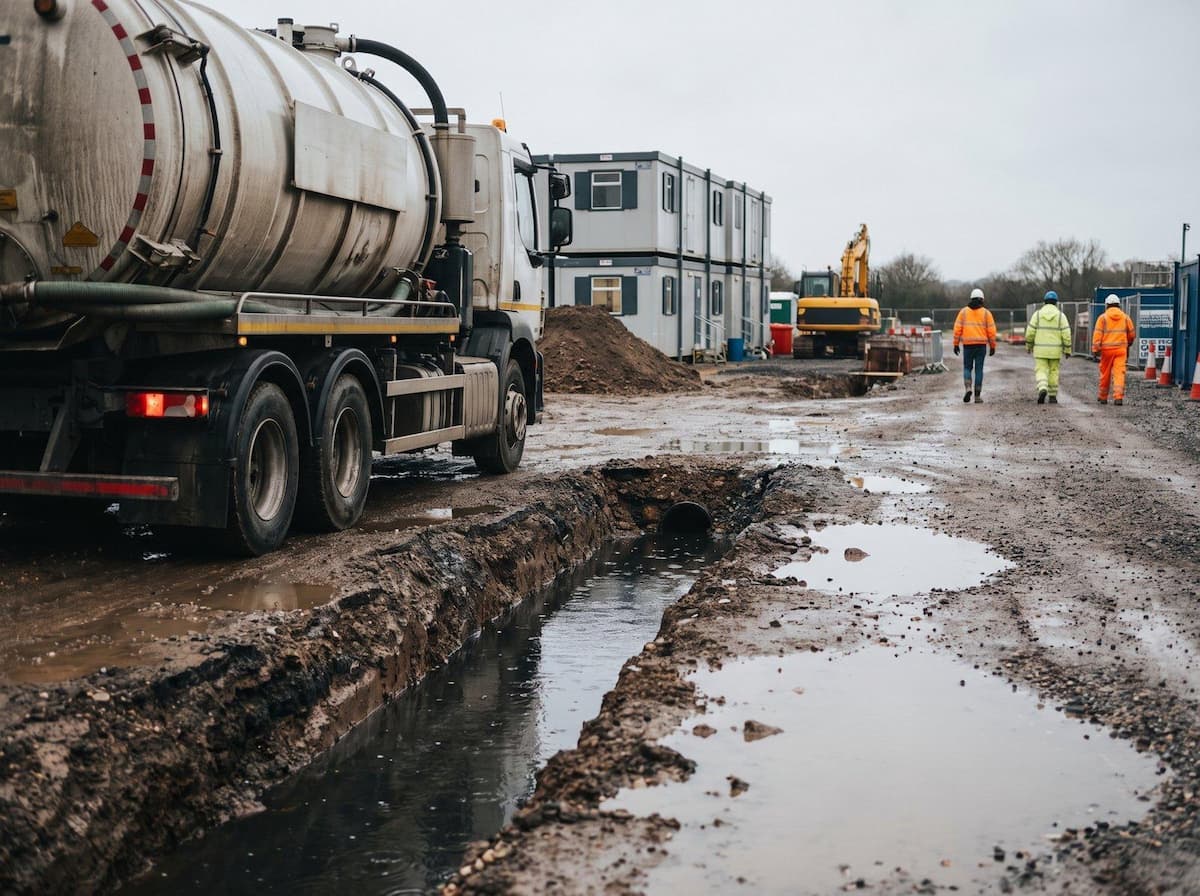
These problems are becoming more common because more of the work is on existing buildings and existing drains. Sites like that come with tanks, chambers and pipework nobody has looked at for decades. This article covers what vacuum tankers do on a building site, why pump performance matters, and the safety and waste rules that apply when a tanker turns up.
Where Vacuum Tankers Earn Their Place on Site
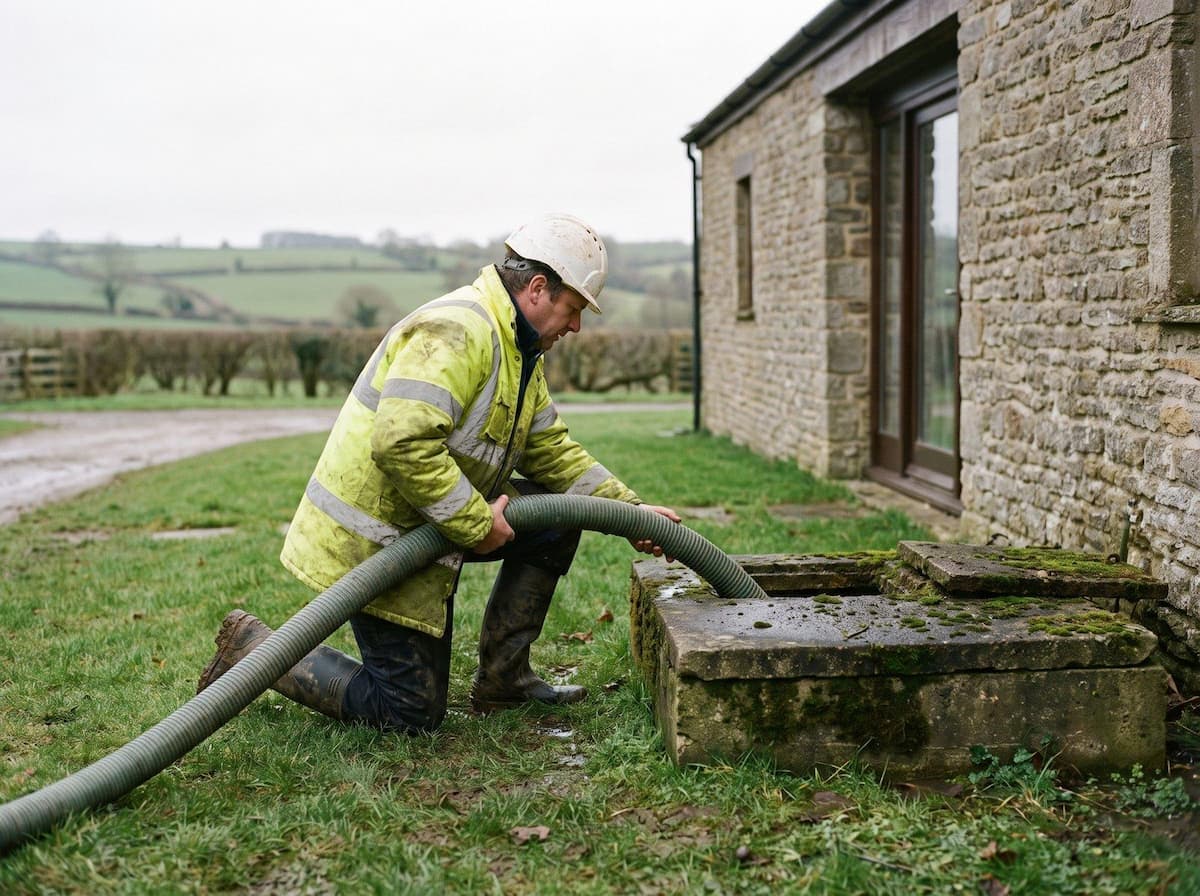
Picture a barn conversion on a rural plot. The building has an old septic tank in the yard, and the foundation trench for the extension has taken a week of rain. The contractor books a tanker fitted with a septic truck vacuum pump, and in a single visit the crew empties the tank before demolition starts and draws the standing water out of the trench so the dig can carry on.
That one visit shows how broad the work is. Tankers handle:
- emptying welfare unit tanks on long-running sites
- clearing septic tanks and cesspits before conversion or demolition
- cleaning gullies, pump chambers and silted drainage runs
- removing floodwater from trenches and basements
Satellite Industries builds vacuum truck and septic equipment, and the principle is the same whatever badge is on the tank: suction does the work, so nobody has to climb in and bail by hand.
Why Pump Performance Matters on a Programme
Programmes are increasingly repair-led. The Office for National Statistics reported that in the first quarter of 2026 repair and maintenance output rose 3.4% while new work fell 1.9%. Repair jobs mean live drains, so liquid-waste capacity is no longer a minor line in the plant list.
When you hire or specify a tanker, a handful of figures decide whether it keeps pace with the dig:
- Tank capacity: a small 2,000-litre unit suits a welfare cabin; a flooded excavation needs far more or repeated trips.
- Lift height and hose run: the further and higher the suction, the slower the flow, so check the distance from the tank to the nearest hardstanding.
- Solids handling: silted gullies and septic sludge clog weak pumps quickly.
- Maintenance: a pump that cavitates or loses vacuum halfway through a job costs you the day.
Ask the supplier for real flow figures at your lift height, not the headline number from the brochure. The honest limitation is that no single tanker does everything; a long suction run to a deep chamber may need a bigger unit than the one you’d choose for gullies.
What the Fatal Injury Figures Say About Site Risk
Construction remains one of the more dangerous trades. The Health and Safety Executive’s provisional figures record 126 workers killed in work-related accidents in Great Britain in 2025/26, with falls from height the most common kind of fatal accident. The final numbers won’t be published until July 2027.
Liquid-waste work isn’t the leading cause, but it sits in the part of a site where people take shortcuts: leaning over a trench edge, working beside a hose under pressure, or stepping into a tank to free a blockage. A tanker is a way of avoiding exactly that. If the water or sludge can be moved from outside, keep everyone outside.
Confined Spaces: Keep People Out of the Tank
Septic tanks, sewage chambers and deep pits count as confined spaces, and the HSE’s guidance on confined spaces is blunt that the first question is whether anyone needs to go in at all. The Confined Spaces Regulations 1997 require you to avoid entry where reasonably practicable, and to have a safe system of work, emergency arrangements and rescue plans where you can’t.
The danger is the air, not the depth. Sewage and sludge release hydrogen sulphide and use up oxygen, and a worker can be overcome within a few breaths. Many fatalities involve a second person who goes in to help. Remote suction from the surface removes the need for entry, which is the strongest argument for tanker capacity on any site with old tanks.
Waste Rules Site Managers Can’t Ignore
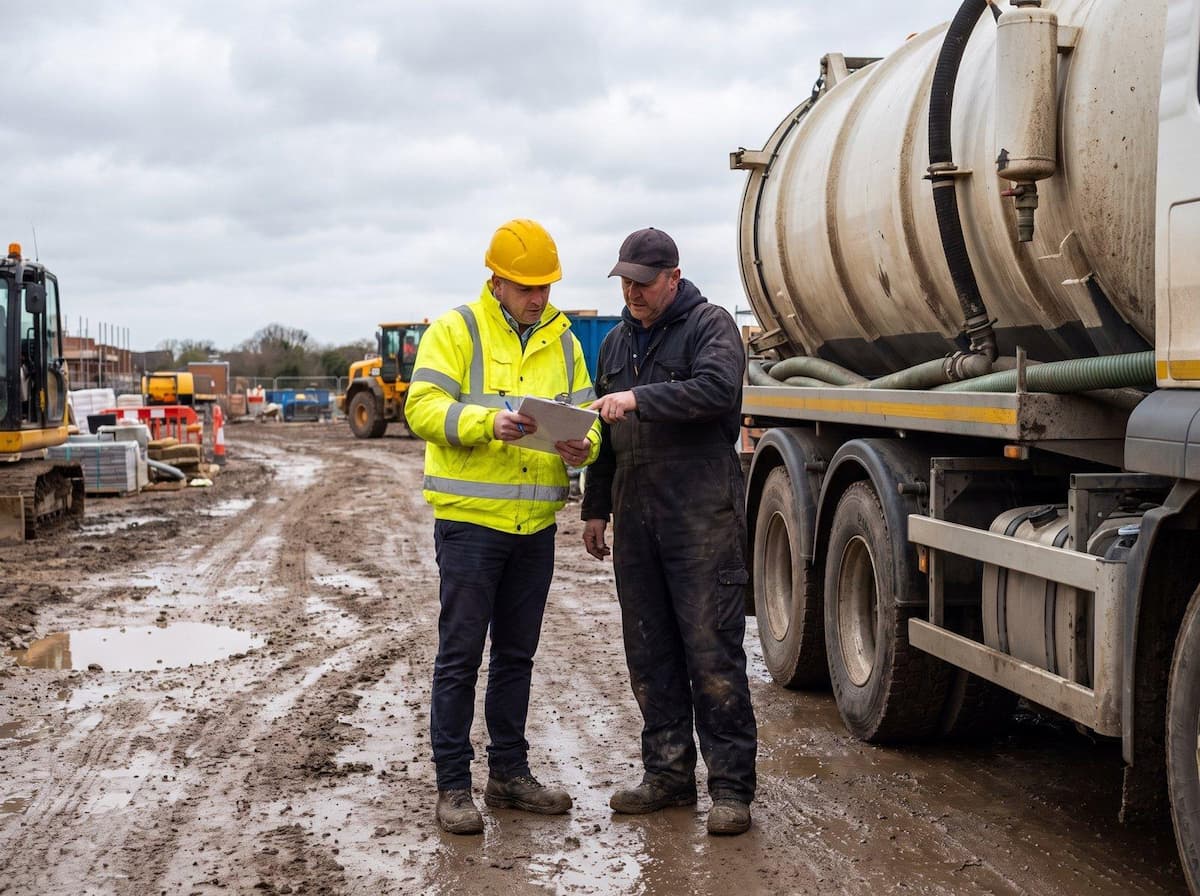
What comes out of the tank is waste, and you’re responsible for where it ends up. Anyone carrying waste for others as part of their business generally needs to be registered, and NetRegs explains who needs to register as a waste carrier in England, Scotland and Northern Ireland. Check the carrier’s registration before they arrive, not after.
Keep the paperwork too: who collected what, when, and where it went. The Environment Agency’s general binding rules also expect septic tanks to be emptied at least once a year by a registered carrier, which matters if you’re taking over a property with an existing system. Sewage and septic sludge carry their own requirements, so confirm the details with the Environment Agency rather than assuming the standard waste rules cover everything.
Planning Drainage Support Into the Programme
Treat the tanker as plant, and book it the way you’d book a mini digger. Before the first spade goes in, work through this list:
- Survey existing tanks, chambers and drains, and mark them on the site plan.
- Book the tanker for stripping and ground-testing, not for the day the trench floods.
- Confirm access width and turning space for a heavy vehicle.
- Check the carrier’s waste registration and keep every transfer note.
- Agree who has authority to stop work if a tank turns out to be live.
Surface water is part of the same plan, and our guide to drainage and grading basics covers how falls and soakaways keep water away from foundations in the first place.
If the job also needs plant to dig around an old tank, our guide to choosing the right mini digger will help you check access widths before the tanker and the digger arrive on the same morning.
Plan for the Water Before It Arrives
Liquid-waste capacity belongs in the plant schedule, not in a panic call once the trench is under water. The sites that stay on programme are the ones that survey the tanks early, book suction in advance and keep the paperwork straight. It costs far less than a lost week.