A full flat roof replacement in the UK typically costs between £60 and £140 per square metre, depending on whether you choose felt, EPDM rubber or GRP fibreglass. For a typical single garage or small rear extension of around 15 to 20m², that usually works out at roughly £1,000 to £2,800 all in.
That is a wide range, and for good reason. The material you pick, the condition of the timber deck underneath, insulation requirements and access all push the final figure up or down. Specialists in flat roofing in Liverpool such as Everlast Roofing North West, an owner-run firm that fits felt, EPDM rubber and GRP across Merseyside, often find that the state of the deck is what separates a cheap quote from a realistic one. That is why they check it during a free survey and photograph any problems before giving a written price.
Two roofs of identical size can end up with very different quotes. This guide breaks down what each of the three main flat roofing systems costs, how long each one lasts, and which hidden extras catch homeowners out. If you have not yet settled on a design for your extension or garage, it is worth comparing flat roof vs pitched roof options first.
Average Flat Roof Replacement Cost UK (Per m²)
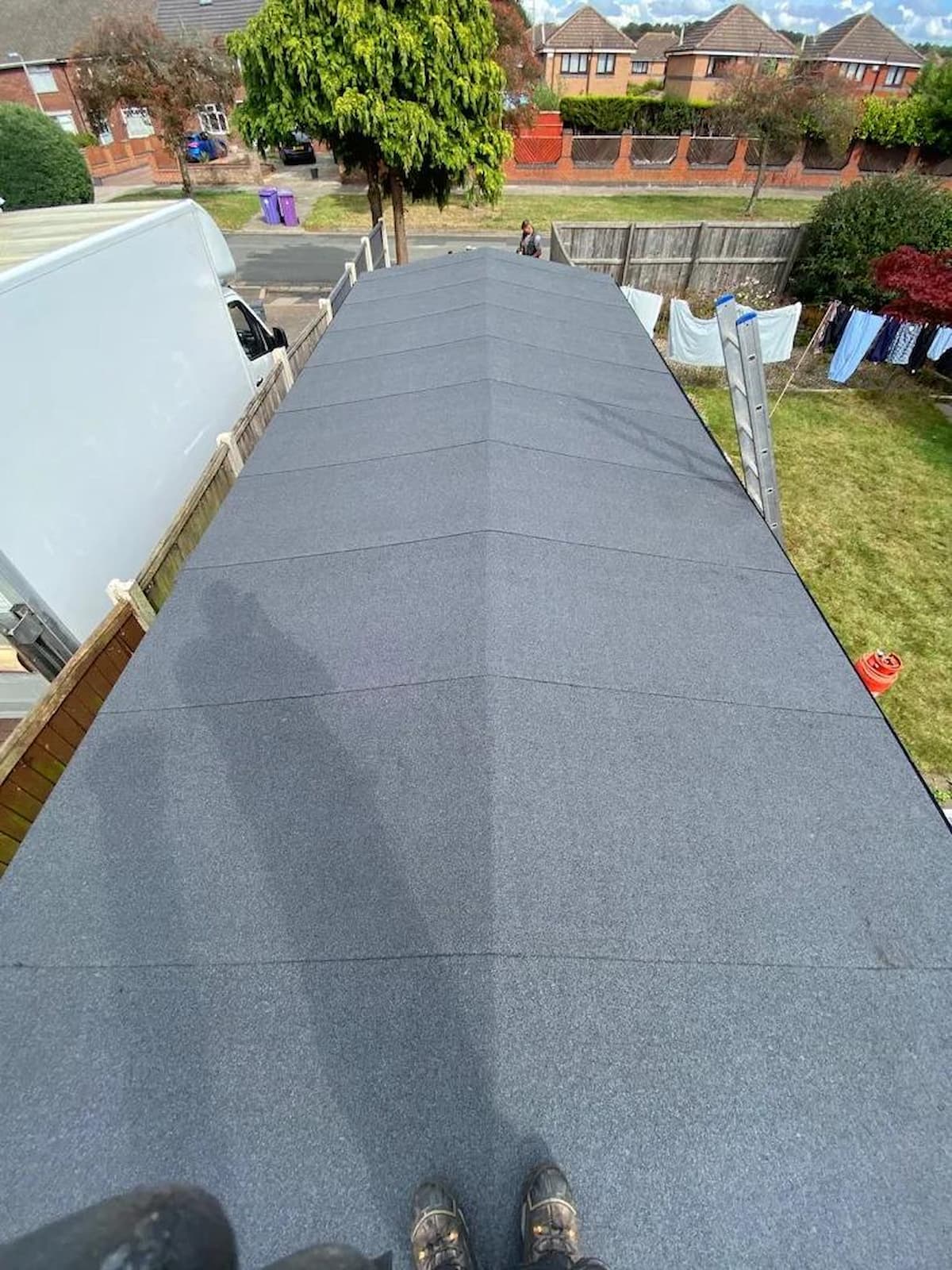
Felt is the cheapest option upfront, EPDM rubber sits in the middle, and GRP fibreglass is usually the most expensive. The table below shows typical supply-and-fit prices for a straightforward domestic roof, including removal of the old covering.
| Roofing system | Cost per m² (supply and fit) | Typical 18m² garage or extension | Expected lifespan |
|---|---|---|---|
| Torch-on felt | £60 to £100 | £1,100 to £1,800 | 15 to 20 years |
| EPDM rubber | £70 to £120 | £1,300 to £2,200 | 30 to 50 years |
| GRP fibreglass | £80 to £140 | £1,450 to £2,500 | 25 to 40 years |
These are guide figures only. Prices tend to be higher in London and the South East and slightly lower in parts of the North. Smaller roofs also cost more per square metre, because set-up, skip hire and labour are spread over a smaller area.
The cheapest quote is not always the best value. A felt roof at £1,200 that needs replacing in 15 years can cost more over time than an EPDM roof at £1,800 that lasts 40.
Flat Roof Replacement Cost by Size: Garages, Extensions and Dormers
Roof size is the biggest single factor in your final bill. The figures below are typical all-in ranges for common domestic roofs, assuming a straightforward job with no major deck repairs.
| Roof type | Typical size | Felt | EPDM rubber | GRP fibreglass |
|---|---|---|---|---|
| Porch or bay canopy | 3 to 5m² | £400 to £700 | £450 to £800 | £500 to £900 |
| Dormer roof | 5 to 15m² | £700 to £1,500 | £800 to £1,800 | £900 to £2,000 |
| Single garage | 15 to 18m² | £1,000 to £1,800 | £1,200 to £2,200 | £1,300 to £2,500 |
| Rear extension | 20 to 25m² | £1,300 to £2,500 | £1,500 to £3,000 | £1,700 to £3,300 |
| Double garage | 30 to 36m² | £2,000 to £3,500 | £2,300 to £4,200 | £2,600 to £4,800 |
Small roofs such as porches and dormers often carry a minimum charge, so the price per square metre is higher. Dormers also involve more detailing around the edges and cheeks, which adds labour time.
Felt Roof Cost: Is Torch-On Felt Still Worth It?
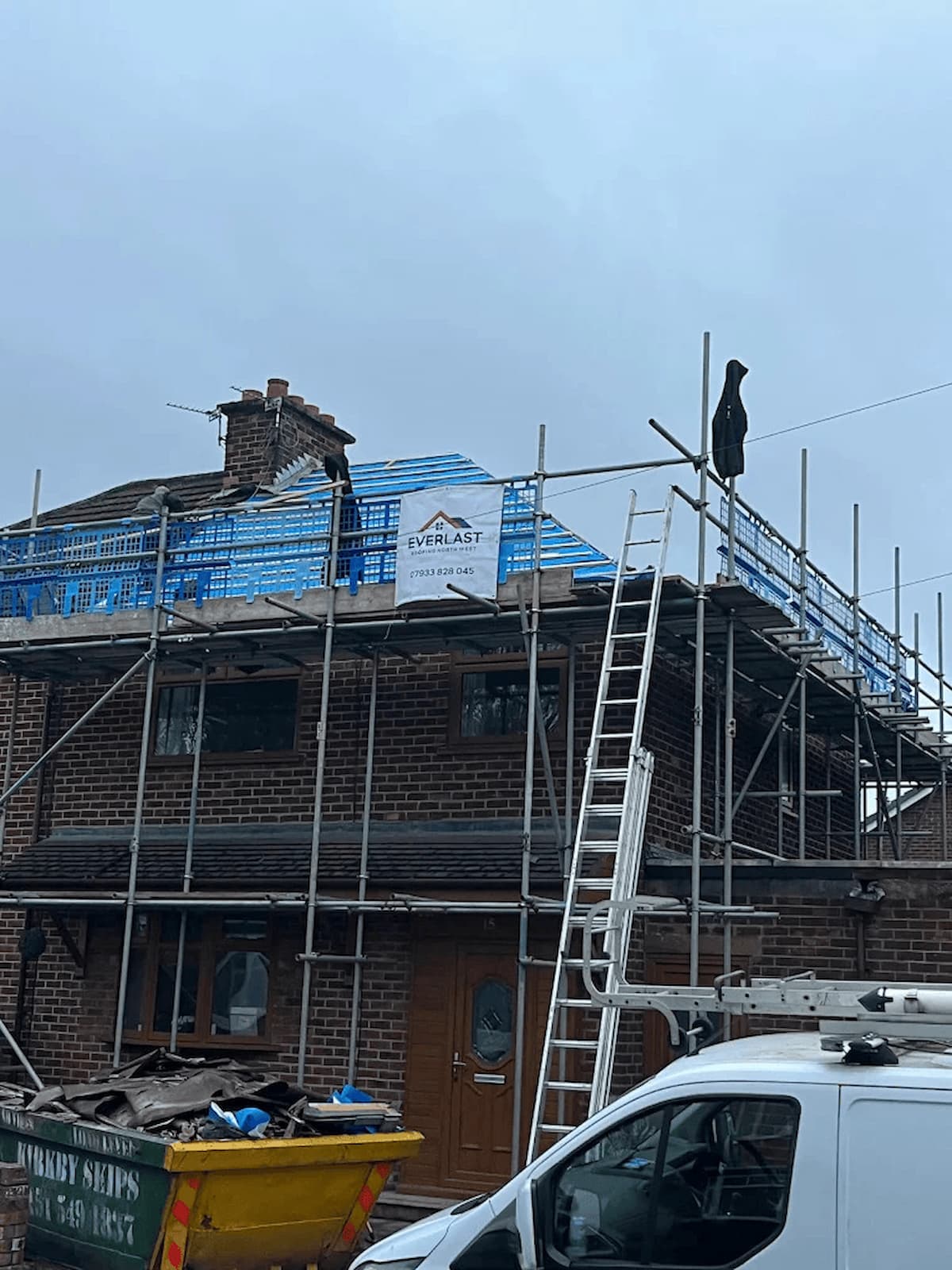
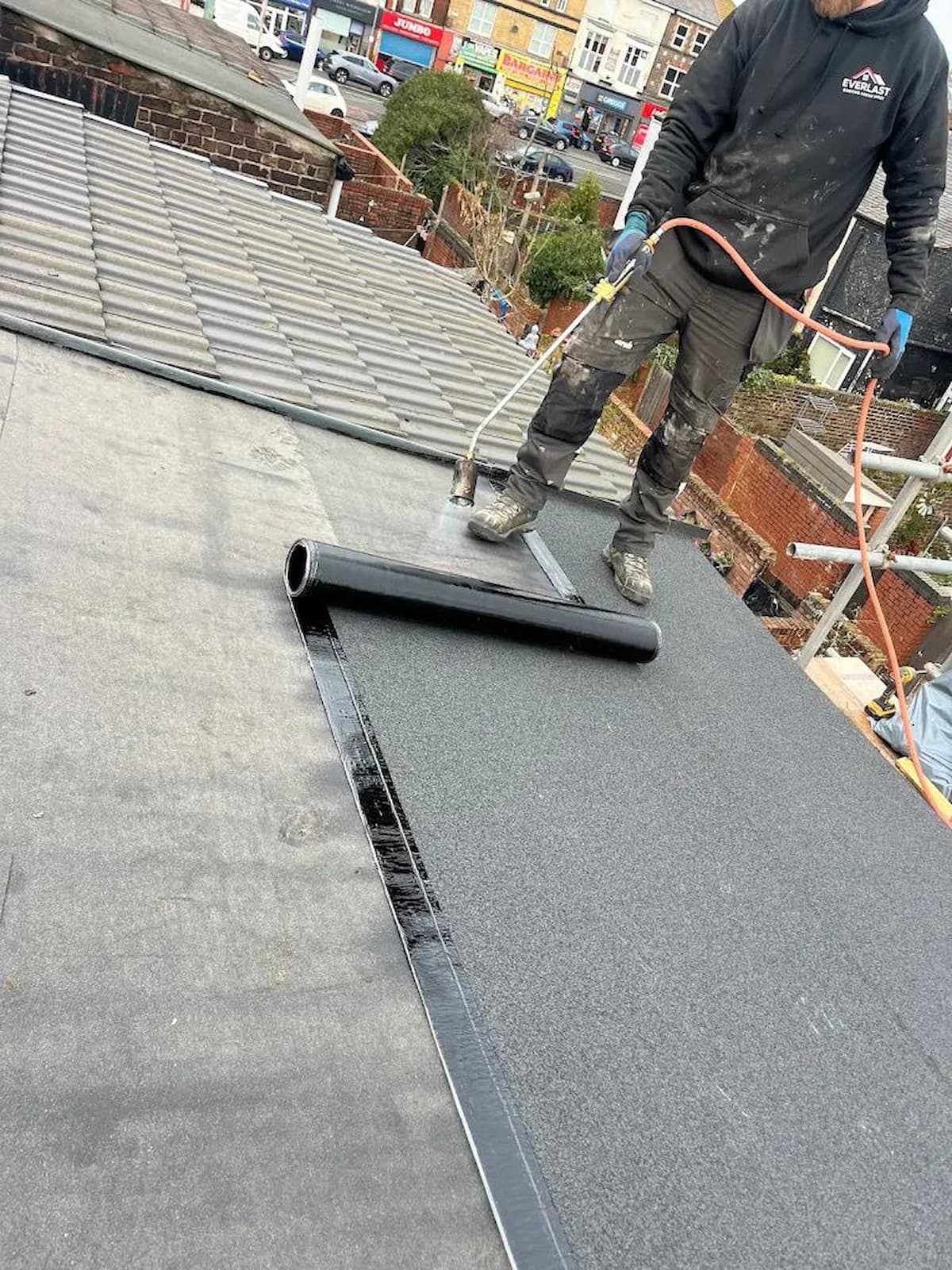
Felt has been used on British flat roofs for decades, and it is still the cheapest system to install. Older felt roofs earned a poor reputation for cracking and leaking, but modern torch-on felt is a big step up. It uses multiple layers of polymer-modified bitumen, heat-bonded to the deck and to each other.
Typical cost: £60 to £100 per m² for a three-layer torch-on system.
The main advantage of felt is price. It is the cheapest of the three systems, it can often be laid on a garage in a single day, and almost any roofer can patch it if something goes wrong. Modern mineral cap sheets also give the surface some protection from UV and light foot traffic.
The trade-off is lifespan. Even a good torch-on system usually lasts 15 to 20 years, and felt can blister or crack as it ages, particularly where water sits on the roof. Torch-on work also involves naked flames, so it should only be done by an experienced, insured installer.
Felt makes most sense on outbuildings, sheds and garages where budget matters more than longevity. It is also a reasonable choice if you plan to move within the next decade.
Rubber Flat Roof Cost: EPDM Prices, Pros and Cons
EPDM (ethylene propylene diene monomer) is a synthetic rubber membrane, and it has become one of the most popular choices for domestic flat roofs in the UK. It is usually laid as a single sheet, so a garage or small extension roof can often be covered with no joins at all.
Typical cost: £70 to £120 per m².
EPDM’s biggest selling point is longevity. A properly installed membrane often lasts 30 to 50 years, and it stays flexible in cold weather, so it copes well with frost and sudden temperature changes. It is also highly resistant to UV and weathering, and because it is bonded with adhesive rather than heat, there are no naked flames on site.
On the downside, EPDM costs more upfront than felt, and its plain black finish does not suit every property. The membrane can be punctured by sharp objects or heavy foot traffic, and the detailing around rooflights, pipes and edges needs a fitter who knows the system well.
EPDM is a strong fit for most homes. It balances cost and durability well, and a single-sheet membrane leaves very few weak points for water to get in.
GRP Flat Roof Cost Per m²: Fibreglass Pros and Cons
GRP (glass-reinforced plastic) is built up on site from layers of resin and fibreglass matting, then finished with a coloured topcoat. The result is a hard, seamless, completely waterproof surface that looks very neat once finished.
Typical cost: £80 to £140 per m².
GRP’s seamless finish is its main strength. With no joins, laps or seams, there are very few weak points for water to find. The hard surface handles foot traffic well, which makes it a popular choice for balconies and walkable roofs, and it can be finished in a range of colours. A well-laid GRP roof typically lasts 25 to 40 years and suits dormers and roofs with awkward detailing.
It is usually the most expensive of the three, though, and it has to be laid in dry weather, which can delay jobs during a wet British autumn or winter. Quality also depends heavily on the installer. Poor resin mixing or rushed curing can lead to cracking, and because GRP is rigid, the deck underneath must be solid and stable.
GRP is worth the extra cost on roofs you will walk on, on visible extensions where appearance matters, and on dormers with complex shapes.
Flat Roof Repair vs Replacement: Which Costs Less?
Not every leaking flat roof needs replacing. A small split, a lifted edge or a failed seam on an otherwise healthy roof can often be fixed for a few hundred pounds. Patch repairs on felt, EPDM or GRP typically cost £200 to £600, depending on access and the size of the damaged area.
Replacement usually makes more sense when the roof is close to or past its expected lifespan, or when leaks keep coming back in different places. Widespread cracking, blistering or crazing across the surface is another warning sign. So is a deck that feels soft or spongy underfoot, or water that pools on the roof for days after rain.
Repeatedly patching a failing roof often costs more in the long run than replacing it once. It also risks hidden damage to joists, insulation and ceilings below.
Hidden Costs in a Flat Roof Replacement Quote
The covering itself is only part of the price. These are the extras that most often push a flat roof quote higher than expected:
- Rotten decking. If water has been getting in for a while, the timber or OSB boards under the old covering may need replacing. This typically adds £20 to £40 per m² and is the biggest source of surprises.
- Insulation and Building Regulations. Replacing more than 25% of a roof is usually notifiable under Building Regulations, and you will normally need to bring the insulation up to current standards. A warm-roof build-up with new insulation boards adds cost but cuts heating bills.
- Removal and disposal. Old felt is heavy, and skip hire or waste disposal is often charged separately.
- Trims, edges and flashings. New drip edges, upstands and lead or GRP flashings where the roof meets a wall all add to the bill.
- Guttering and fascias. Many homeowners replace tired fascias and gutters at the same time, since the scaffolding or access is already in place.
- Access. Roofs that need scaffolding, or are hard to reach, cost more than a ground-level garage.
A good roofer will inspect the deck before quoting and explain any extras in writing. Be cautious of quotes that seem far cheaper than others, as they may leave these items out.
How to Reduce Your Flat Roof Replacement Cost
There are a few sensible ways to save money without cutting corners on quality. Spring and summer are ideal for flat roofing, but they are also the busiest months, so booking early in the year can give you more choice of dates. If you also need new fascias, gutters or a chimney repair, doing everything at the same time saves on access and labour.
Acting early on leaks makes a big difference too. A small leak fixed quickly can stop rot spreading into the deck, which is one of the biggest extra costs. When comparing quotes, check that each one covers the same system, insulation, deck repairs and guarantee. It is also worth thinking long term, as a slightly higher price for EPDM or GRP can save you paying for a second replacement later.
Also check what guarantee is on offer. A reputable installer should guarantee their workmanship, and quality EPDM and GRP systems often come with long manufacturer guarantees too.
Felt vs EPDM vs GRP: Which Flat Roof Is Best for UK Weather?
For most UK homes, EPDM or GRP offers better long-term value than felt, because both last two to three times as long. The right choice comes down to how the roof is used and what you can spend:
- Choose felt if you need the lowest upfront cost, or the roof is on a shed or outbuilding.
- Choose EPDM for garages and extensions where you want a long-lasting, low-maintenance roof at a fair price.
- Choose GRP for balconies, walkable roofs, dormers, or extensions where a smart finish matters.
Local conditions matter too. Wet, windy and coastal areas put flat roofs under extra strain, and installers who work in those conditions every day know which details fail first. Liverpool and the wider Merseyside coast are a good example: driving rain off the Irish Sea tests every seam, upstand and edge trim.
Everlast Roofing North West, an owner-run firm based in Merseyside, sees this regularly. The team installs felt, EPDM rubber and GRP systems on garages, extensions and dormers, as well as larger commercial roofs. Because they fit all three, they can recommend a system based on the roof rather than steering every customer towards one product.
That kind of transparency is worth looking for wherever you live. Ask any roofer to show you the condition of your existing deck, explain the guarantee on both materials and workmanship, and put every extra in writing before work starts.
Flat Roof Replacement Cost FAQs
How much does it cost to replace a flat garage roof?
A single garage roof of around 15 to 18m² typically costs £1,000 to £1,800 in felt, £1,200 to £2,200 in EPDM, and £1,300 to £2,500 in GRP. A double garage costs roughly twice that.
What is the cheapest way to replace a flat roof?
Torch-on felt is the cheapest system to install. However, it also has the shortest lifespan, so EPDM often works out cheaper over the life of the roof.
Is GRP better than EPDM rubber for a flat roof?
Neither is better in every case. GRP is harder-wearing and seamless, so it suits walkable roofs and dormers. EPDM is usually cheaper, more flexible in cold weather, and can last longer on a roof that is rarely walked on.
How long does a flat roof replacement take?
Most garage and small extension roofs are replaced in one to two days. Larger roofs, or jobs that need new decking and insulation, can take three days or more. GRP needs dry weather to cure, which can affect scheduling.
Do I need planning permission to replace a flat roof?
Like-for-like replacement does not usually need planning permission. However, replacing more than a quarter of the roof normally falls under Building Regulations, including insulation requirements, so check with your roofer or local council.
How often do flat roofs need replacing?
Most flat roofs need replacing every 15 to 20 years for felt, 25 to 40 years for GRP and 30 to 50 years for EPDM. Beyond age, repeated leaks, sagging or spongy areas, widespread cracking or blistering, and standing water that never drains are all signs that replacement is the better option. A one-off leak on an otherwise sound roof can often be repaired.
Does a new flat roof add value to a home?
A new flat roof rarely adds much on paper, but an old, leaking one can put buyers off or lower offers. A recently replaced roof with a valid guarantee is a strong selling point for garages and extensions.
What guarantee should I expect on a new flat roof?
Ask for a written workmanship guarantee from the installer, plus details of any manufacturer guarantee on the materials. EPDM and GRP systems often carry longer guarantees than felt, reflecting their longer lifespan.