
A rental refurb looks like a simple job on paper. Strip out the tired kitchen, rewire a few circuits, repaint, and get a new tenant in before the void eats into the year’s profit.
The reality is tougher. The latest English Housing Survey found that 22% of privately rented homes, about 1.1 million dwellings, failed the Decent Homes Standard in 2024. Many of those failures trace back to work that was rushed, skipped or never certified.
Refurbishment is the moment when most landlord legal responsibilities either get met properly or quietly slip through the cracks. This checklist shows you, and the trades you hire, exactly what needs signing off before keys change hands.
Key Takeaways
- Gas appliances need a Gas Safe check every 12 months, with records kept for two years.
- Wiring needs a professional inspection every five years or sooner, with fines up to £30,000.
- Every storey with living space needs a smoke alarm on the first day of a tenancy.
- Lettings face an EPC C target from October 2030, backed by a £10,000 cost cap.
- Updated decency rules reach private lettings in 2035.
Why a Refurb Is Your Biggest Compliance Moment
A refurbishment between tenancies is the cheapest point to fix hazards, because the property is empty and trades are already on site. Wiring, boilers, ventilation and insulation are all exposed, so certification costs far less than it would mid tenancy.
Privately let homes still lag behind other tenures on condition. Over the decade to 2024, the share of non-decent private rented homes fell from 29% to 22%, yet it remains the highest of any tenure.
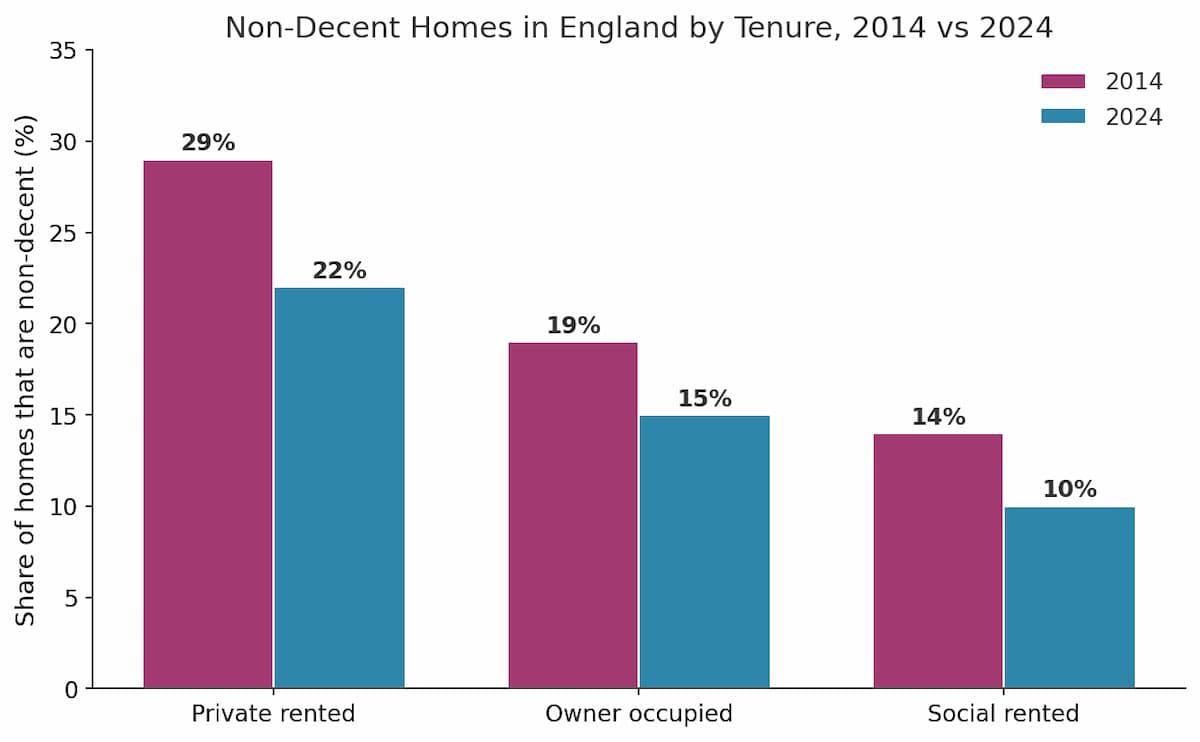
Figure 1: Proportion of dwellings failing the standard, 2014 and 2024. Source: English Housing Survey 2024 to 2025.
Damp tells a similar story. The government’s latest housing quality findings show damp affected 10% of private rented homes, compared with 4% of owner occupied homes and 7% of social rented homes.
| Key stat: Damp is more than twice as common in private rented homes as in owner occupied ones. Ventilation and moisture control deserve a line in every refurb specification. |
The Core Safety Checks Before a Tenant Moves In
Three safety regimes apply to nearly every rental in England. Each has its own interval, its own qualified professional and its own paperwork deadline.
| Requirement | How often | Who carries it out | Tenant copy |
|---|---|---|---|
| Gas safety check and record | Every 12 months | Gas Safe registered engineer | Within 28 days; new tenants before move in |
| Electrical Installation Condition Report (EICR) | At least every 5 years | Qualified, competent electrician | Within 28 days of the inspection |
| Smoke alarms | One per storey with living space | Landlord or contractor | Checked working on the first day |
| Carbon monoxide alarms | Rooms with a fixed combustion appliance | Same as smoke alarms | Tested on move in day |
| Energy Performance Certificate | Minimum band E now | Accredited energy assessor | Provided before letting |
Gas Safety
Under the Gas Safety (Installation and Use) Regulations 1998, a Gas Safe registered engineer must check every landlord owned gas appliance and flue every 12 months. You keep each record for two years and give existing tenants a copy within 28 days.
Any new boiler or relocated gas run fitted during the refurb should be signed off before the first viewing, not after.
Electrical Safety
The Electrical Safety Standards in the Private Rented Sector (England) Regulations 2020 require a full inspection and test at least once in each five year period, with a shorter interval if the report says so. Remedial work flagged in the report must be completed within 28 days, or a shorter period if specified.
The official guidance for landlords on electrical inspections explains how to check that your electrician is competent. If you are buying an older property to let, these electrical upgrades worth considering in older homes can help you plan a rewire at the right stage.
Smoke and Carbon Monoxide Alarms
Since 1 October 2022, landlords must fit at least one smoke alarm on every storey containing a room used as living accommodation. A carbon monoxide alarm is required in any room with a fixed combustion appliance, such as a boiler or log burner.
Flats in larger blocks bring extra fire safety layers too, which is why smoke ventilation belongs in every block maintenance plan.
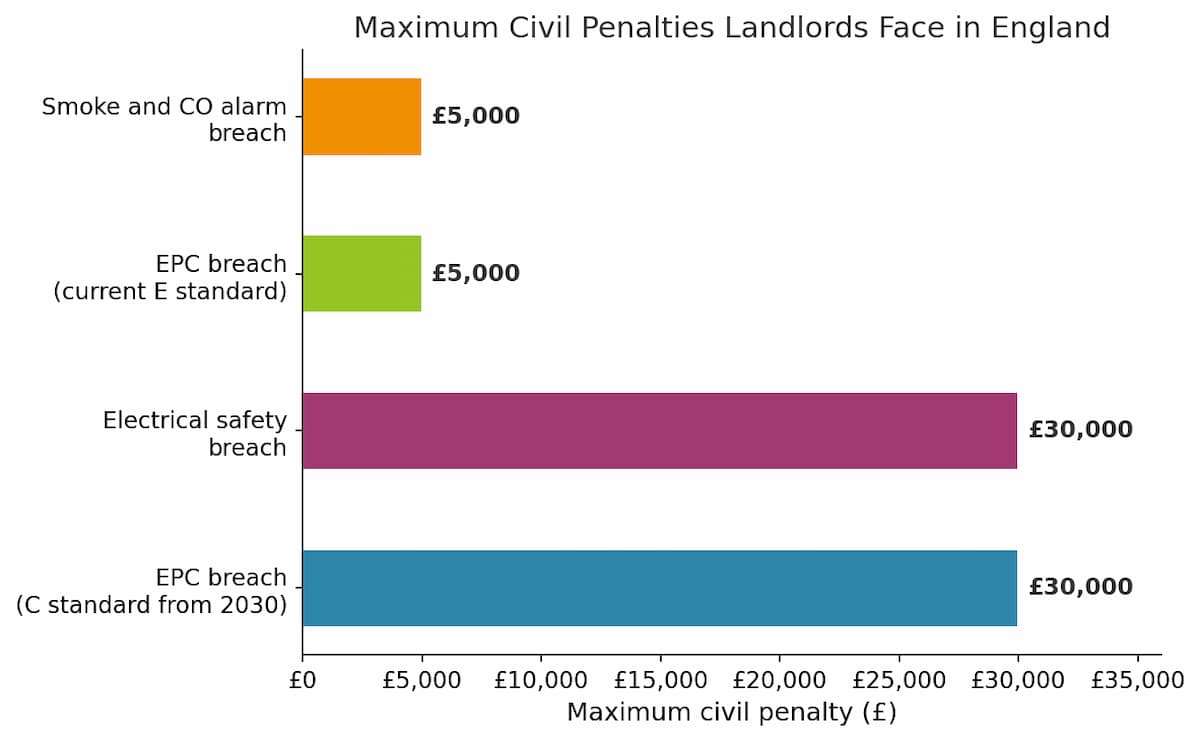
Figure 2: Maximum civil penalties per breach under each regime in England.
| Warning: Penalties stack. A council can pursue separate breaches for separate regimes, so a property that fails on alarms, electrics and energy at once can face several fines. |
Energy Efficiency: Planning Upgrades for EPC C by 2030
Rented homes currently need an EPC rating of E or above to be let lawfully. In January 2026, the government confirmed that every private rented home in England and Wales must reach EPC C by 1 October 2030, covering new and existing tenancies alike.
The rules include a cost cap. You will need to spend up to £10,000 per property, or 10% of its value if that figure is lower, before you can register an exemption.
- Qualifying energy work completed from 1 October 2025 counts towards the cap.
- Insulation is easiest to install when floors, walls and lofts are already opened up.
- Heating and glazing upgrades often pair naturally with a kitchen or bathroom refit.
| Pro Tip: Commission a fresh EPC before you finalise the refurb specification. The assessor’s recommendations show which measures give the biggest rating gain for your budget. |
How New Rental Laws Change the Picture
The Renters’ Rights Act 2025 received Royal Assent on 27 October 2025, and its first phase took effect on 1 May 2026. Section 21 no fault evictions ended on that date, so landlords now need a specific legal ground to regain possession.
That shift matters for refurbishment planning. You can no longer clear a property quickly for major works, so good maintenance during a tenancy carries more weight than ever.
| Date | What changes |
|---|---|
| 1 May 2026 | No fault evictions end; tenancies become periodic |
| 1 October 2030 | EPC C becomes the minimum for lettings |
| 2035 | DHS enforcement begins for private lets |
| To be confirmed | Awaab’s Law extended to private landlords |
The government’s policy statement of 28 January 2026 confirmed 2035 as the start date for the updated standard. No start date has yet been set for Awaab’s Law in the private sector, which will introduce fixed timescales for tackling hazards such as damp and mould.
Managing Builders and Tenants During Works
Many refurbishments happen with tenants still in place, especially now that vacant possession is harder to secure. Good planning keeps everyone safe and keeps the relationship intact.
- Give proper notice. Provide at least 24 hours’ written notice before entering for inspections or repairs.
- Agree working hours. Check local rules on what time builders can start work in residential areas before booking noisy trades.
- Collect every certificate. Store gas records, EICRs, building control sign offs and alarm checks in one place.
- Photograph before and after. Dated photos support deposit decisions and prove the work was done.
Strong systems make all of this easier, much like the processes behind a successful property turnaround that experienced developers rely on.
Many owners hand this workload to a managing agent. Rachel F., a London landlord, wrote in a 2020 review on Trustist that Garrett Whitelock had managed her SE17 flat for seven years, praising their thorough tenancy checks and correct handling of deposits. That kind of steady oversight is what keeps a portfolio compliant between refurbs.
Frequently Asked Questions
How often does a landlord need a gas safety certificate?
Once a year. Book a Gas Safe engineer to inspect each appliance and flue you supply, hold onto the paperwork for 24 months, and hand tenants their copy within four weeks, or before a new tenant moves in.
Is an EICR a legal requirement for landlords?
Yes, in England. The fixed wiring must be tested by a qualified person no more than five years apart, the report shared with tenants, and any urgent defects put right within the four weeks allowed.
Does a gas cooker need a CO alarm?
No. Gas cookers are specifically excluded. The duty covers boilers, gas fires, oil burners and wood stoves in rooms people live in, so most homes with gas central heating still need at least one alarm.
What EPC rating will rental properties need?
Band E is the legal minimum today. The bar rises to C for every let property across England and Wales from October 2030, unless an exemption is registered after spending up to the cost cap.
When will private landlords have to meet the DHS?
From 2035. The government confirmed in January 2026 that the updated standard will cover private lettings from that year, giving councils power to act against homes that fall short.
Building Compliance Into Every Project
A rental refurb is far more than a cosmetic refresh. It is your best chance to bring gas, electrics, alarms and energy performance up to standard while walls are open and trades are on site. Plan certification into the programme from day one, keep every document, and look ahead to EPC C and the 2035 decency rules. Landlords who treat compliance as part of the build, rather than an afterthought, protect their tenants and their investment.





