
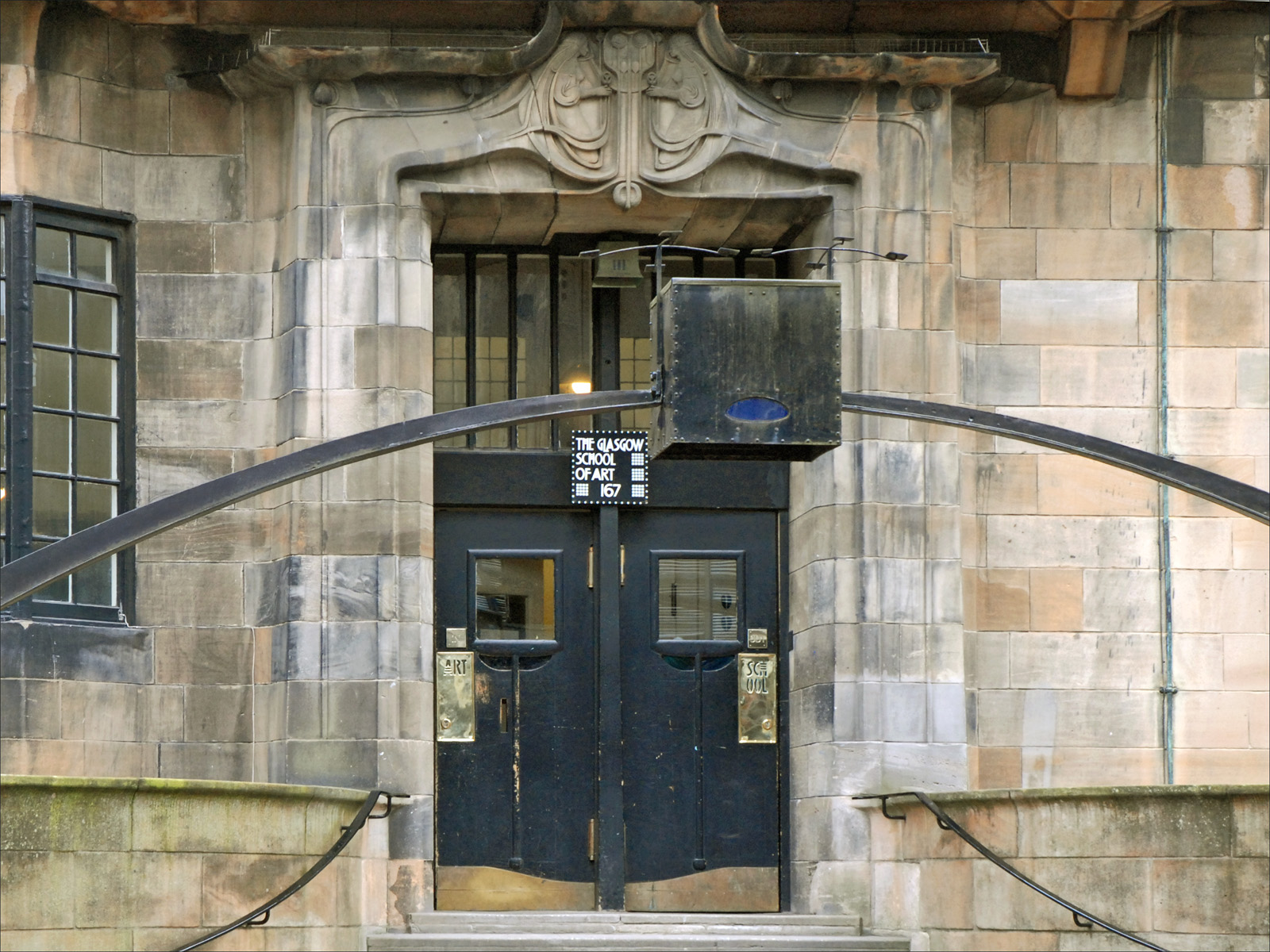
Architecture is a form of applied art, notable for its unique ability to blend the aesthetic and the practical into a unique style. It’s a field where innovations can remain relevant long past their due by reverberating in future designs and evolving with the times. Scotland had its fair share of brilliant minds that left a rich legacy in the domain of architecture and interior design, few of them more impactful than Charles Rennie Mackintosh. His unique creative style is still alive, both in the country and abroad, and continues to find new forms in which to flourish.
Who Was Charles Rennie Mackintosh?
Charles Rennie Mackintosh was born in 1868 in Glasgow, and was clearly a man of many talents as evidenced from his works as a designer, architect, and water colourist. His brilliance was evident from an early age, and he found good educational opportunities to hone his skills in his home town, where he spent most of his life. This didn’t go unnoticed, and he soon started getting commissions for private homes and commercial buildings.
By the turn of the century, Mackintosh already had a well-designed style that was attracting attention from the leading European architects of the time. Some of his most iconic works such as the Hill House in Helensburgh or the Tea Willows in Glasgow date from this period. Sadly, some of his most daring architectural blueprints were never built and we were denied a chance to see their full splendour. While Mackintosh quit the profession later in life and focused on his painting, he left behind more than enough completed works to inspire several generations of architects that came after him.
Which of His Ideas Remain Important Today?
The main style characteristics you can find on a Mackintosh building are very much in line with modernist and minimalist architecture of the late 20th and early 21st centuries. Geometry plays a huge role in his work, but he moved away from perfect symmetry favoured by earlier architects and used vertically elongated shapes and complex grid patterns to great effect. Mackintosh also was a master of using different materials to achieve visual and functional harmony.
Despite the limited technological means of his era, Mackintosh buildings still look very precise and feature a multitude of details contrasting the monumental base. This is much easier to achieve today, when mass manufacturing simplifies the process and availability of advanced materials is much better. That’s why his ideas were only developed to their full form long after their author finished his career and why modern Scotland still carries his personal mark.
How Mackintosh Influences Modern Door Design?
Before Mackintosh, doors were treated as separate objects that needed to be heavily decorated and just added to their predetermined places. He started the transition away from massive Victorian wooden panels and started incorporating glass elements that enabled light to enter the home. Most importantly, for him a door was just one part of the overall design, and it had to fit into the overall geometry of the building and provide an aesthetic anchor.
Those principles are very close in spirit to how modern architects think. You can spot real life impact very easily if you take notice of how many French doors in Glasgow are in use today. Some door manufacturers openly cite Mackintosh as one of the sources of inspiration, while many others rely on his ideas without knowing it. We can safely say that people in Glasgow encounter the visual style pioneered by Charles Rennie Mackintosh every day, and they would be wise to pay homage to his legacy.





