
A building envelope team choosing a roofing metal is rarely choosing on looks alone. Weight limits set by the structural engineer, exposure to salt air or industrial pollutants, the maintenance budget for the next several decades, and how a finish will age all sit on the same decision sheet. A thorough metal roofing materials comparison has to hold these factors together rather than ranking materials by price per square metre alone, because the cheapest sheet on day one is not always the cheapest roof over its working life. This article walks through how aluminium, steel, zinc and copper actually differ in practice, and where pre-finished aluminium fits into a specification that needs to balance performance with a predictable factory finish.
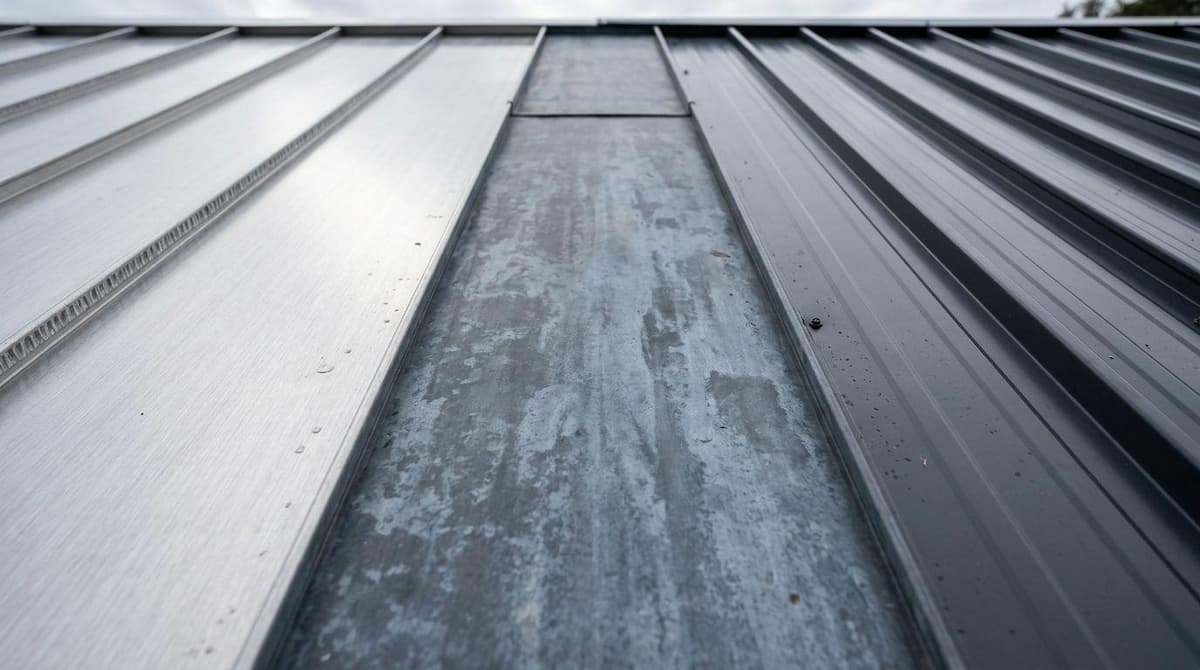
TL;DR: Key Takeaways
- A sound metal roofing materials comparison weighs lifecycle maintenance against upfront cost, not just the price per sheet.
- Aluminium is lighter than steel, copper and zinc in equivalent roofing applications, easing structural load and transport.
- Zinc and copper patina over time, changing colour and texture, while aluminium’s oxide layer keeps its appearance more stable.
- Pre-painted aluminium coil shifts colour consistency and weather protection to the factory stage, reducing on-site finishing work.
- Thermal movement, fastener compatibility and edge detailing affect how any metal roof performs long after installation.
What Really Determines Long-Term Roof Performance?
Long-term roof performance comes down to how a material handles load, weathering and the gap between installation day and decades of exposure, not how it looks on a sample board. Weight is the first structural question: a heavier roofing metal pushes load through the rafters, purlins or deck, which can mean larger structural members or additional support on a renovation where the existing frame was never designed for a heavy covering. On new builds this is less of a constraint, but on retrofits and extensions it often narrows the shortlist before anyone discusses colour.
Corrosion resistance is the second pillar, and it varies far more between coating systems than between the base metals themselves. A bare steel sheet, a galvanised one and a factory-coated one behave completely differently in the same coastal or industrial environment, so comparing metals without specifying the coating is an incomplete comparison. The protective mechanism matters too: some coatings work as a sacrificial barrier that corrodes before the base metal does, others work as a sealed physical barrier that simply keeps moisture and pollutants away from the surface.
The third factor, and the one most often underweighted at the specification stage, is lifecycle maintenance cost. A roof that needs periodic recoating, sealant renewal or panel replacement carries a cost stream that only shows up years after handover, well outside the project budget that approved the original material choice.
Aluminium, Steel, Zinc or Copper: Comparing the Options
These four metals differ most clearly on weight, how they resist corrosion, and how their appearance changes over time. According to Architecture Today, a construction industry publication, aluminium roofing is lighter than zinc, copper and steel in equivalent applications, which can reduce both transport costs and the load carried by the structure beneath it. That weight advantage compounds on larger roof areas, where every kilogram saved per square metre adds up across a full elevation or a long standing seam run.
Steel roofing typically needs galvanising or an additional coating to resist corrosion, because bare steel oxidises quickly once the mill finish is broken by cutting, drilling or scratching on site. Galvanising adds a zinc layer that sacrifices itself ahead of the steel, which protects the panel but also means the coating has a finite protective life that depends on how thick that zinc layer is and how exposed the site happens to be.
Copper and zinc both develop a patina as they weather, shifting from a bright metallic surface toward the duller tones many people associate with older civic buildings. That colour change is a genuine design feature for some projects and a liability for others, since the patina forms unevenly depending on rainfall patterns, orientation and nearby runoff, and it cannot be specified to a precise shade or timeline.
| Material | Relative weight | Corrosion behaviour | Appearance over time |
| Aluminium | Lightest of the four | Self-forming oxide layer resists further corrosion | Stable, especially with a factory finish |
| Steel | Heavier, needs protection | Relies on galvanising or coating | Stable while coating is intact |
| Zinc | Mid-range | Self-healing patina forms naturally | Patina darkens and shifts unevenly |
| Copper | Heaviest commonly specified | Patina protects surface over years | Pronounced colour change, green patina develops |
Aluminium’s natural oxide layer forms almost immediately on exposure to air, and because that layer bonds tightly to the surface rather than flaking away, it keeps providing protection as long as it is not repeatedly abraded. That inherent resistance is why uncoated aluminium performs acceptably in many environments on its own, before a paint system is even added.
Specifying Pre-Painted Aluminium for Roofing Projects
Pre-finished aluminium shifts the colour and weather protection decision from the building site to the factory, which is the main thing raw metal cannot offer. In a coil coating line, flat aluminium stock passes through cleaning, pretreatment and then a series of paint application and curing stages before it is ever cut or formed into a roofing profile. Because the coating is applied and cured under controlled conditions rather than sprayed or brushed on site, the finish thickness and cure quality are far more consistent across an entire coil than anything achievable with field-applied paint.
That consistency has a practical knock-on effect for contractors: a pre-painted semi-finished product arrives ready to fabricate into panels, flashings and trim, which removes an entire on-site finishing step and the weather-dependent scheduling that comes with it. There is no waiting for a dry, low-humidity window to paint a roof at height, and no risk of a batch mismatch between panels painted on different days.
This relates to a broader category of coated aluminium roof systems that specifiers can call up directly as a finished semi-finished product, with the colour and protective coating already locked in before the metal reaches the fabricator. For a specification document, that means the paint system, substrate thickness and forming behaviour can all be referenced as a single defined product rather than assembled from separate site trades, which simplifies both the drawings and the warranty conversation that follows later.
Installing Aluminium Roofs: Details That Affect Longevity
Installation detailing determines whether an aluminium roof reaches its expected service life or starts showing problems within a few winters. Aluminium expands and contracts more than some other roofing metals as temperatures swing through a day and across seasons, so standing seam and panel systems both need expansion joints and clip spacing calculated for the specific panel length and local temperature range rather than copied from a different material’s detail sheet. Getting this spacing wrong does not usually cause an immediate failure; it shows up later as oil canning, loosened seams or stress at fixing points once enough thermal cycles have passed.
Fastener and flashing compatibility is the second detail worth checking closely. Aluminium in direct contact with certain other metals can set up a galvanic reaction in the presence of moisture, where one metal corrodes preferentially at the point of contact. Isolating dissimilar metals with a compatible washer, gasket or barrier coating at every fixing point avoids this, and it is one of those details that costs almost nothing to get right during installation but is expensive to retrofit once a roof is finished and occupied.
Edge detailing also differs meaningfully between system types. A few points worth checking against the fabrication drawings:
- Standing seam systems rely on the seam itself to manage water at the ridge and eaves, so termination details need to close that seam cleanly rather than leaving an open channel for wind-driven rain.
- Panel systems depend more heavily on overlap and sealant at joints, which puts more weight on correct lap direction relative to prevailing wind and water flow.
- Both system types need perimeter flashing sized to accommodate the same thermal movement calculated for the field of the roof, not a fixed trim profile borrowed from a steel or zinc detail.
Turning the Comparison Into a Specification Decision
None of these materials wins outright; the right choice depends on what a specific project is actually exposed to. A coastal building with constant salt spray, a steep pitch that sheds water quickly, and a tight maintenance budget points toward a different answer than an inland low-slope roof where appearance and a particular patina effect matter more than minimising structural load. Pitch affects drainage speed and therefore how much standing moisture any coating has to tolerate, while budget constraints often decide whether lifecycle savings from a durable factory finish can be justified against a lower upfront material cost.
Coating warranty documentation deserves its own line in the specification file, since it is the paper trail that determines who is accountable if a finish fails to perform as expected years into the building’s life. A warranty is only useful if it is actually retained, referenced in the handover documents and tied to the exact product and batch installed, rather than filed away and forgotten once the roof passes inspection.





