
By Padraig Reilly, Founder and CEO of Boxcore
Construction workforce compliance involves far more than collecting documents and delivering site inductions. Contractors need to know who is working on their projects, whether workers have the correct qualifications and training, and to have a process to know and control who is authorised to be on site.
Managing these requirements across multiple subcontractors creates significant administration for already busy site teams. Worker information is often spread across spreadsheets, emails, training systems and separate access control platforms, making it difficult to establish whether someone is fully compliant and ready to start.
With updated UK Right to Work guidance effective from 1 October 2026, having reliable and auditable verification processes is increasingly important.
The solution isn’t simply to digitise individual tasks. It’s to connect worker onboarding, training compliance, digital inductions and site access into one straightforward process.
Construction workforce management platforms such as Boxcore are helping contractors achieve this by bringing workforce information together, reducing manual administration and giving site teams immediate visibility of who is on site and whether they meet the necessary requirements.
The Problem With Fragmented Workforce Compliance
On many construction projects, subcontractors email worker details, qualifications are entered into spreadsheets, inductions are completed separately and site access is managed through another system.
Although each process may work individually, the lack of connectivity creates unnecessary work and increases the risk of requirements being missed.
Common problems include:
- Excessive administration: Information must be entered, checked and updated across multiple systems.
- Limited visibility: Site managers cannot easily establish whether workers have met every requirement.
- Expired qualifications: Missing or expired CSCS cards and training records may only be identified when workers arrive.
- Inaccurate attendance: Manual sign-in systems make it difficult to reliably establish who is on site.
- Difficult audits: Retrieving historical compliance evidence involves searching multiple systems, emails and folders.
These issues become more significant as projects grow, and subcontractors regularly mobilise new workers.
The objective should be to eliminate duplicated administration and ensure the right information is available when site teams need it.
One Connected Workflow: From Onboarding to Site Access
An effective construction workforce management system treats compliance as one continuous process, from initial registration through to site attendance.
This involves five key stages.
1. Simple Digital Worker Onboarding
Workers should be able to register digitally, submit their details and upload required documents before arriving on site. Subcontractors should also be able to manage their workforce information without relying on site administrators or site teams to manually enter every record.
Existing information can be reused where appropriate, provided it remains valid and meets the new project’s requirements. This reduces repeated paperwork, email chasing and delays during mobilisation. Importantly, onboarding needs to be straightforward. Site workers and subcontractors should be able to complete the process with minimal training required.
2. Connected Training, CSCS and Compliance Checks
Once workers are registered, contractors need to establish that they meet the project’s requirements. This can include CSCS cards, trade qualifications, plant tickets, training records, Right to Work evidence, and project-specific and task-specific training.
A central training register allows managers to identify missing qualifications, monitor expiry dates and see which workers have outstanding requirements. UK Right to Work requirements also need particular attention. Updated Home Office guidance effective from 1 October 2026 sets out the prescribed checking procedures for relevant working arrangements. Simply storing identification documents does not constitute a legally compliant Right to Work check. The responsible employer must complete the appropriate verification process and maintain the necessary evidence. A connected system can help organise and track this information, reducing the risk of administrative gaps.
3. Digital Inductions Before Arrival
Digital site inductions allow workers to complete required training and assessments before their first day. Completion records are automatically linked to the worker’s profile, making it easy for site teams to establish whether induction requirements have been satisfied. This reduces delays on the first morning and eliminates the need to manually reconcile induction registers with worker lists. When digital inductions are connected to workforce authorisation, outstanding requirements can also be identified before a worker arrives at the entrance.
4. Facial Recognition Connected to Access Control and Attendance
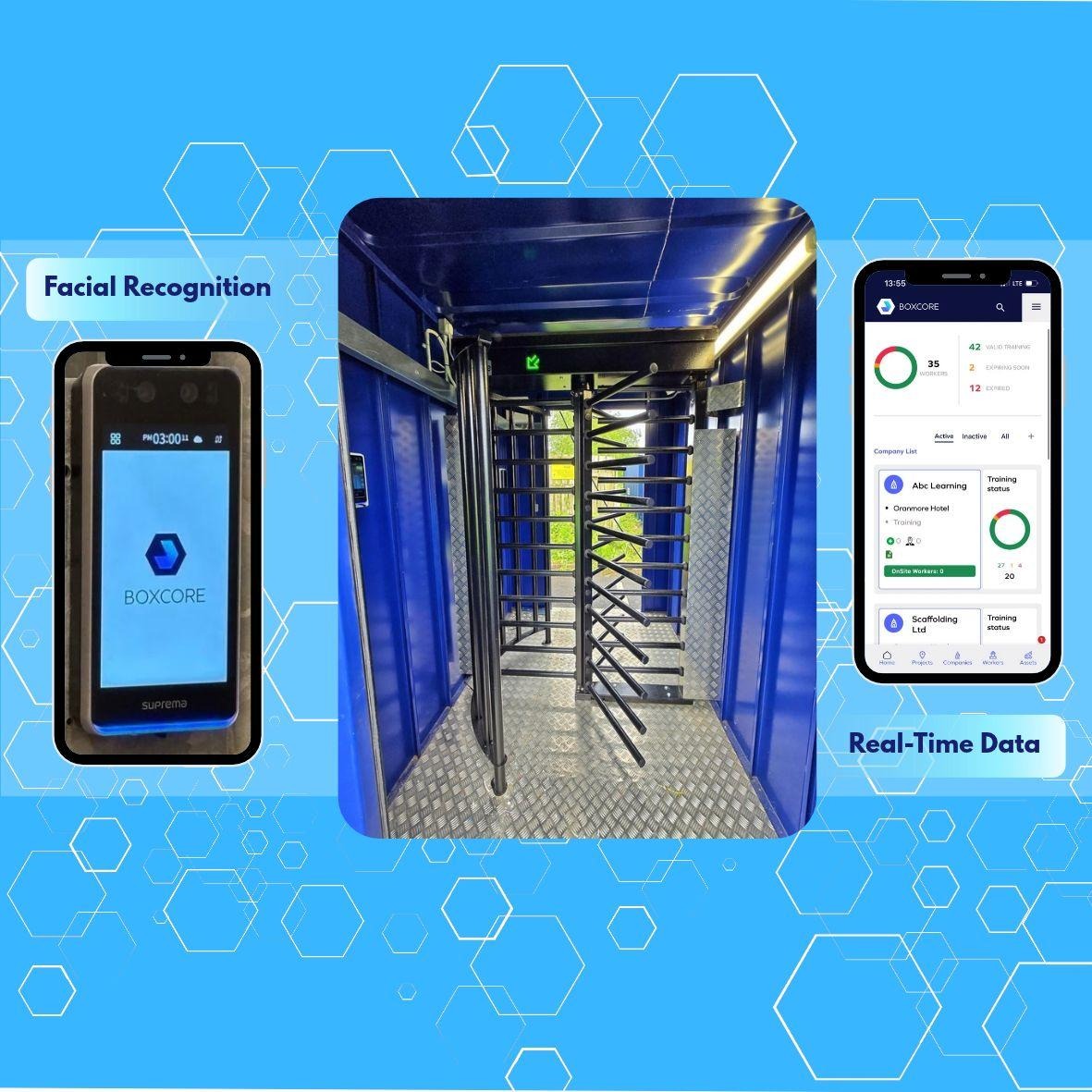
Connecting facial recognition technology to workforce compliance records provides contractors with a practical way to manage attendance and site access. Facial recognition matches workers to their enrolled identities when they arrive at a site reader, while the connected workforce management platform maintains information about their training, induction and authorisation status.
This gives site teams real-time visibility of who has arrived and whether workers meet the relevant requirements. Where integrated with turnstiles or other physical access control equipment, access can be restricted when a worker has not satisfied the site’s authorisation rules. For example, workers with an outstanding induction or expired mandatory qualification can be prevented from entering until their records are updated and approved.
Importantly, facial recognition workforce attendance systems can operate with or without turnstiles.
Standalone readers can provide accurate attendance records without requiring the installation of physical turnstiles, making the solution suitable for projects of different sizes. By linking construction site access control software with onboarding and training records, contractors can reduce manual sign-ins, improve workforce visibility and minimise the risk of inaccurate attendance information.
Biometric systems must also be implemented with appropriate UK data protection safeguards, including a lawful basis, a relevant special category condition and an assessment of necessity and proportionality.
5. One Clear View of Workforce Compliance
With onboarding, training records, inductions and attendance connected, site managers can establish a worker’s compliance status in seconds. Rather than searching through spreadsheets and emails, managers can identify outstanding requirements and manage worker authorisation through one central interface. This creates a more consistent approach across subcontractors and reduces the administration associated with managing changing site teams.
Identifying Compliance Issues Before Workers Arrive
Consider a subcontractor preparing to mobilise 50 to 60 workers onto a major construction project over a period of a week. Under a fragmented system, worker details are emailed to the principal contractor, training records are checked manually and inductions are organised separately. When workers arrive, the site team discovers that five have not completed their inductions and another two have expired qualifications.
The result is delays, additional administration and disruption to planned work. With connected workforce onboarding, these issues can be identified before mobilisation. Training records and inductions are reviewed centrally, allowing the contractor to establish which workers are ready to start and which require further action. When linked to facial recognition attendance, the same system can also track when authorised workers arrive. This illustrative example demonstrates a simple principle: identify compliance problems before workers reach the site entrance, rather than dealing with them at the gate.
Why Ease of Adoption Is Essential
Construction companies increasingly have access to sophisticated software, but more functionality does not always deliver better results. If software is difficult to use, site teams and subcontractors won’t use it, leaving records incomplete and creating additional administration.
Construction projects are busy environments where teams have limited time for complicated onboarding procedures or lengthy training sessions. The most effective systems are those that workers, subcontractors and site managers can adopt quickly. A straightforward interface, minimal data entry and practical implementation support are often more important than having an extensive list of features. Ultimately, software only delivers value when site teams consistently use it.
Historical Records and Audit Readiness
Knowing who is on site today is important, but contractors also need reliable historical records. Information may be required months or years later for audits, contractual disputes, insurance matters or incident investigations. At that point, contractors may need to establish which qualifications a worker held, whether an induction was completed and when the worker attended site. A connected system should maintain a searchable history of training records, inductions, authorisation decisions and attendance events.
Records must also be retained and deleted according to applicable legal, contractual and data protection requirements. For example, Home Office guidance generally requires prescribed Right to Work evidence to be retained for the duration of employment and two years afterwards. Other records, including safety documentation and biometric information, require appropriate retention arrangements based on their purpose and applicable obligations. Keeping information organised and accessible significantly reduces the work involved in responding to historical enquiries.
What Makes a Construction Worker Site-Ready?
Before allowing a worker to start, contractors should be able to confirm:
- Their identity has been appropriately verified.
- Required Right to Work checks have been completed.
- Relevant CSCS cards, qualifications and plant tickets are valid.
- Project-specific and task-specific training requirements have been satisfied.
- The correct site induction has been completed.
- The worker is authorised to access the project.
- Attendance is associated with the correct worker identity.
- Expiries are monitored and historical compliance records are retrievable.
Connecting these requirements reduces the need for repeated manual checks and helps contractors manage workforce compliance consistently.
Common Questions About Workforce Onboarding and Access Control
Can facial recognition be connected to CSCS cards and digital inductions?
Yes. Facial recognition access control can be integrated with workforce management software that tracks CSCS cards, qualifications and induction completion. This allows a worker’s identity and attendance to be linked to their authorisation status. Facial recognition itself does not independently verify qualifications or Right to Work eligibility.
Can construction attendance be tracked without turnstiles?
Yes. Standalone facial recognition readers can record worker attendance without turnstiles, providing real-time workforce information. Where automated physical access restrictions are required, the system can be integrated with suitable turnstiles or access control equipment.
How can contractors reduce subcontractor onboarding administration?
By allowing subcontractors to submit worker information digitally and connecting training records, inductions and authorisation into one system, contractors can eliminate repeated data entry, reduce document chasing and identify outstanding requirements before workers arrive.
How Boxcore Connects Workforce Compliance and Site Access
Boxcore is a construction safety and workforce management software platform used by more than 250 contractors across the UK, Ireland, Europe and the United States.
The platform combines digital worker onboarding, CSCS and training record management, site inductions, compliance monitoring, facial recognition attendance and access control in one straightforward system. Contractors can see in seconds who is on site, whether workers have completed their required training and inductions, and which compliance records need attention. A key difference is Boxcore’s focus on practical implementation and proven ease of adoption by site teams and subcontractors.
The system is designed specifically for busy construction environments, allowing frontline teams to get up and running with minimal training. Boxcore also provides hands-on implementation support, including initial data migration and subcontractor training. Its facial recognition attendance solution works with or without turnstiles, allowing contractors to select an approach suited to their project requirements. By bringing safety compliance and workforce attendance together, Boxcore helps contractors eliminate duplicated administration and improve visibility across their projects.
Explore Boxcore’s construction safety and workforce management software to see how the platform connects onboarding, training compliance and workforce attendance.
Connecting Compliance and Site Access
Construction workforce compliance will always involve managing multiple subcontractors, changing site teams and project-specific requirements. The aim should be to make these processes as straightforward and reliable as possible. Connecting worker onboarding, training records, digital inductions and facial recognition access control gives contractors a more consistent way to manage their workforce. It reduces duplicated administration, identifies issues before workers arrive and provides reliable information when it is needed.
Ultimately, contractors need to know who is on site and whether those workers are compliant. Connecting workforce onboarding and site access makes both easier to achieve.
About the Author
Padraig Reilly is the Founder and CEO of Boxcore, a construction safety and workforce management software company. A qualified civil and structural engineer with more than 15 years’ experience managing construction projects across Ireland, the UK and Australia, Padraig founded Boxcore to simplify safety compliance and workforce management for construction teams.





