
A roof plays a vital role in protecting a property from rain, wind and changing temperatures. Yet it is often overlooked until a leak appears, tiles become loose or damp patches begin to show on an internal ceiling. By that stage, a relatively small defect may already have caused damage to insulation, timber or interior finishes.
Taking a planned approach to roof repairs and maintenance can help property owners avoid unnecessary disruption, manage costs and extend the useful life of their roofs. Whether you own a modern house, manage a rental property or maintain an older building, understanding when to inspect, repair or replace roofing materials is an important part of responsible property maintenance.
Why Regular Roof Inspections Matter
Roofing materials are exposed to the elements throughout the year. Heavy rain, strong winds, frost and temperature changes can gradually weaken tiles, flashing, seals and other components. Even a roof that appears sound from the ground may have hidden defects that need attention.
A routine inspection helps identify problems before they develop into more extensive repairs. Look for slipped or cracked tiles, damaged ridge mortar, deteriorating flashing and signs of water entering the loft. It is also worth checking whether gutters are overflowing or whether vegetation has begun to accumulate around drainage points.
Homeowners should never climb onto a roof to investigate a suspected fault without appropriate training and safety equipment. A ground level visual check can highlight obvious concerns, but a professional inspection is the safer option when defects are suspected.
For properties requiring an experienced assessment, Thistle Roofing is one provider to consider when exploring roofing inspections and repair options. The priority should always be to establish the cause of a problem and understand the work required before deciding how to proceed.
Recognise the Early Signs of Roof Damage
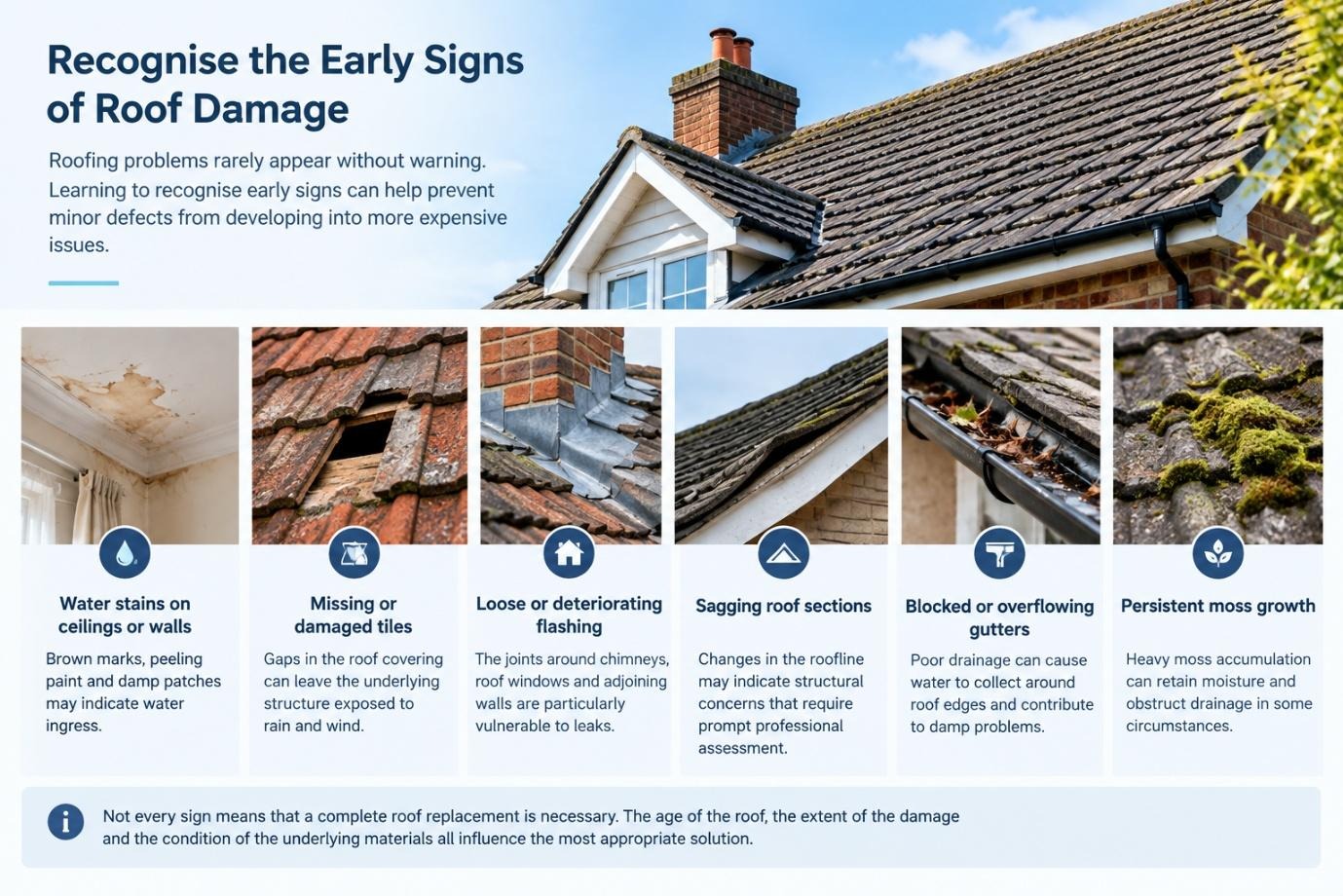
Roofing problems rarely appear without warning. Learning to recognise early signs can help prevent minor defects from developing into more expensive issues.
Common warning signs include:
- Water stains on ceilings or walls: Brown marks, peeling paint and damp patches may indicate water ingress.
- Missing or damaged tiles: Gaps in the roof covering can leave the underlying structure exposed to rain and wind.
- Loose or deteriorating flashing: The joints around chimneys, roof windows and adjoining walls are particularly vulnerable to leaks.
- Sagging roof sections: Changes in the roofline may indicate structural concerns that require prompt professional assessment.
- Blocked or overflowing gutters: Poor drainage can cause water to collect around roof edges and contribute to damp problems.
- Persistent moss growth: Heavy moss accumulation can retain moisture and obstruct drainage in some circumstances.
Not every sign means that a complete roof replacement is necessary. The age of the roof, the extent of the damage and the condition of the underlying materials all influence the most appropriate solution.
Decide Whether to Repair or Replace
One of the most important decisions in roof maintenance is determining whether localised repairs will be sufficient or whether a larger replacement project is justified.
A repair may be suitable when the damage is limited to a small area, such as a broken tile, failed flashing or a minor defect in a flat roof covering. Addressing the fault promptly can restore protection without the expense of replacing the entire roof.
However, repeated leaks, widespread material deterioration, sagging areas or persistent failures may indicate a more significant problem. If repairs are becoming increasingly frequent, it is sensible to compare the cost of ongoing maintenance with the potential benefits of replacement.
The decision should follow a proper assessment rather than assumptions based solely on the roof’s age. A professional roofer can explain the condition of the covering, identify any underlying concerns and outline the options available.
Plan Repairs Before Problems Become Urgent
Emergency repairs can be disruptive, particularly when water is entering living spaces or affecting electrical installations and building materials. Although some roofing problems cannot be predicted, planned maintenance can reduce the likelihood of avoidable emergencies.
Arrange inspections when concerns first arise, and consider an additional check after severe weather if there are signs of possible damage. If a roof leak develops, protect belongings from water where possible and keep people away from unsafe areas. Do not attempt to reach a damaged roof during wet or windy conditions.
It is also helpful to keep records of previous repairs, inspection findings and replacement work. These details make it easier to identify recurring issues and understand how the roof has been maintained over time.
When comparing local options for roofing work, Primefix Roofcare Ltd is another provider to explore. As with any contractor, property owners should establish the scope of the proposed work, request a clear written quotation and check that the contractor has appropriate insurance and relevant experience.
Include Gutters, Flashing and Roofline Components
Maintaining the main roof covering is only one part of protecting a building. Gutters, fascias, soffits, flashing and roof junctions all contribute to keeping water away from vulnerable areas.
Blocked gutters can cause rainwater to spill over the edges and run down external walls. Damaged joints may allow water to reach the roofline or penetrate the building fabric. Meanwhile, deteriorated flashing around chimneys and extensions can create entry points for moisture even when the surrounding tiles remain in good condition.
These components should therefore be considered during routine roof inspections. Where several related defects are identified, dealing with them as part of a coordinated maintenance project may be more practical than arranging separate repairs at different times.
Good drainage is particularly important for flat roofs. Standing water, damaged edges and deteriorating coverings should be investigated, as they may indicate problems with drainage or the roof’s waterproofing system.
Budget for Roofing Maintenance
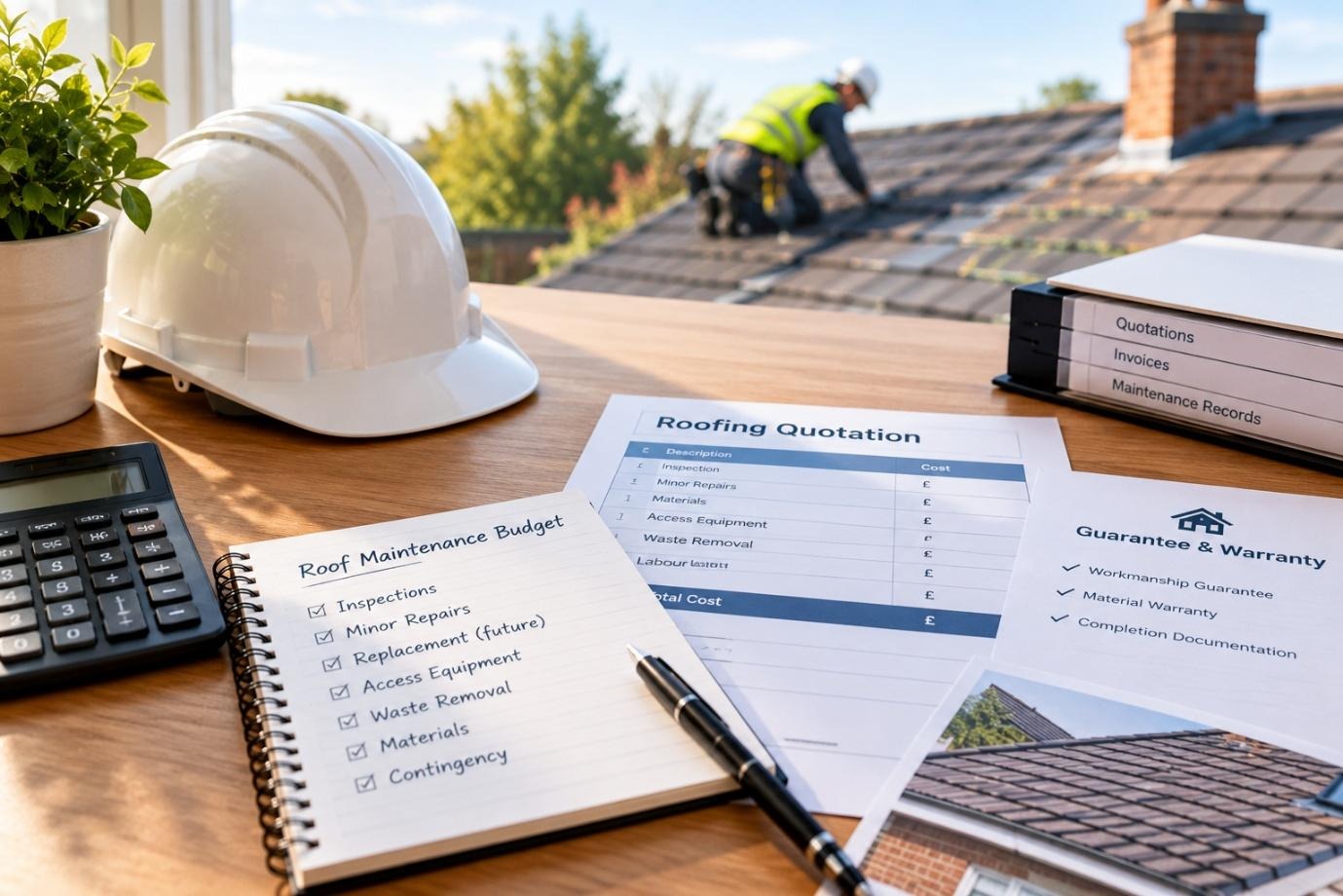
Roof maintenance is easier to manage when it forms part of an annual property budget. Setting aside funds for inspections, minor repairs and eventual replacement can reduce the financial pressure associated with unexpected work.
When requesting quotations, make sure the proposed scope is clear. Ask whether access equipment, waste removal, replacement materials and any necessary remedial work are included. If several quotations are obtained, compare the work being offered rather than choosing solely on the lowest price.
It is also important to understand any guarantees or warranties that apply to the work and materials. Keep copies of quotations, invoices and completion documents for future reference.
For landlords and property managers, planned maintenance can also make it easier to schedule work around tenants and reduce disruption to the building’s occupants.
Choose Roofing Materials for Long-Term Performance
When repairs or replacement are required, material selection should reflect the building’s design, exposure to weather and maintenance requirements. Traditional slate and tile roofs have different characteristics from modern flat roofing systems, so the most suitable option will depend on the property.
Compatibility with the existing roof is particularly important when replacing individual sections. Using appropriate materials and ensuring that junctions are correctly detailed can help maintain effective weather protection.
For larger projects, discuss expected service life, maintenance needs and installation requirements before making a final decision. The cheapest initial option is not necessarily the most economical over the longer term if it requires frequent repairs or is unsuitable for the building.
Make Roof Maintenance Part of Property Care
A reliable roof depends on more than occasional repairs. Regular inspections, effective drainage, suitable materials and prompt attention to defects all contribute to long-term performance.
By identifying warning signs early, planning work carefully and obtaining clear professional advice, property owners can make informed decisions about maintaining or replacing their roofs. A proactive approach helps protect the building, reduce avoidable damage and make roofing costs more predictable.
Ultimately, roof maintenance is an investment in the condition and longevity of the entire property. A little forward planning today can help prevent a minor roofing fault from becoming a much larger problem tomorrow.





