
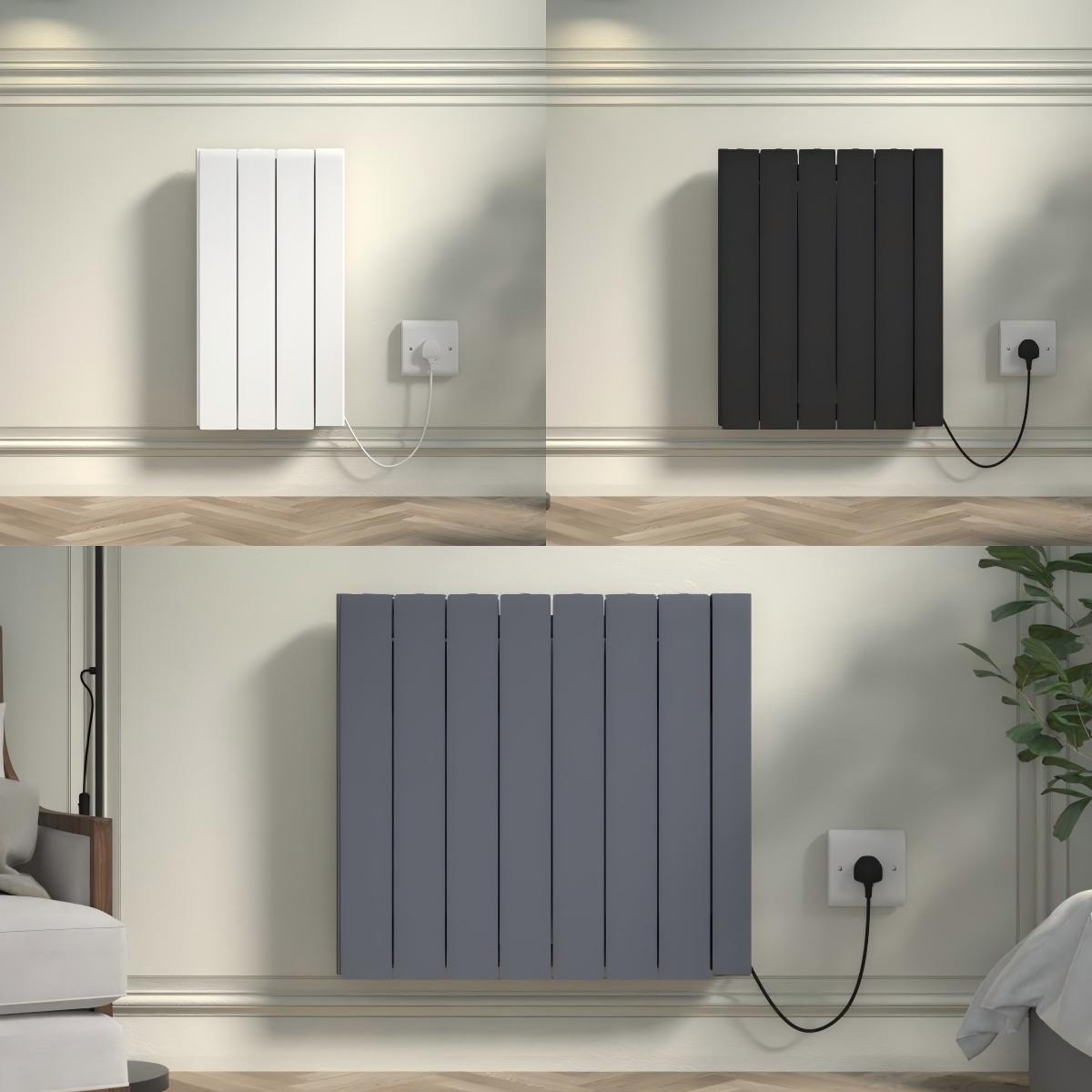
For smaller spaces, you need a heating solution that will fill the room with warmth without taking up too much floor or wall space. It’s also worth bearing in mind the running costs of electric radiators, as these can vary depending on the model of radiator you choose, how big your room is, the tariff you’re on and how often you use your heating.
There are many different sizes and styles of electric radiators to choose from and some can be plugged in and switched on without the need for any central heating system to be fitted. So are electric radiators suitable for small rooms? Let’s take a closer look.
Why Choose an Electric Radiator for a Small Room?
Compact rooms generally have limited wall space. The typical large central heating radiator can often be an obstacle to placing furniture, storing items, etc. in a room.
Electric radiators can offer more flexibility.
There is no need for small radiators such as ours to be attached to a wet central heating system; we are electric radiators and are powered by electricity. This makes them ideal for smaller rooms where the costs and difficulties of extending the existing pipework would be too great.
They can be particularly useful in:
- Small bedrooms.
- Home offices.
- Bathrooms.
- Conservatories.
- Hallways.
- Spare rooms.
- Garden rooms.
Do Electric Radiators Take Up Less Space?
Many electric radiators are designed with smaller rooms in mind.
They can be bought in a compact size to fit into smaller rooms, and there are also vertical versions which use the height of a wall rather than taking up a lot of floor or wall space.
This can give you more freedom when it comes to fitting furniture into the room.
For example, in a narrow home office, a tall and thin radiator would create sufficient space for a desk and chair. In a small bedroom, a compact radiator will also make best use of the available wall space.
Are Electric Radiators Easy to Install?
One of the biggest advantages of electric radiators is their installation flexibility.
A traditional central heating radiator needs pipework connecting it to your heating system. Installing one in a new location can therefore involve additional plumbing work.
Electric radiators don’t require this type of water pipe connection. They simply need an appropriate electrical supply.
However, electrical work should always be carried out safely. Depending on the type of radiator and installation, you may need a qualified electrician.
Don’t try to modify electrical wiring yourself if you are not suitably qualified.
How Much Do Electric Radiators Cost to Run?
One of the key issues to consider when looking at electric heating is running costs.
The costs to run an electric radiator include the wattage rating of the radiator, how long it is turned on for, the temperature setting and the cost of the electricity you are purchasing from your utility supplier.
This example highlights that a higher-powered radiator may use more electricity to run when operating than a lower-powered model. But that doesn’t automatically mean you should opt for the lowest-powered model on the market.
A radiator is required to supply sufficient heat to a room.
A too-small radiator may not be able to warm up a room enough and might need to run for longer periods.
Are Electric Radiators Efficient?
Electric radiators convert electrical energy into heat at the point of use. This means very little energy is lost through the delivery of heat within the room itself.
However, the overall running cost depends on the price of electricity and how the radiator is used.
Features such as thermostats and programmable controls can help you manage your heating more effectively. You can set the radiator to maintain a comfortable temperature instead of leaving it running unnecessarily.
For a small room that only needs occasional heating, this flexibility can be particularly useful.
Electric Radiators vs Central Heating Radiators
Both options have their advantages.
A central heating radiator is connected to a boiler or another wet heating system. It can be a good choice if your home already has central heating and you want to heat several rooms from the same system.
An electric radiator works independently. This can be useful if you only want to heat one room at certain times.
Electric radiators can therefore be especially practical for spaces that are not regularly used.
For example, if you work from home only a few days a week, you may prefer to heat your office when you need it rather than heating the entire house.
What Size Electric Radiator Do You Need?
Even in small rooms, choosing the right size is important.
Many people incorrectly assume that even the smallest of rooms require the smallest of radiators. In fact, the amount of heat a room requires is based upon a number of factors.
- Room dimensions.
- Insulation levels.
- Number and size of windows.
- External walls.
- Ceiling height.
- The room’s location within the property.
A small well-insulated bedroom will require less heat than a poorly insulated room with large windows.
Check the heat output required before you buy and choose the right radiator for your room.
What Features Should You Look For?
Modern electric radiators come with a variety of useful features.
Depending on your needs, you may want to look for:
- Accurate thermostatic controls.
- Programmable timers.
- Digital displays.
- Multiple heat settings.
- Remote controls.
- Slim designs.
- Wall-mounted installation.
These features can make it easier to control your heating and avoid using energy when you don’t need it.
Are Electric Radiators Good for Bathrooms?
Although electric radiators can be suitable for small bathrooms, safety has to be a priority.
In special locations like bathrooms which contain water, all electrical installations must be designed with safety in mind. Adequate safety measures and zoning must be established.
When installing an electric radiator in your bathroom remember to select a radiator that is designed for bathroom use and ensure that it is installed correctly by a qualified engineer.
Final Thoughts
Are Electric Radiators Suitable for Small Rooms?
They can be an excellent option for small spaces if the right electric radiator is selected and installed correctly.
Consider the room’s requirements of heat, the space on the walls, and the room’s usage before you buy. Also consider the costs of running the radiator as opposed to the cost of the radiator itself.
For a small room that needs flexible, independent heating, electric radiators are a practical and convenient solution.





