
Every renovation starts with an empty room. Old furniture, fittings and clutter must leave before builders can strip, plaster or fit anything new.
Handled badly, this step delays the build and can lead to a fine. This guide compares your options and explains what the law expects from you.

Why Clearing Comes First
A clear site lets tradespeople work faster and more safely. Fewer obstacles also mean fewer accidents, which ties in with our advice on preventing slips and trips in high-traffic construction zones.
Waste is also a bigger issue than most owners expect. UKGBC says construction, demolition and excavation produce around 120 million tonnes of waste a year, nearly 60% of all UK waste.
The encouraging part is that much of it is reused. The Mineral Products Association reports that 76% of this waste is recycled or recovered.
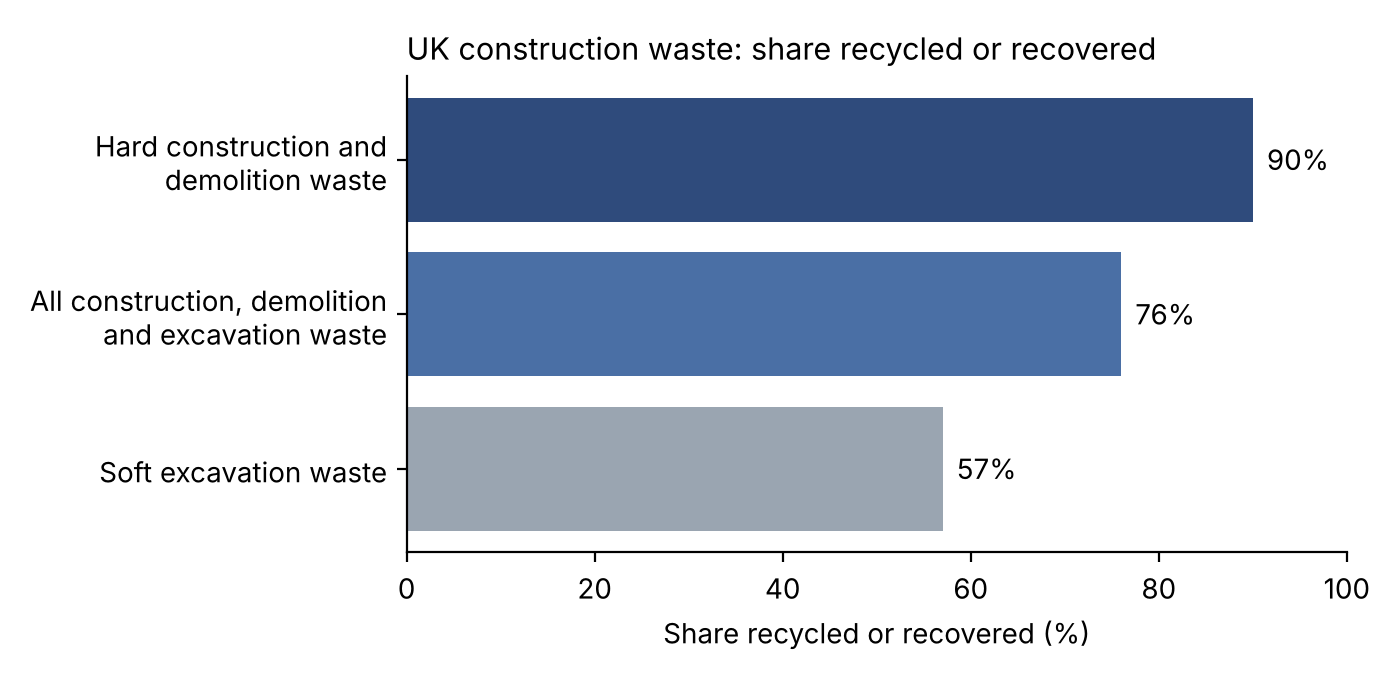
Source: Mineral Products Association
Clearance Options Compared
The right choice depends on how much needs to go and how quickly. For whole-property jobs, many homeowners book professional house clearance services because a licensed carrier can sort, reuse and remove everything in one visit.
| Option | Best for | Typical cost | Watch out for |
| Recycling centre | Small loads | Often free for household waste | DIY and rubble rules vary by council |
| Skip hire | Ongoing building work and rubble | £190 to £450 for a builder skip | Permits may be needed for roadside skips |
| Waste collector | Bulky mixed items | Priced by load size | Must hold a waste carrier licence |
| Professional house clearance | Full properties and probate | £250 to £700 for a 1 to 2 bed home | Compare fixed quotes in writing |
Costs are indicative and vary by region. Skip prices come from a Checkatrade-based guide on LoveMoney, and clearance prices from Fantastic Services.
Know Your Legal Duty of Care
Since 2005, householders must check that anyone removing their waste is authorised to do so.
If your rubbish is fly-tipped and traced back to you, councils can issue a fixed penalty notice of up to £400. A court can impose an unlimited fine for a breach.
Kevin Baker of the Environment Agency has warned that rogue traders advertising on social media are “the new door steppers”. The agency reminds householders to confirm registration before handing anything over.
Four Checks Before You Hire
- Ask for the carrier’s waste carrier registration number.
- Search it on the Environment Agency public register or call 03708 506 506.
- Ask where the waste will be taken.
- Keep the invoice, receipt or waste transfer note.
Planning the Clear-Out
Sort Before You Pay
Separate items to keep, donate and dispose of. Reuse cuts the load and often the bill.
Treat Hazardous Items Separately
Paint, solvents and asbestos need special handling. Our guide to putting paint in a skip covers the rules and fines. Suspected asbestos should go to professional disposal experts.
Match Collection to the Build Schedule
Book the clearance a few days before work starts. Remember that builders face set start times in residential areas, so plan collection around them.
Common Questions About Property Clearance
Do I need a licence to take my own rubbish to the tip?
No. Householders can use household waste recycling centres free of charge for household waste. Some sites restrict DIY waste, so check first.
Can I be fined if a contractor fly-tips my waste?
Yes, if you did not take reasonable steps to check they were authorised.
When is a skip better than a clearance service?
A skip suits continuous building waste such as rubble. A clearance service suits emptying a whole property.
How much does a builder’s skip cost?
Roughly £190 to £450, depending on size and location.
Final Thoughts
Clear early, compare your options and always check carrier licences. A tidy start protects your budget, your schedule and your legal position.





