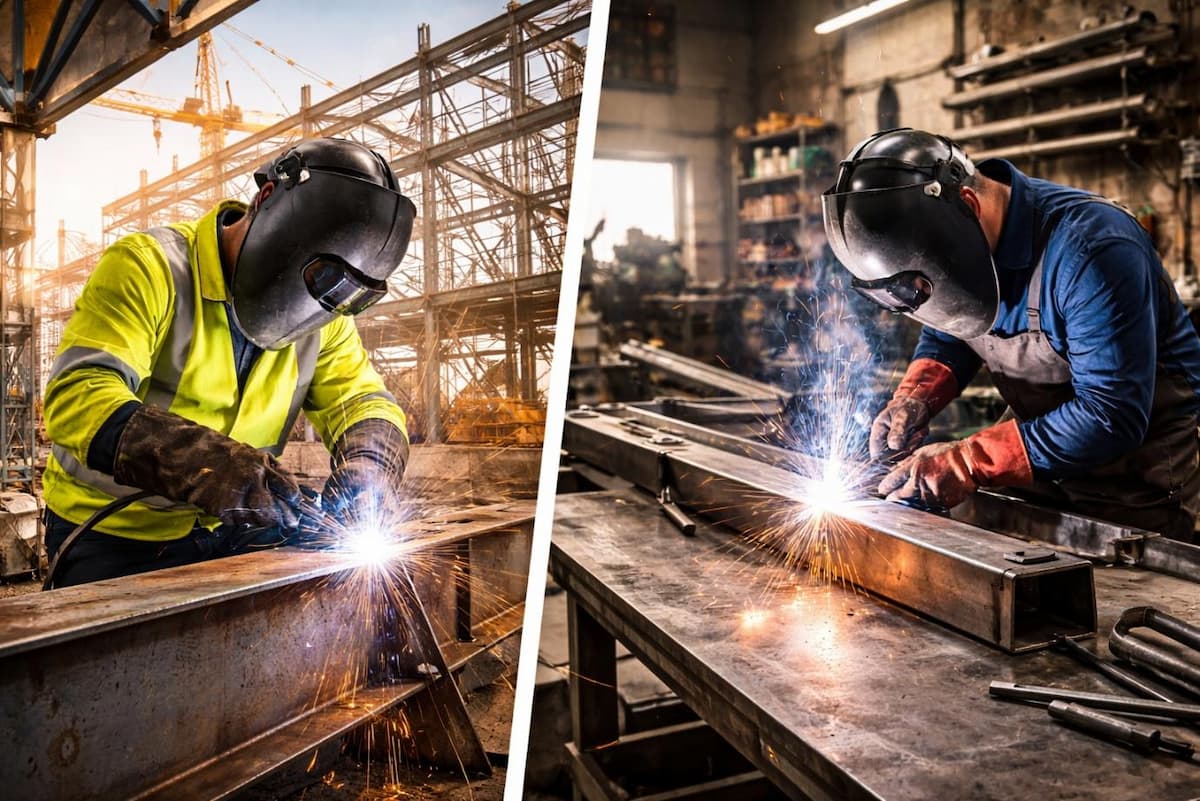
Welding plays a critical role in construction, engineering, and structural development. Whether you are working on a large-scale commercial build or a smaller residential project, choosing between on-site welding and workshop fabrication can significantly impact efficiency, cost, and overall project quality. Each approach offers unique advantages, and understanding the differences is essential for making the right decision.
Understanding On-Site Welding
on-site welding involves carrying out welding work directly at the project location. This method is particularly useful when dealing with large structures or components that are difficult or impractical to transport. It allows welders to work in real-time alongside other trades, ensuring seamless integration with the construction process.
One of the biggest advantages of on-site welding is flexibility. Adjustments can be made instantly if measurements or conditions change, reducing delays and the need for rework. This is especially beneficial in complex construction environments where precision and adaptability are key.
However, on-site welding also comes with challenges. Weather conditions, limited space, and safety considerations can affect productivity. Proper planning and experienced professionals are essential to ensure high-quality results under these conditions.
The Benefits of Workshop Fabrication
Workshop fabrication, on the other hand, involves creating and welding components in a controlled environment before transporting them to the site for installation. This method is often preferred for projects that require a high level of precision and consistency.
Working in a workshop allows for better quality control, as conditions such as temperature, lighting, and equipment are optimised for accuracy. It also enables the use of advanced machinery that may not be practical to bring on-site. As a result, workshop fabrication often produces cleaner, more uniform welds.
Another advantage is efficiency. Multiple components can be fabricated simultaneously, reducing overall project timelines. However, transportation and installation logistics must be carefully managed to avoid delays or damage to prefabricated elements.
Choosing the Right Approach for Your Project
The decision between on-site welding and workshop fabrication depends on several factors, including project size, complexity, location, and timeline. For large or fixed structures, on-site welding is often the most practical solution. For projects that require intricate detailing or repetitive components, workshop fabrication may be the better choice.
In many cases, a combination of both methods delivers the best results. Components can be partially fabricated in a workshop and then assembled and finished on-site. This hybrid approach balances precision with flexibility, ensuring both quality and efficiency.
The Importance of Professional Expertise
Regardless of the method chosen, working with experienced professionals is crucial. Reliable Welding Services in Essex provide the expertise needed to assess project requirements and recommend the most suitable approach. Skilled welders ensure that all work meets industry standards, safety regulations, and structural requirements.
Professional teams also bring the right equipment and knowledge to handle challenges effectively, whether working in a workshop or directly on-site. Their experience can make a significant difference in achieving durable and high-quality results.
Cost and Time Considerations
Cost and time are always important factors in construction projects. On-site welding may reduce transportation costs but can take longer due to environmental limitations. Workshop fabrication can speed up production but may involve additional logistics expenses.
A careful evaluation of these factors helps determine the most cost-effective solution. By balancing efficiency with quality, project managers can ensure that budgets and deadlines are met without compromising on performance.
Conclusion
Both on-site welding and workshop fabrication offer distinct advantages, and the right choice depends on the specific needs of your project. While on-site welding provides flexibility and adaptability, workshop fabrication delivers precision and efficiency in a controlled setting.
By understanding the strengths of each method and working with experienced professionals, you can ensure that your project is completed to the highest standards. Whether you choose one approach or a combination of both, the key is to align your decision with your project goals, ensuring durability, safety, and long-term success.