San Diego isn’t a city you’d typically look to for roofing inspiration. Yet quietly, across its sun-drenched suburbs and coastal neighbourhoods, a significant shift is underway. Homeowners are tearing off ageing asphalt shingles and replacing them with metal roofing systems, and the reasons behind that switch are more universally relevant than you might expect.
In the UK, metal roofing has long been the preserve of commercial and industrial buildings. Residential applications remain relatively niche, partly due to cost concerns, aesthetic misconceptions, and a general unfamiliarity with the product. But as UK homeowners face rising energy bills, ageing housing stock, and increasingly unpredictable weather, the case for metal roofing is growing stronger.
What’s happening in San Diego offers a compelling preview of where residential roofing could, and perhaps should, be heading.
San Diego’s Roofing Challenge: A Climate That Tests Every Material
San Diego has a reputation for near-perfect weather, but from a roofing perspective, it’s a genuinely demanding environment. Properties across the county face a combination of stresses that few materials can handle well over the long term.
Intense UV radiation degrades organic materials rapidly. The closer you are to the coast, the more salt air becomes a factor, accelerating corrosion and breakdown in traditional roofing products. Seasonal Santa Ana winds push gusts well beyond what standard asphalt shingles are rated to handle. And increasingly, wildfire risk has become a primary concern for homeowners further inland, where building materials are now scrutinised for their fire resistance as much as their weather performance.
The result? Asphalt shingles (still the default choice across much of the United States) are wearing out in as little as ten to fifteen years in San Diego’s conditions. For many homeowners, that means two or even three roof replacements within a generation. The economics simply don’t stack up.
Metal roofing, by contrast, is engineered for exactly these conditions. That’s what’s driving the switch.
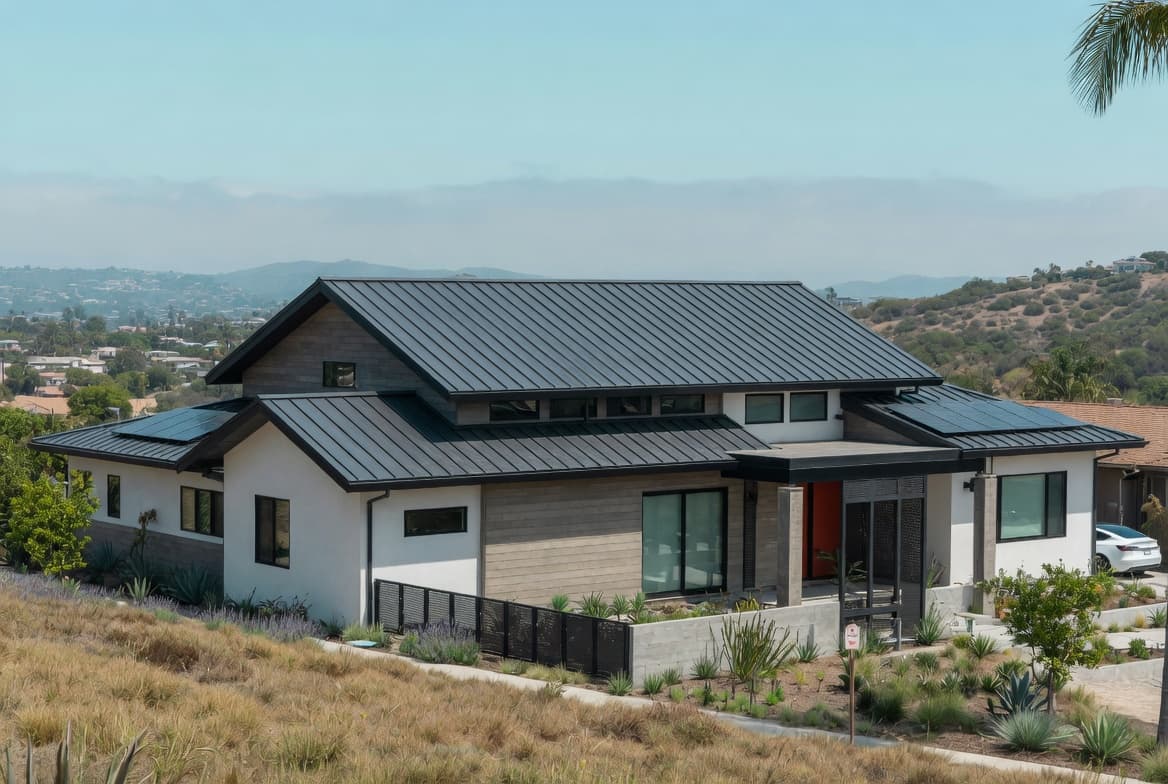
The Metal Roofing Options San Diego Homeowners Are Choosing
Metal roofing is not a single product; it’s a family of systems, each suited to different property types, budgets, and aesthetic goals. In San Diego, four systems dominate:
Standing seam metal roofing is the premium choice for modern homes. Its concealed fastener system eliminates exposed screws, one of the most common failure points in roofing, and creates a sleek, clean profile that suits contemporary architecture. It offers outstanding weather resistance and is effectively maintenance-free.
Metal shingle roofing appeals to homeowners who want the durability of metal without departing from a traditional look. These systems replicate the appearance of asphalt shingles, slate, or wood shake while delivering a significantly longer lifespan.
Stone-coated steel combines a heavy-gauge steel core with a granular stone surface, offering excellent impact resistance and a textured aesthetic that blends well with more traditional property styles.
Corrugated metal roofing remains the most cost-effective entry point, offering solid performance and durability for both residential and commercial applications where aesthetics are less of a priority.
The Key Reasons Behind the Switch
The growth of metal roofing in San Diego isn’t driven by aesthetics alone. It comes down to a set of practical, financial, and performance advantages that are increasingly difficult to ignore.
Longevity
A quality metal roof is typically warranted for 40 to 70 years, two to four times the lifespan of asphalt shingles under the same conditions. According to the Metal Roofing Alliance, metal roofs can last two to three times longer than other roofing materials. For a homeowner planning to stay in their property long-term, that longevity effectively eliminates the roof from their list of recurring major expenses.
Energy efficiency
Metal roofing reflects solar radiation rather than absorbing it, which can significantly reduce cooling costs in warm climates. In San Diego’s sunny conditions, the energy savings are measurable and meaningful. For UK homeowners, the equation is slightly different (heat gain is less of an issue) but properly insulated metal roofing systems can improve thermal performance year-round.
Low maintenance
Unlike asphalt, metal doesn’t crack, warp, or develop the kind of moss and algae growth that is particularly common on UK roofs. Once installed correctly, a metal roof requires very little ongoing attention beyond periodic inspections.
Weather and fire resistance
Metal roofing systems are rated for high wind speeds, making them suitable for exposed coastal positions. They are non-combustible, which is a critical advantage in wildfire-prone areas. Corrosion-resistant coatings, particularly important in salt-air environments, the metal holds up over decades without degrading.
Return on investment and home value
The higher upfront cost of metal roofing is frequently offset by its longevity, reduced maintenance, and energy savings. In the US property market, metal roofs have also been shown to add measurable resale value; buyers recognise a roof they won’t have to replace for decades as a genuine asset.
What the UK Can Learn from San Diego’s Metal Roofing Shift
The climates are different, but the underlying challenges are more similar than they first appear.
Coastal regions of the UK (Cornwall, Wales, the Scottish Highlands, the North East) face persistent salt air exposure, high wind speeds, and driving rain. These are precisely the conditions that shorten the lifespan of standard roofing materials and make low-maintenance, high-durability systems attractive. The logic that’s pushing San Diego homeowners toward metal is entirely transferable.
The UK also has an ageing housing stock problem. Millions of homes are approaching the point where their roofs need replacement, and with material and labour costs rising, the economics of re-roofing every 20 years are becoming increasingly unattractive. A longer-life roofing system that pushes that cost out by half a century changes the financial picture considerably.
There’s also an energy efficiency dimension that aligns closely with UK policy priorities. The country has committed to ambitious net zero targets, and the built environment plays a significant role in meeting them. Metal roofing, when combined with appropriate insulation, can contribute to improved thermal performance, a relevant consideration as the UK continues to push for higher energy standards in both new builds and retrofits.
Metal roofing already has a well-established presence in UK commercial and industrial construction. The residential market is where adoption has lagged, largely due to three persistent misconceptions:
- Noise: Modern metal roofing systems, installed with proper underlayment and insulation, are no noisier than any other roofing material during rain.
- Cost: The upfront investment is higher than asphalt or standard tiles, but the total cost of ownership over a 50-year period is typically lower once you factor in replacement cycles, maintenance, and energy savings.
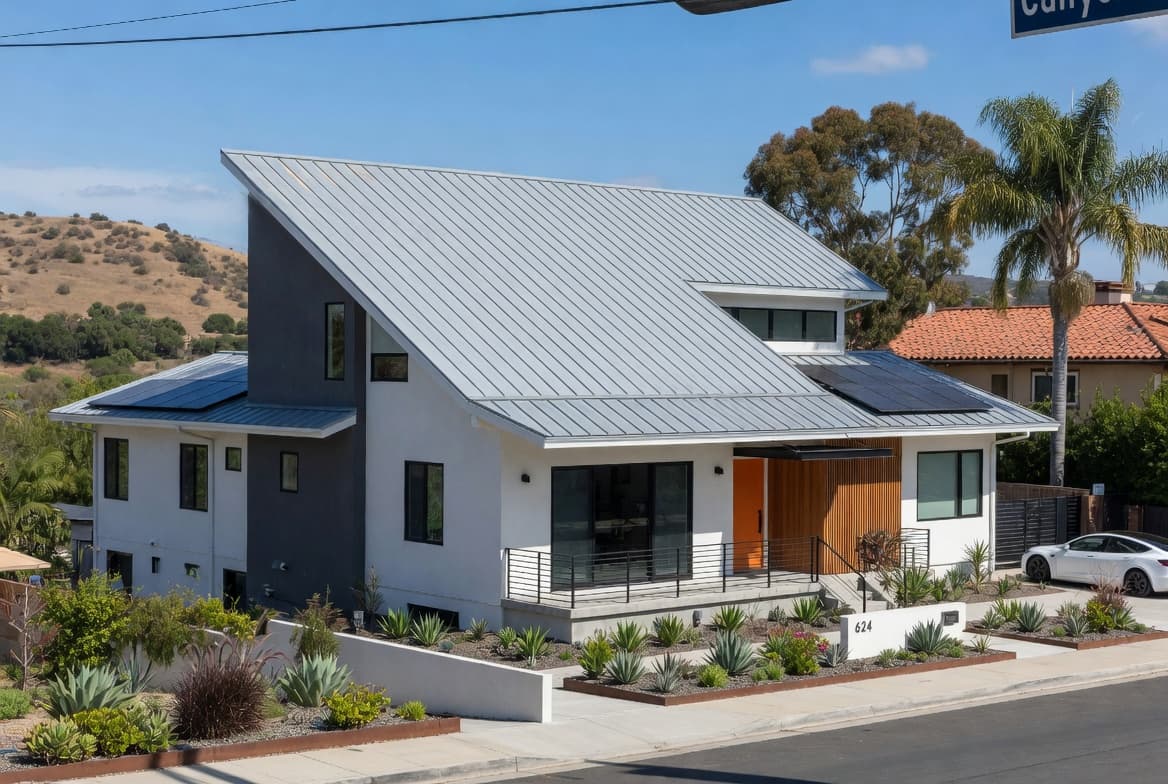
- Aesthetics: The corrugated barn-roof image is outdated. Standing seam and metal shingle systems look striking on both modern and traditional UK homes, and the range of profiles and colours available has expanded considerably.
Is Metal Roofing Right for Your Home?
Metal roofing isn’t the right solution for every property or every budget, but it deserves serious consideration in more situations than many homeowners realise. A few questions worth asking:
- How long do you plan to stay in the property? The longer the horizon, the more compelling the economics.
- Is your property in a high-exposure location (coastal, elevated, or frequently storm-affected)?
- Are you factoring in the full lifecycle cost of your roof, not just the installation price?
- Are energy efficiency improvements a priority for your home?
If the answers point toward metal, the next critical step is choosing a contractor with genuine metal roofing expertise. This is not a product that rewards generalised roofing experience; installation precision matters enormously, and the wrong approach can undermine the very longevity you’re investing in.
Look for a contractor who specialises in metal systems rather than offering them as one option among many, who can demonstrate local knowledge of the climate conditions your roof will face, and who works with proven, high-performance materials backed by manufacturer warranties.
Conclusion
The shift toward metal roofing in San Diego isn’t a design trend. It’s a pragmatic response to a demanding environment, rising costs, and the realisation that the traditional replacement cycle for standard roofing materials simply isn’t sustainable.
UK homeowners face their own version of those pressures: ageing roofs, coastal exposure, energy targets, and long-term cost concerns. The lessons from San Diego translate more directly than the distance between the two places might suggest.
For San Diego homeowners considering the switch, SW Metal Roofing specialises exclusively in metal roofing systems (standing seam, metal shingles, stone-coated steel, and corrugated) designed for San Diego County’s specific coastal conditions. Their team brings the local climate knowledge and installation precision that a long-term investment like this demands.
Whether you’re in San Diego or Swansea, the roof above your head is worth thinking about differently.