When navigating through construction sites, the vibrant and distinct colors of construction signs play a crucial role in ensuring safety and efficiency. Each color is carefully chosen to convey specific messages and warnings, promoting awareness and compliance amongst workers and the public. From the cautionary yellow triangles we recognize from afar to the regulation-red signs that signal danger, understanding the meaning behind these colors is essential. This guide delves into the purpose of construction sign colors and their significant impact on maintaining order within bustling construction environments. Discover how color-coding enhances communication and safeguards everyone involved.
Brief Overview
Navigating construction sites effectively hinges on understanding the meaning behind construction sign colors, as each color is meticulously selected to convey specific messages and warnings. Orange dominates work zones, signaling caution, while red highlights immediate danger and commands stops. Yellow enhances visibility and signifies caution, ensuring safety in dynamic environments. By adhering to color-coded safety measures, these signs promote efficiency and awareness among workers and the public, facilitating safer navigation through construction zones. Equip yourself with this knowledge to support safety and compliance with industry standards in construction operations.
Key Highlights
- Colors in construction signs ensure safety, with orange signaling caution and red indicating immediate danger.
- Orange is the standard for work zones, leveraging high visibility to avert traffic accidents.
- Red signs mandate immediate stops, crucial for highlighting critical safety instructions.
- Yellow enhances visibility and caution, playing a core role in dynamic environments.
- Effective signage blends color, reflective materials, and strategic placement for clear communication.
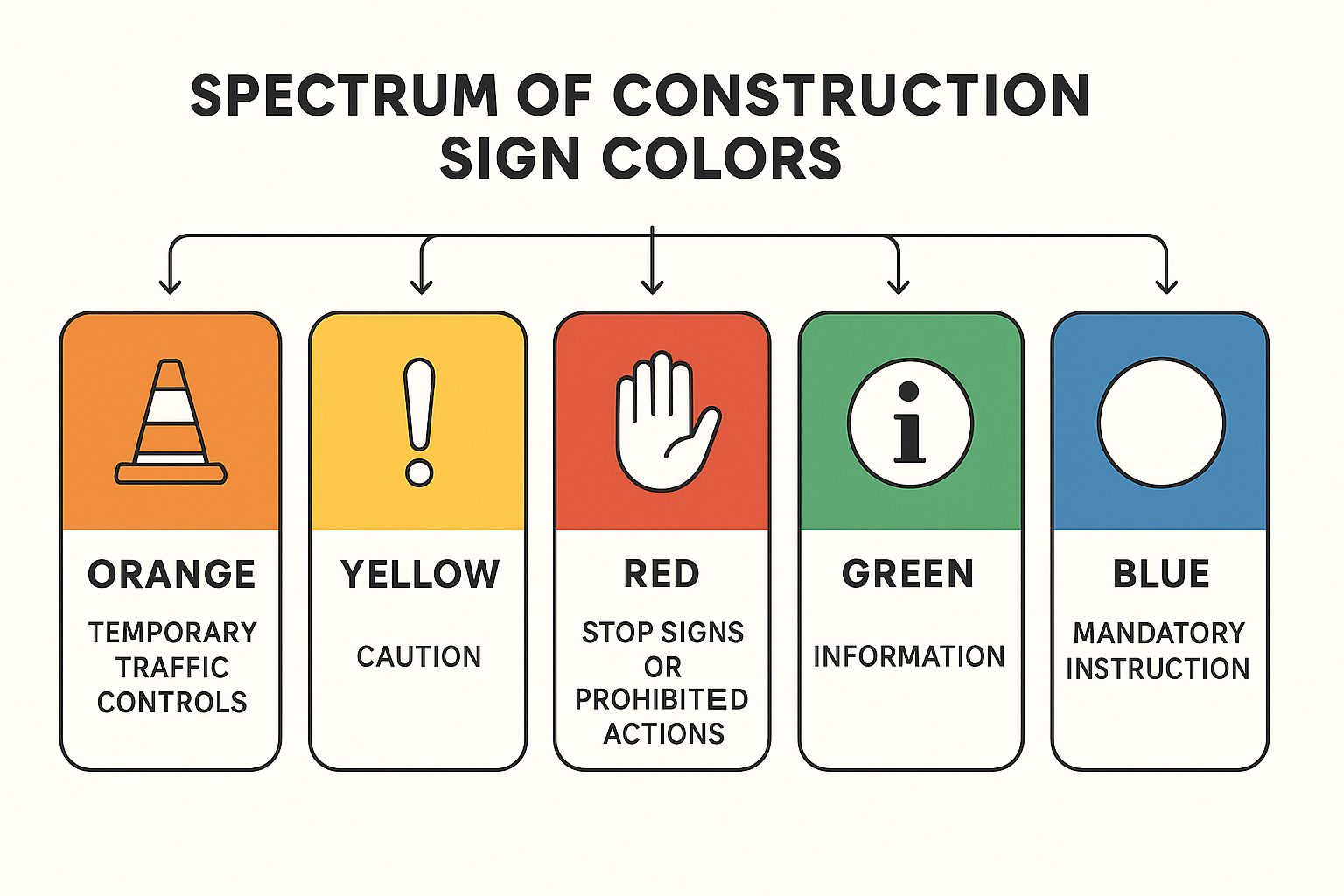
Understanding the Spectrum of Construction Sign Colors
Construction signs play a critical role in keeping road users and workers safe. To ensure clarity, each color used in construction signage conveys a specific meaning, enhancing traffic flow and preventing accidents. Orange is a predominant color in work zone areas, symbolizing caution and alerting drivers to slow down. Red is another significant shade, demanding immediate attention to potential dangers or stops in road conditions. Understanding these color specifications is crucial for both construction professionals and road users to maintain safety and efficiency in construction zones. Dive into why these colors are standard across highway sites.
Why Orange is the Standard for Work Zones
Orange has become synonymous with work zones due to its high visibility and ability to command attention. When drivers approach a construction zone, the vibrant orange hue immediately signals the presence of potential hazards. The use of orange-colored indicators is more than just a tradition; it stems from rigorous safety standards that consider human perception and reaction times. This color effectively stands out against typical road scenery, reducing the likelihood of traffic accidents. Construction zone signs are typically orange to ensure they catch the eye even in peripheral vision, a crucial factor in road conditions where drivers need to make quick decisions. In the UK, these safety signs often consist of reflective aluminum materials to enhance their visibility during both day and night. This dual functionality ensures signs are seen in any lighting condition, maintaining site safety and efficiency. When used in work zones, orange serves as a visual cue that drivers should slow down and prepare for potential changes in road conditions or traffic patterns. By prioritizing this color in construction signage, road authorities communicate effectively with drivers, reinforcing their expectations and actions. Orange’s effectiveness in work zones is not just limited to conveying urgency. It’s also ideal for temporary signs, such as those used during roadworks. These signs are portable and easy to manage, allowing swift deployment as construction projects progress. The unmistakable orange alerts drivers to dynamic road environments where conditions may shift rapidly, underlining its role in road safety. With its ability to quickly grab attention and boost visibility, orange remains the unwavering color choice for construction signs.
Distinguishing Red: Indicating Stop and Immediate Danger
While orange dominates in work zones, red is equally vital for its association with immediate danger and stop commands. When you come across a red sign on the highway, it indicates a requirement to halt or pay attention to a significant change in the roadway. Red colors are crucial in alerting traffic to critical safety instructions that cannot be ignored, such as a site with an open trench or a non-negotiable stop point. They utilize symbols and straightforward messages to minimize any ambiguity in conveying urgent information. Red construction signage is a critical component in ensuring the safety of both drivers and construction workers. These are often employed at the start of a road closure or to signal a complete shift in traffic conditions. Such signs are made with reflective aluminum, giving them excellent night visibility and ensuring that road users are always aware of the dangers lying ahead, no matter the time. The psychological impact of red, recognized universally as a warning color, offers immediate stimulus to stop or proceed with utmost caution, reducing the chance of traffic incidents where timing is critical. Incorporating red in construction signs is part of a broader strategy to provide a cohesive, unified message across varying work zones. This consistency aids not only in safety enforcement but also facilitates quick comprehension among drivers who rely on color-coded signals to adapt to changing road conditions. Red is not just a shade to convey urgency, but a crucial tool in communicating non-negotiable actions in dynamic environments. As an essential element in the color specifications of construction signage, red plays a vital role in maintaining a safe and controlled construction site.
The Role of Yellow in Construction Safety
Yellow plays a vital role in construction safety, signifying caution and enhancing visibility on project sites. This color is universally recognized for its capacity to command attention and symbolizes awareness of potential hazards, particularly in traffic settings. The combination of these attributes makes yellow a standard in warning signs and safety messages across construction zones. From highways to road crossings, yellow’s significance extends beyond mere aesthetics to enforce vital safety protocols. Dive into how yellow signs ensure high visibility and safety, boosting awareness on sites bustling with construction activities.
Caution and High Visibility: The Meaning of Yellow Signs
Yellow signs are a cornerstone in the repertoire of construction safety, designed to signify caution in environments bustling with activity. These signs are often utilized in areas necessitating immediate awareness, such as on highway projects or bustling construction sites. The primary purpose behind a yellow background is to draw attention, ensuring even amongst a myriad of distractions, the symbol of caution is apparent. For instance, signs with yellow and black text are prevalent across roads, signaling drivers and personnel of changes or potential hazards. This use of black text against a bright yellow enhances legibility, allowing quick digestion of the critical message portrayed by these signs. Often made from reflective aluminum, yellow signs maintain their high visibility in varied lighting conditions. Whether it’s dawn or the middle of the night, these signs use reflective surfaces to shine brightly when hit by light, such as car headlights, ensuring continuous safety across different scenarios. This reflective capability underscores their effectiveness in traffic management, particularly in places with fluctuating conditions like construction and highway crossings. By providing clear, unambiguous signals, these signs equip drivers and pedestrians with crucial information, bolstering road and site safety significantly. The use of yellow in safety signs extends to symbols and message signs that are strategically placed to mitigate risk. From indicating pedestrian crossings to alerting about roadway alterations, these signs communicate a warning efficiently. Furthermore, the association of yellow with caution helps manage the flow of traffic, curbing the probability of accidents and ensuring a seamless operation of a construction site. In an ever-evolving environment marked by complex interactions and safety demands, the role of yellow within construction signs cannot be understated, proving pivotal for keeping attention focused and maintaining a safe environment for all parties involved.
| Purpose of Yellow | Sign Design Features | Applications | Impact on Safety |
| Enhance Visibility | Bright, Reflective Materials | Warning Signs | Reduces Accidents |
| Signal Caution | Contrasting Colors | Barricades | Improves Awareness |
| Alert Workers and Public | Clear Symbolism | Safety Vests | Promotes Quick Response |
| Compliance with Standards | Universal Signage Symbols | Machinery Indicators | Ensures Regulations Met |
This table underscores the critical function of yellow in construction site safety, spotlighting its role in enhancing visibility and caution awareness.
Exploring the Variety of Construction Signage
Construction signs employ a spectrum of colors to communicate vital information, facilitating safety and efficiency on worksites. Each hue serves a specific purpose, often dictated by legal standards to ensure uniformity. Such signs are essential for managing traffic flow and providing safety instructions, especially in dynamic environments. From vibrant warning signs in orange and yellow to commanding red stop indicators, the color system aligns with human perception to convey clear messages. These signs, made from materials like reflective aluminum, are crucial for maintaining safety on roads and highways, compelling all to act accordingly upon sight.
The Importance of Diverse Colors and Their Meanings
The color spectrum used in construction signage isn’t random, it carries significant importance in regulating site and road safety. Each shade, from cautionary orange-colored indicators to authoritative red, plays a role in conveying specific messages to drivers and workers alike. The strategic use of diverse colors aids in preventing mishaps by triggering immediate recognition and appropriate responses. Orange signifies warning and caution, crucial for alerting drivers to slow down and stay vigilant of upcoming road work or potential safety hazards, a key component for keeping traffic flowing smoothly in high-stakes environments. On the other hand, red commands immediate action, often signaling stops or emergency exits that demand a prompt halt to prevent dangerous situations. These critical messages are often printed on reflective aluminum signs designed to maintain visibility both day and night. Such signs are especially vital for night-time operations when the risk of accidents due to poor visibility rises. The color red’s psychological impact, consistently associated with danger or prohibitions, ensures it’s never ignored. Yellow, too, is a versatile color in construction safety, typically used to denote caution, thus guiding drivers through road changes or near pedestrian zones with minimal disruption. By integrating color with understandable symbols and clear black text, often the staple for safety signs, construction signage ensures non-negotiable safety compliance. Keywords such as black text and symbols further define these colors’ meanings, embedding vital information into visual cues that demand attention both on highways and within bustling cities. This systematic use of color ensures that anyone approaching a worksite is adequately informed and prepared to adapt their behavior, curbing the chances of traffic accidents and boosting safety for both workers and the general public. The color specifications in construction signage aren’t merely about marking borders but are crucial for a practical, reliable transmission of safety messages that protect lives and facilitate smooth operation in often chaotic environments.
| Color | Meaning | Material | Effectiveness Factors | Symbol Examples |
| Orange | Warning | Reflective Aluminum | High durability, universally recognized color for attention, optimal placement near hazards | Construction Worker, Detour Arrows |
| Red | Stop | Reflective Aluminum | Highly visible, especially in low-light conditions, clear and direct message | Stop Sign, No Entry |
| Yellow | Caution | Durable Plastic or Aluminum | Visible from a distance, symbols that enhance message understanding, weather-resistant | Slippery Surface, Caution Tape |
| White | Informational/Regulatory | Reflective Aluminum | Clear communication of rules or information, high contrast with text/graphics | Speed Limit, Guide Signs |
This table encapsulates the essential elements of construction signage, demonstrating how color, material choice, message clarity, and strategic placement converge to enhance safety and efficiency on worksites.
What Makes a Construction Sign Effective?
Effectiveness in construction signs stems from more than just bright colors; it involves a blend of material, placement, and message clarity, all governed by strict safety standards. Reflective aluminum is a favored material due to its durability and high visibility, vital for signs that need to withstand various weather conditions and remain functional despite continuous exposure to outdoor elements. The reflective nature ensures that, regardless of daylight or night-time, the signs remain prominently visible when illuminated by vehicle headlights or street lights, providing consistent safety signals. Placement is another crucial factor in a sign’s effectiveness. Strategically positioned message signs at key decision points ensure drivers are informed well ahead of potential safety hazards or road changes. This optimal positioning helps in guiding traffic smoothly and reducing risks associated with sudden decision-making. Moreover, the signs often feature black text against vivid backgrounds, to enhance readability, ensuring information is processed quickly and accurately. This combination allows pedestrians and drivers alike to decipher crucial messages at a moment’s notice. Beyond these aspects, the wording and symbolism used are tailored for maximum impact and comprehension. Signs utilize universally recognized symbols alongside text to ensure clear communication across diverse populations, ensuring that even language barriers don’t impede safety efforts. Symbols like arrows indicating direction changes and figures for pedestrian crossing elevate a sign’s clarity and efficacy, leaving no room for ambiguity. By following these guidelines, construction signage not only meets legal requirements but also delivers essential safety messages efficiently, encouraging responsible behavior in traffic and construction settings. The systematic approach of using color, reflective materials, and strategic placement all contribute to making construction signs indispensable tools for maintaining public safety and promoting orderly conduct in intricate work zones.Continuing the discussion on what contributes to an effective construction sign, several key elements stand out:
- Visibility: Utilizing bright colors and reflective materials ensures that signs remain visible both day and night, capturing the attention of drivers and pedestrians.
- Clear Messaging: The use of simple language and universally recognized symbols allows for quick comprehension, reducing the likelihood of confusion and accidents.
- Strategic Placement: Positioning signs at appropriate distances before road work areas grants drivers sufficient time to decelerate or change lanes safely.
- Durability: Constructing signs with weather-resistant materials guarantees they withstand harsh conditions and maintain their effectiveness over time.
- Consistent Updates: Regularly updating information on signs ensures that the most current instructions and warnings are relayed to road users, adapting to the changing environment of a construction site.These elements collectively contribute to a construction sign’s impact, promoting safety and efficient traffic flow around construction zones.
Conclusion: The Impact of Color on Construction Safety
The use of color in construction signs profoundly impacts safety and efficiency on our roads and highways. When drivers encounter these warning signs, the vibrant hues prompt rapid recognition, an essential step in mitigating work zone incidents. With its commanding presence, the ubiquitous orange color serves as a universal cue for caution, pivotal in maintaining vigilance as traffic approaches construction sites. This shade’s compatibility with human perception ensures that work zones are easily identifiable, streamlining traffic and minimizing unexpected hazards.
Meanwhile, the color red plays an equally crucial role, explicitly denoting stops or immediate danger zones. Red’s psychological impact as a warning color prompts swift reactions necessary for effective control of road environments. By incorporating color specifications like red and orange, these markers provide actionable cues, further supported by durable materials like reflective aluminum to ensure visibility. The strategic application of colors in construction signs aligns with stringent safety regulations, guiding not just vehicle operators but also workers within dynamic work zones.
Distributed with thoughtful precision, these signs form a comprehensive system encompassing signs for all potential scenarios encountered on a roadway. This safety-driven design reduces confusion and aligns with structured traffic patterns, ultimately lowering accident risk. Continued awareness and adherence to these color specifications not only support safety efforts but also promote a culture of responsibility among all who use the roads. Encourage others to familiarize themselves with these signs, a pivotal step in reinforcing our collective commitment to worksite safety and efficient traffic management.
Understanding the meaning behind construction sign colors is crucial for ensuring safety and efficiency within construction sites. These signs serve as vital tools to alert, inform, and guide both workers and the public, thus minimizing risks. Familiarizing yourself with standard color codes, from red warnings to orange constructions alerts, empowers you to navigate these sites safely. For more detailed insights, download our comprehensive guide on construction signage and enhance your knowledge. Equip yourself with this awareness to actively contribute to safer construction environments and further the seamless progress of construction projects.Rich content results: FAQs
Why are construction sign colors important?
Construction sign colors are vital because they convey specific messages and warnings, promoting awareness and compliance among workers and the public. These colors help ensure safety and efficiency by alerting people to potential hazards and instructions.
What does the color orange signify in construction zones?
Orange is the standard color for work zones, signaling caution. It leverages high visibility to avert traffic accidents and alerts drivers to slow down when approaching construction areas.
What is the purpose of red signs in construction areas?
Red signs indicate immediate danger and are critical for highlighting safety instructions that require immediate attention. They mandate immediate stops and signal significant changes in road conditions, such as a site closure or emergency exits.
How does the color yellow contribute to construction safety?
Yellow enhances visibility and signifies caution, playing a core role in dynamic environments. It commands attention and warns of potential hazards, helping manage traffic flow and preventing accidents, especially in complex construction zones.
What materials are commonly used in construction signage and why?
Reflective aluminum is commonly used for construction signs due to its durability and high visibility in varying lighting conditions. This material ensures that signs remain clearly visible both day and night, enhancing safety for road users and construction workers.