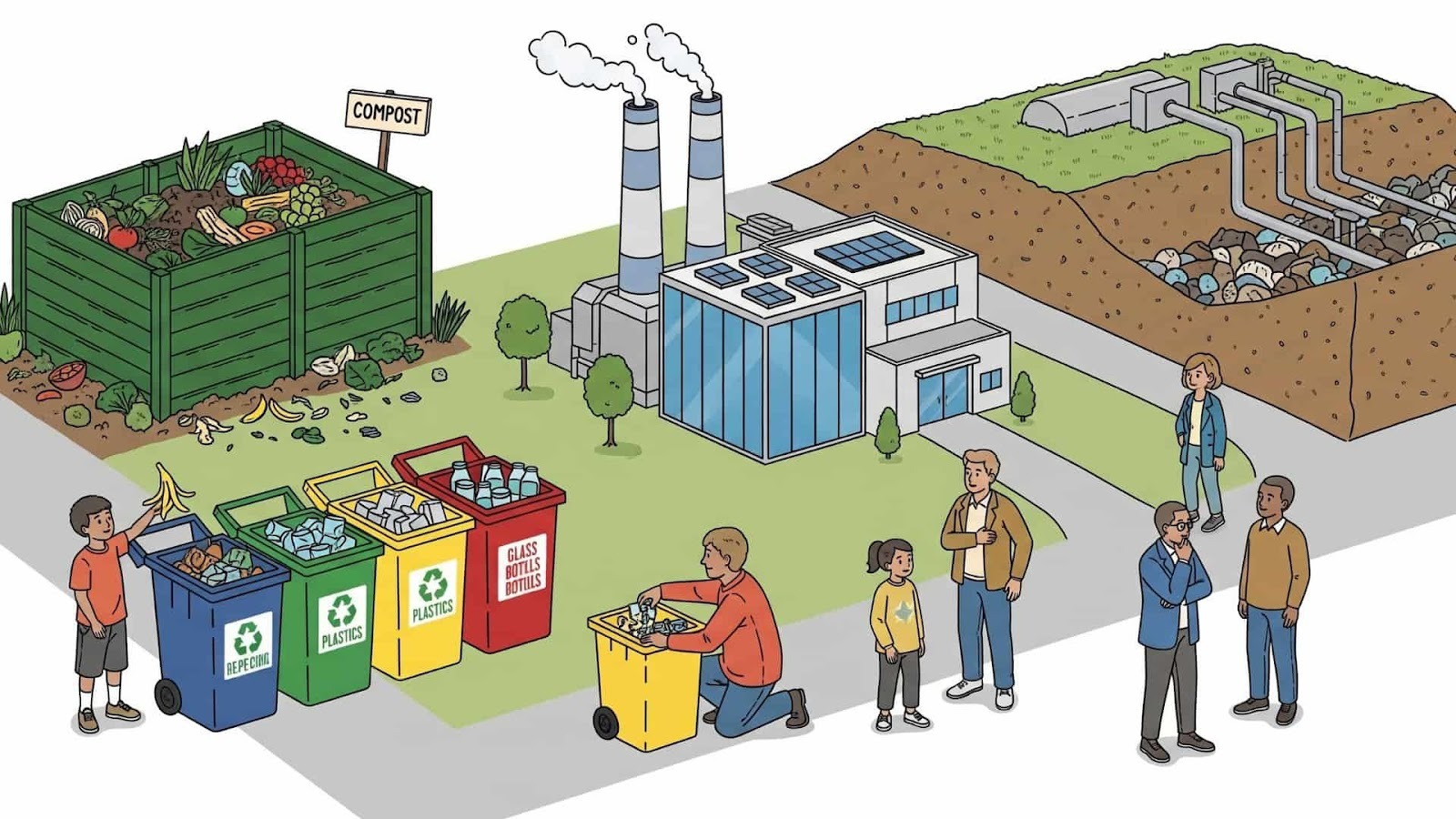
Managing waste effectively is essential for any Australian business that aims to operate efficiently, reduce operational risks, and present a responsible image to clients and industry partners.
And proper waste management practices can be tough to get right because the waste management process requires skills and expertise.
Strong waste management practices support smoother workflows, improve resource use, and keep facilities organised, whether they’re handling food waste, organic waste, hazardous waste, or just general solid waste management.
This guide explores practical strategies that modern businesses can adopt to improve the way they handle waste from day-to-day operations through to long-term planning.
What Is Proper Waste Management?
Proper waste management refers to a structured and proactive approach to handling all waste materials generated during business operations, including essential tasks like grease trap cleaning.
It involves identifying waste streams, implementing collection and storage processes, using appropriate disposal or recycling solutions, and continually reviewing practices to achieve better outcomes.
When done well, it supports cleaner worksites, reduced downtime, and more cost-effective operations.
The 10 Strategies for Proper Waste Management Practices
Proper waste management practices make waste collection, waste treatment, and the general waste management process easier, safer, and more environmentally friendly for all.
1. Understand Your Waste Streams and Waste Materials
Every industry generates different types of waste, so the first step is to identify exactly what your site produces.
Understanding the volume and nature of each stream helps you match them with the right recycling or disposal services.
This creates a more organised workflow and reduces unnecessary costs linked to mixed or contaminated waste.
2. Prioritise Recycling Opportunities and Resource Recovery
Recycling remains one of the most effective ways to reduce the volume of waste going to landfill.
Many materials produced in workplaces, such as paper, plastics, metals, cardboard, pallets, and certain industrial by-products, can be recovered.
By mapping opportunities for recycling, businesses create cleaner work zones and make waste disposal more efficient.
3. Improve Onsite Storage Practices
Good waste management begins long before collection day.
Using the right labelled bins, covered storage areas, and clearly designated zones ensures waste stays contained and easy to sort.
This reduces contamination and helps staff handle materials safely and consistently.
4. Train Staff in Correct General Waste Disposal Processes
Staff play a major role in the success of any waste management program as they are the ones creating goods in your business. .
It’s very important that staff are trained on which bins to use and how to manage their work effectively. This is true for the person printing paper to the mechanics oiling your components.
Clear and simple instructions also help new or temporary workers follow the same standards.
5. Engage a Reliable Waste and Recycling Management Partner
Working with an experienced waste management provider can streamline your entire process.
A reliable partner offers dependable collections, access to specialist recycling services, and guidance on improving internal systems.
This support ensures that waste is managed efficiently and without disruption to your operations.
6. Adopt Scheduled Collections
Regular and predictable collection schedules prevent waste buildup and keep worksites organised, so you should so what you can to partner with a reliable waste service.
This is all the more true for any company who manufactures goods and services and find their workplace filled with trash that they no longer need.
This supports cleaner, safer, and more productive environments. It also quite literary declutters the workplace.
7. Use Technology to Track Waste Data
Digital tracking tools help businesses understand how much waste they generate and where inefficiencies may be occurring.
Most tracking services are best done through a waste audit. Be sure to find a company that offers these.
Data insights allow you to refine processes, adjust collection frequency, and identify opportunities for reducing waste at the source.
8. Reduce Waste Through Process Improvements
It goes without saying that there are many benefit from reviewing how materials are ordered, handled, and consumed, just like with any other business practice
Some small changes in procurement or packaging choices can greatly cut waste volume and often save your some money in the process.
This leads to cleaner storage spaces and more efficient waste handling processes that you will notice..
9. Ensure Equipment Is Fit for Purpose
Using appropriate skip bins and office binsare the best first start to a better workplace of waste management.
We recommend contacting a waste management team so that they can optimise your waste streams by running a waste audit.
Fit for purpose equipment reduces contamination and improves the speed at which staff handle waste. It can also lead to cost savings in the long run.
10. Continually Review and Improve Practices
Waste management is not a set-and-forget task.
Regular reviews of site processes, collection schedules, and recycling outcomes ensure your business gets the most value from its system.
As operations change, adjustments keep your waste strategy aligned with your needs.
What Does Good Waste Management Look Like?
Good waste management is fundamentally about reducing waste. This means not throwing everything into a landfill as if it is all the same.
Good practices, like recycling, seeks to give new purpose to what otherwise would be called waste.
Such practices are not just good for the environment, but they also represent how a proper waste management company would be resourceful.
Additionally, efficiently and environmental protection must take centre stage. A good company will save your business money while it also takes care of your trash.
Closing Thoughts
Proper waste management is one of those things that are best run when they are doing so in the background. You don’t want a team who creates problems so that they have things to do.
Rather, proper waste management is about reducing problems before they arrive. This aligns with the waste management hierarchy, which looks to minimise waste before it forms through practices like manufacturing with recycling in mind.