If you’ve ever considered refreshing wooden surfaces in your home, you might wonder if emulsion paint can be applied directly onto wood. As a versatile and cost-effective choice for walls and ceilings, emulsion offers an appealing option for adding a fresh coat to your décor. This guide explores the nuances of using emulsion on wood, examining its practicality, potential benefits, and preparation tips to achieve a lasting finish. Whether tackling a DIY project or planning a professional job, understanding when and how to use emulsion paint on wood can open up creative possibilities for your home design.
Brief Overview
Emulsion paint, typically used for walls and ceilings, offers a versatile and eco-friendly option for painting wooden surfaces. Although not originally intended for wood, its quick-drying, low-odour properties make it a convenient choice for interior projects when paired with the right primer. To achieve a durable finish, proper preparation—including sanding and priming—is essential, followed by multiple thin coats of paint. Sealing the painted surface with a suitable varnish enhances longevity and appearance. Choosing the correct sealant is crucial to maintaining the desired aesthetic while protecting against environmental wear. This approach enables creative flexibility in transforming home interiors.
Key Highlights
- Emulsion paint is versatile and water-based, ideal for indoor use with a quick-dry finish.
- Types of emulsion include acrylic and vinyl, each offering distinct benefits for specific applications.
- Emulsion paint can be used on wood with the right preparation, offering versatility and cost-effectiveness.
- Proper priming and sealing are essential for using emulsion on wood, ensuring durability and a lasting finish.
- Polyurethane and acrylic varnishes are recommended sealants to enhance emulsion’s durability on wood.
Understanding Emulsion Paint
Emulsion paint is a popular choice for decorators and DIY enthusiasts alike. It combines versatility with ease of use, making it a practical option for various surface applications. This type of paint is water-based, providing a quick-dry finish while being low on odour, which is particularly beneficial for indoor projects. Whether you’re considering a matt or gloss finish, emulsion delivers a smooth finish that’s easy to maintain. In this section, we’ll explore what emulsion paint is and the different types available, helping you grasp its potential for renovation projects.
What Is Emulsion Paint?
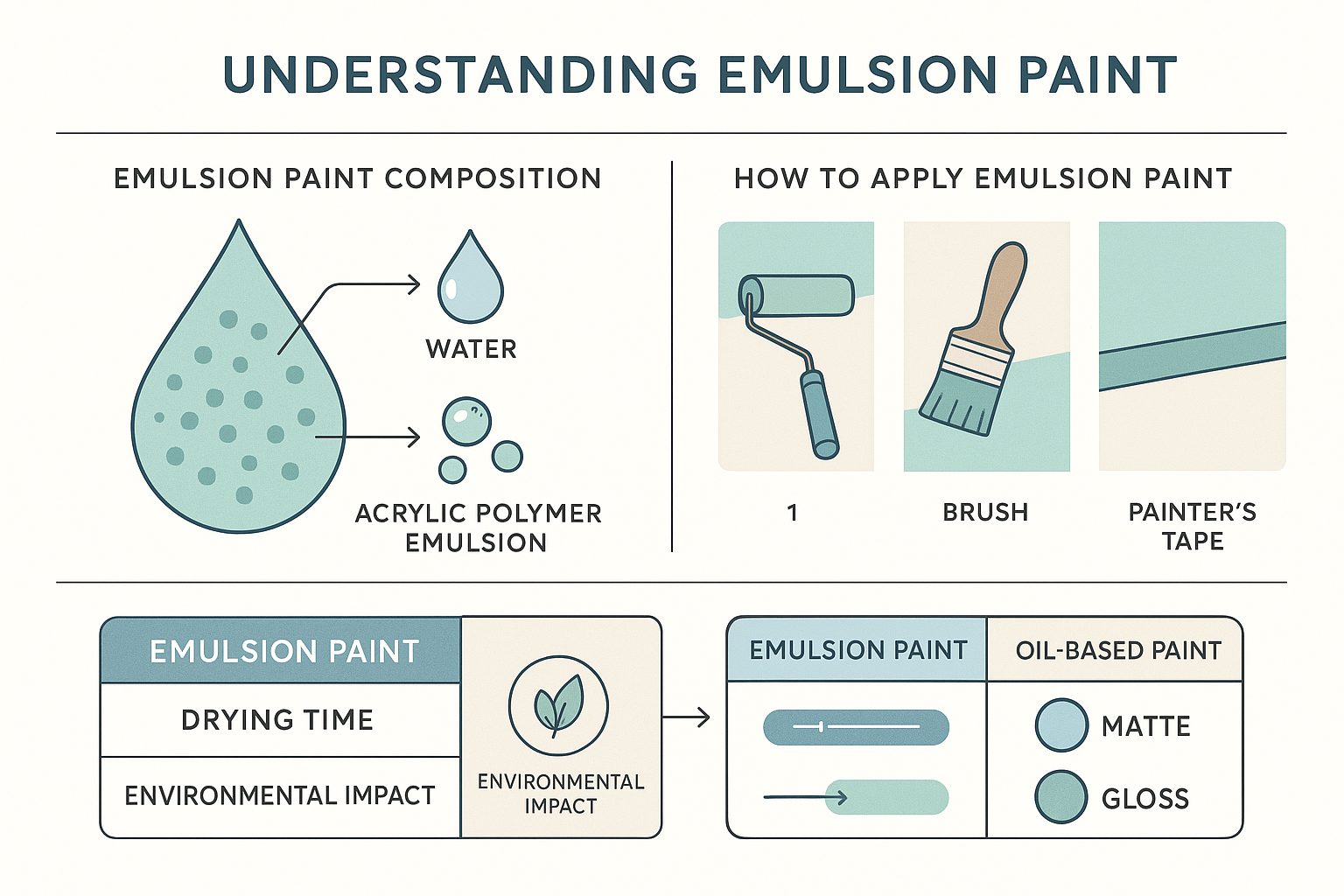
Emulsion paint is a water-based paint known for its versatility and ease of application. It’s composed of solvents, pigments, and binders, which work together to adhere to surfaces and deliver vibrant colours. The water content in this paint allows it to dry quickly, making it a favourite option for indoor painting projects where convenience is key. Emulsion paint comes in various finishes, like matt and gloss, each serving distinct aesthetic and functional purposes. A matt finish absorbs light, offering a smooth, contemporary look without shine, whereas a gloss finish reflects light, providing a brighter, more vibrant appearance.
People looking to redecorate often choose emulsion paint due to its low odour and fast-drying properties. It’s particularly advantageous when painting large areas, like walls and ceilings, as it promotes an even application with minimal effort. Understanding the basic composition and properties of emulsion paint can make it easier to decide whether it’s suitable for different surfaces, including wood. While traditional paints may require extensive preparation and drying time, emulsion paint simplifies this process without compromising on quality.
Moreover, emulsion paint is generally more eco-friendly than oil-based alternatives, reducing volatile organic compounds (VOCs) emissions in the air. This aspect makes it ideal for homes seeking sustainable decoration options. It’s also more cost-effective in the long run, given its durability and ease of maintenance. When considering paint for wood surfaces, assessing the benefits of using emulsion paint can help guide your decorating decisions. From walls to wooden furniture, exploring its applications ensures a tailored finish that enhances your living space.
Types of Emulsion Paint Available
The market offers a wide array of emulsion paints that cater to different needs and preferences. One of the most common distinctions you’ll encounter is between acrylic and vinyl emulsion paints. Acrylic emulsion paint contains a higher proportion of acrylic resin, which enhances its durability and water resistance, making it suitable for high traffic areas and surfaces that require frequent cleaning. On the other hand, vinyl emulsion paint leans towards affordability and flexibility, often chosen for its ease of application on interior walls and ceilings.
Specialty types, such as silk and satin finishes, provide additional sheen and durability. These options are perfect for areas that demand a touch of elegance or require a bit more resilience against wear and tear. Silk finishes, for instance, offer a subtle sheen that brings out the depth of colour without excessive gloss. Satin, meanwhile, finds its strength in its wipeable nature, ideal for homes with children or high-use areas like kitchens and bathrooms.
Another significant category is matt emulsion, which is renowned for its velvety texture and ability to conceal imperfections on walls, giving a clean, smooth surface that appeals to modern aesthetics. It’s particularly effective in living spaces where natural and artificial light variations can impact the ambiance. While matt doesn’t reflect light like gloss, its subtlety often enhances the colours’ richness, making it a preferred choice for many decorators.
Understanding these types allows you to make informed decisions when selecting emulsion paint for your projects. Whether aiming for a bold statement or understated elegance, the right emulsion type can transform the appearance and feel of any space. Each type of emulsion paint has unique characteristics that can significantly influence your project’s final outcome. By taking these differences into account, you’re better equipped to create a space that truly reflects your style and functionality needs.
Can You Paint Wood with Emulsion?
Yes, you can use emulsion paint on wood, but there are important considerations to ensure a successful outcome. Emulsion paint isn’t just for walls; it provides a pleasing finish on wooden surfaces too. However, it’s crucial to understand the peculiarities of painting wood with emulsion. Although not originally formulated as wood paint, emulsion can effectively work on interior wooden surfaces when applied correctly. We’ll delve into why emulsion paint is beneficial for wood, what to consider before embarking on this task, and address any concerns surrounding its use on wood.
Why Use Emulsion Paint on Wooden Surfaces?
Using emulsion paint on wood surfaces can offer several advantages owing to its unique characteristics. One of the primary benefits is its versatility. While emulsion paint just isn’t formulated specifically for wood, it can adhere well when paired with the right primer. This adaptability opens up possibilities for redecorating wood items in tones and finishes that match the rest of your décor. For instance, if you’re looking to give a fresh look to your interior wood furniture or trim, emulsion paint provides a contemporary finish with its matte or silk appearances, which absorb and reflect light in unique ways, respectively.
The ease of application is another attractive feature. Emulsion spreads smoothly over previously finished wood, often requiring fewer coats than traditional wood paint. Thanks to its water-based formula, it’s forgiving to work with and easy to clean up, requiring only soap and water for post-painting clean-up. This user-friendly approach makes it ideal for DIY projects or quick makeovers. Moreover, because emulsion dries faster, it reduces the downtime associated with waiting for paint to cure, thus allowing you to use the painted wood much sooner.
From an environmental standpoint, emulsion generates fewer volatile organic compounds (VOCs) compared to oil-based paints. As a result, it creates a healthier indoor environment with minimal odour, which is particularly advantageous when painting wood surfaces in living spaces. Emulsion also offers a cost-effective solution when compared to specialized wood paints, providing a budget-friendly method to enhance home interiors. Finally, with the right combination of primer and topcoat, emulsion can achieve a durable, long-lasting finish that meets both functional and aesthetic demands. This makes it a preferred choice for many looking to balance performance with style.
Key Considerations When Painting Emulsion on Wood
When opting to paint wood with emulsion, there are several pivotal considerations to ensure the finish is both aesthetically pleasing and durable. The first step is to assess the wood surface you’re working with. Wood varies in texture and condition, and understanding these aspects can guide your preparation process. New wood generally requires less preparation compared to old, previously finished wood, which might need sanding to smooth out imperfections and enhance the primer’s adherence.
Choosing the right primer is a fundamental step. A high-quality primer will seal the wood surface and prevent tannins from bleeding through and discolouring the emulsion paint. It also provides a grip that ensures the emulsion adheres more effectively, reducing the chances of peeling. Primer selection should align with the desired finish, whether you’re aiming for a matte appearance or a more subtle sheen. After priming, be sure to apply multiple thin coats of emulsion. Thin layers ensure better adhesion and smoother coverage without brush marks. Importantly, each coat should be fully dry before applying the next, enhancing longevity and consistency in texture.
Protection is another critical consideration. Since emulsion paint isn’t designed to be as durable as traditional wood paint, especially for high-impact areas, sealing the finish with a clear varnish can increase its durability. A suitable matte varnish will preserve the emulsion’s aesthetic while adding a layer of protection against scratches and dents. Finally, planning your painting in a controlled environment with consistent temperature and humidity will prevent issues such as cracking or bubbling. By considering these factors, your emulsion-painted wood will not only look stunning but retain its beauty over time.
Preparing Interior Wood for Emulsion Paint
Proper preparation is key when applying emulsion paint to interior wood. A seamless transformation starts by choosing the right undercoat and understanding the painting process. Ensuring each step is conducted with care will not only enhance the finish but also prolong its longevity. From selecting a compatible primer to following a detailed step-by-step painting guide, each aspect contributes to achieving a professional-grade result. These insights will help you confidently approach your painting project, ensuring the wood surfaces in your home look both stylish and well-protected.
Choosing the Right Undercoat
Before diving into a painting project, selecting the right undercoat for wood surfaces is essential for a flawless finish. A suitable undercoat will form a base that allows the emulsion paint to adhere properly, minimizing issues like peeling and uneven finishes. It’s important to choose a primer that’s designed specifically for wood surfaces, as it seals pores and provides a smooth, even layer that enhances the final appearance. For bare or untreated wood, a good quality wood primer is recommended to ensure that the emulsion adheres well and prevents tannin bleed-through, which can discolour the paint.
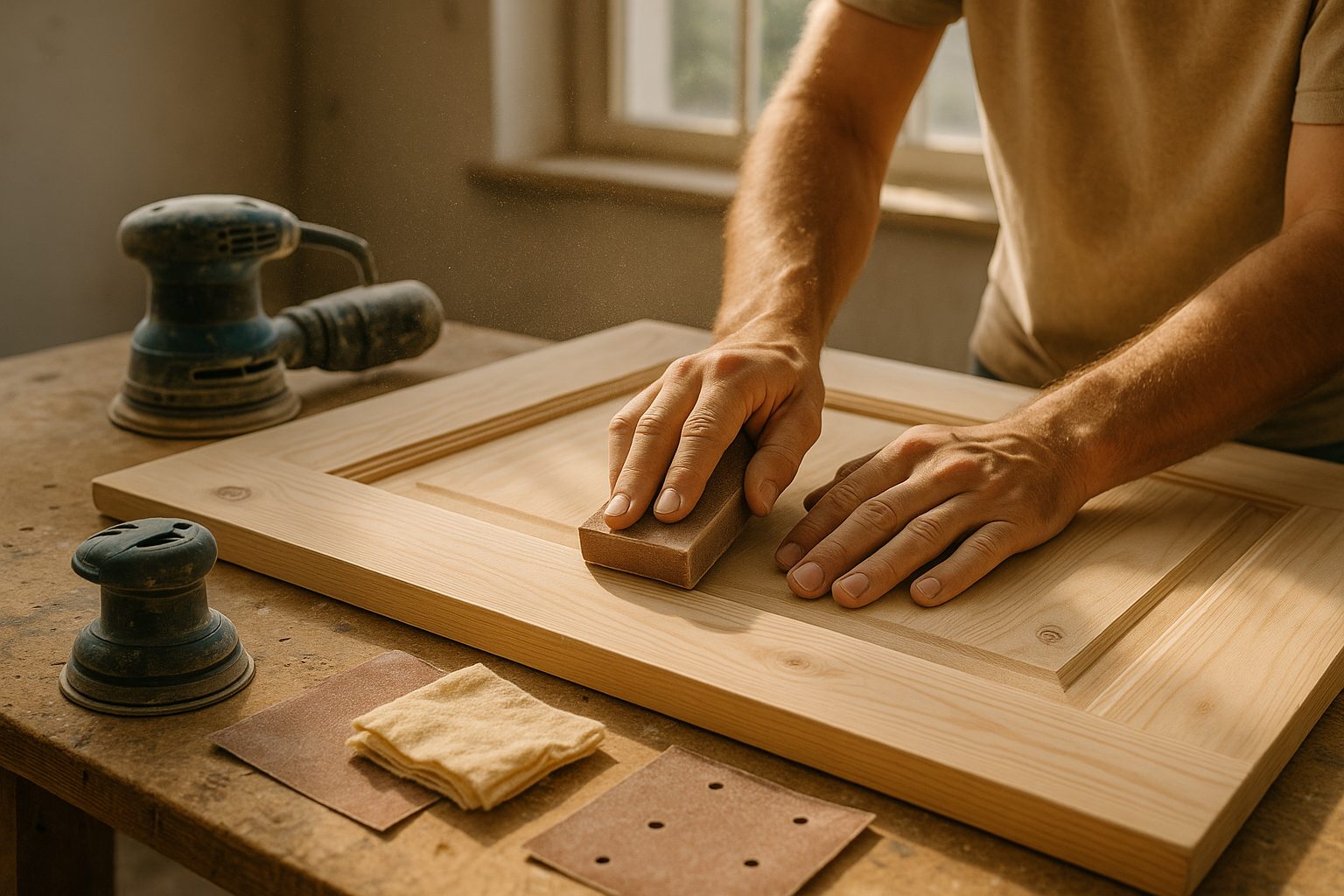
In considering the undercoat, the condition and type of wood should be taken into account. Bare wood often requires more preparation, including dusting and sanding, to create a smooth surface where the primer can adhere effectively. For painted wood, a light sanding can help the undercoat bond better, enhancing the overall durability of the paint job. The choice of primer can also affect the texture and sheen of the emulsion paint, enabling you to align the finish with your interior aesthetic goals.
Using a high-quality undercoat is a wise investment, as it not only prepares the wood but can also extend the life of the paint job by protecting the wood from moisture and wear. Selecting an undercoat with stain-blocking properties can further enhance its protective role, ensuring that the stylish finish remains unblemished over time. When you prepare adequately with the correct undercoat, it makes subsequent paint coats appear more vibrant and consistent, contributing to a polished and professional look that will stand the test of time. By following this essential step, you’re ensuring that your use of emulsion paint on wood surfaces culminates in flawless, enduring results.
| Preparation Steps | Undercoat Considerations | Painting Techniques | Additional Tips |
| Clean the Wood Surface | Choose an Appropriate Undercoat | Apply Even Brush Strokes | Check Humidity Levels |
| Sand Smoothly | Ensure Compatibility with Wood Type | Use a Quality Brush or Roller | Use Drop Cloths to Protect Floors |
| Remove Dust and Debris | Allow Full Drying Time | Aim for Thin Coats | Ventilate the Area Properly |
| Prime the Surface if Necessary | Test on a Small Area | Inspect for Uniformity | Store Paint as per Instructions |
This table highlights essential steps and considerations for effectively preparing and painting interior wood with emulsion paint, ensuring enduring quality and appeal.
How to Paint Wood with Emulsion: Step-by-Step Guide
Painting wood with emulsion paint involves a meticulous process that ensures a smooth, high-quality finish. This task begins with thorough preparation of the wood. Start by sanding the wooden surface to remove any imperfections and create a texture that will help the paint adhere. After sanding, clean the surface with a damp cloth to eliminate dust particles that could interfere with paint adhesion. Once the surface is dry, apply a thin coat of primer, allowing it to dry completely according to the manufacturer’s instructions. This step is critical as it sets the foundation for the next steps.
Once the primer is dried, you can start applying emulsion paint. Use a high-quality brush or roller to apply the first coat, maintaining an even thickness across the wood. For optimal results, apply the paint in thin layers, rather than trying to cover everything in one thick coat. This technique helps avoid drips and allows the paint to dry evenly. Following each coat, allow ample drying time before applying subsequent layers; this is crucial for durability and a smooth finish.
For a professional look, at least two coats of emulsion are recommended. The fast dry times of emulsion mean you can complete the project relatively quickly, but don’t rush the process. Take time to inspect the surface before moving to a second coat to catch any areas needing touch-ups. After the final coat is applied and dried, consider sealing the surface with a clear coat of varnish. This protective layer enhances the emulsion’s durability, safeguarding against scratches and wear common in high-traffic areas. With these steps, transforming wooden surfaces with emulsion paint becomes an achievable task, delivering a distinctive and aesthetically pleasing result.
Sealing Emulsion Paint on Wood
To achieve long-lasting and durable results when using emulsion paint on wood surfaces, proper sealing is essential. Sealing safeguards the painted wood from wear and tear, ensuring its beauty is preserved over time. This section will explore the reasons for sealing emulsion paint and discuss the best sealants to use. By understanding these aspects, you can enhance both the durability and the visual appeal of your wooden surfaces with a protective finish.
Why Seal Emulsion Paint for Better Durability?
Sealing emulsion paint on wood is a crucial step that shouldn’t be overlooked if you aim to enhance the durability and longevity of your paint job. Emulsion paints, while effective on wood surfaces, aren’t originally formulated to withstand the same level of wear and tear as traditional wood paints. This can sometimes lead to premature fading, chipping, or other surface issues that can detract from the wood’s appearance. By applying a sealant over emulsion paint, you effectively protect the surface against environmental factors such as moisture, which can significantly affect wood. Moisture penetration can lead to swelling and warping of wood, undermining the aesthetics and integrity of the painted surface.
Furthermore, a sealant provides a resilient layer that shields the paint from scratches and minor impacts. This is especially beneficial in high-traffic areas or on wooden furniture that sees frequent use. Choosing to seal emulsion ensures the paint remains vibrant and intact, extending the time between necessary touch-ups or repainting projects. The added layer also makes cleaning the wood surface easier, as dust and grime can be wiped away more effortlessly without damaging the emulsion coat beneath.
In addition to practical benefits, sealing emulsion paint enhances the overall finish of the project. The sealant can add a subtle sheen or matte effect, depending on the desired look, contributing to a professional-grade feel. When incorporated as a standard part of your emulsion painting process, seals amplify the longevity and appearance of the painted wood, making them an indispensable part of any DIY or professional project. Overall, opting to seal emulsion-painted wood not only ensures ongoing protection and durability but also preserves the artistic and aesthetic finesse of your work. Investing in a quality seal is a proactive step toward maintaining stunning and robust wood surfaces.
In addition to the mentioned advantages, here are more reasons to seal emulsion paint on wood:
- Enhances durability and longevity by protecting against daily wear and tear.
- Prevents moisture penetration, reducing the risk of mould and mildew growth.
- Improves aesthetic appeal with a smooth, even finish that resists fading.
- Sealing provides an extra layer of UV protection, preserving colour vibrancy.
- Increases surface hardness, making the wood more resistant to scratches.
- Simplifies cleaning and maintenance with a wipeable, non-porous surface.
- Offers improved stain resistance, keeping the paint looking fresh over time.
These benefits make sealing an essential step in preserving and enhancing the beauty and function of painted wood surfaces.
Best Sealants for Emulsion Paint
Choosing the right sealant for emulsion paint on wood is pivotal to achieving a finish that resists wear and meets aesthetic expectations. Among the most popular options is polyurethane, a preferred choice for its toughness and ability to cater to both interior and exterior wood surfaces. Polyurethane comes in both oil-based and water-based forms, each offering unique benefits. Oil-based polyurethane imparts a rich, warm glow ideal for enhancing the natural tones in wood, while water-based polyurethane is noted for its quick drying time and clear, non-yellowing finish, making it excellent for maintaining the brightness of emulsion colours.
Aside from polyurethane, clear acrylic varnishes also offer significant protection for emulsion-painted wood surfaces. Known for their ease of application and durability, these varnishes provide a transparent coat that doesn’t cloud or alter the colour beneath, ensuring the emulsion’s original hues remain vivid. Acrylic varnishes are particularly beneficial for indoor projects where low odour and fast drying times are desired attributes. The thin layer of protection also promotes easy cleaning and maintenance, enhancing the practicality of sealed emulsion surfaces.
For those looking to maintain a natural appearance with a more understated finish, matte varnishes provide an excellent solution. These sealants give a smooth, matte texture that preserves the subtleness of the emulsion paint’s finish while adding a protective barrier. Matte varnishes are ideal for wood surfaces that need to exude a modern, low-sheen appeal. Selecting the right sealant not only involves choosing the best product for your needs but also considering how the finishing touch aligns with the overall aesthetic vision. Whether you’re aiming for rich warmth or minimalistic elegance, the right sealant can make all the difference in achieving both style and substance.
While emulsion paint might seem unconventional for wood surfaces, it remains a viable option under appropriate conditions. Ensuring the wood is properly primed and sealed can make emulsion a practical and cost-effective choice for achieving a smooth finish, especially indoors. However, for high-traffic areas or exterior woodwork, a more specialized paint might be advisable for durability. For those looking to bring a fresh aesthetic to wooden surfaces, using emulsion can be an efficient way to experiment with colours and styles. Consult with paint specialists or refer to product guides to achieve the best results.
FAQs
Can emulsion paint be used on wood surfaces?
Yes, emulsion paint can be used on wooden surfaces with the right preparation. Though it’s traditionally used for walls and ceilings, its versatility extends to wood when paired with an appropriate primer and sealant.
What are the benefits of using emulsion paint on wood?
Emulsion paint offers low odour, quick drying, and is water-based, making it suitable for interior projects. It’s versatile, providing a contemporary matt or gloss finish and known for its eco-friendly properties.
How should wood be prepared before applying emulsion paint?
Wood preparation involves sanding to smooth out imperfections, priming with a high-quality primer to seal the surface, and applying multiple thin coats of emulsion. Ensure each coat dries fully before adding the next.
Why is sealing important after painting wood with emulsion?
Sealing is vital to protect the painted surface from wear, moisture, scratches, and impact. It enhances durability and maintains the aesthetic appeal of the paint.
What sealants are recommended for emulsion-painted wood?
Polyurethane and clear acrylic varnishes are excellent choices. Polyurethane offers toughness and can enhance natural wood tones, while acrylic varnishes provide a clear coat, preserving emulsion colour vibrancy without yellowing.