Understanding front garden fence height regulations in the UK is crucial for homeowners planning renovations. Navigating planning permissions and legal restrictions can be daunting, as these rules ensure safety, aesthetics, and harmony in neighbourhoods. Whether enhancing privacy or security, knowing the legal height limits and when planning consent is required prevents potential fines and alterations. This guide provides clear, concise insights into the current regulations, helping homeowners make informed decisions. Explore everything you need to know about permissible fence heights and avoid common pitfalls in your home improvement journey.
Brief Overview
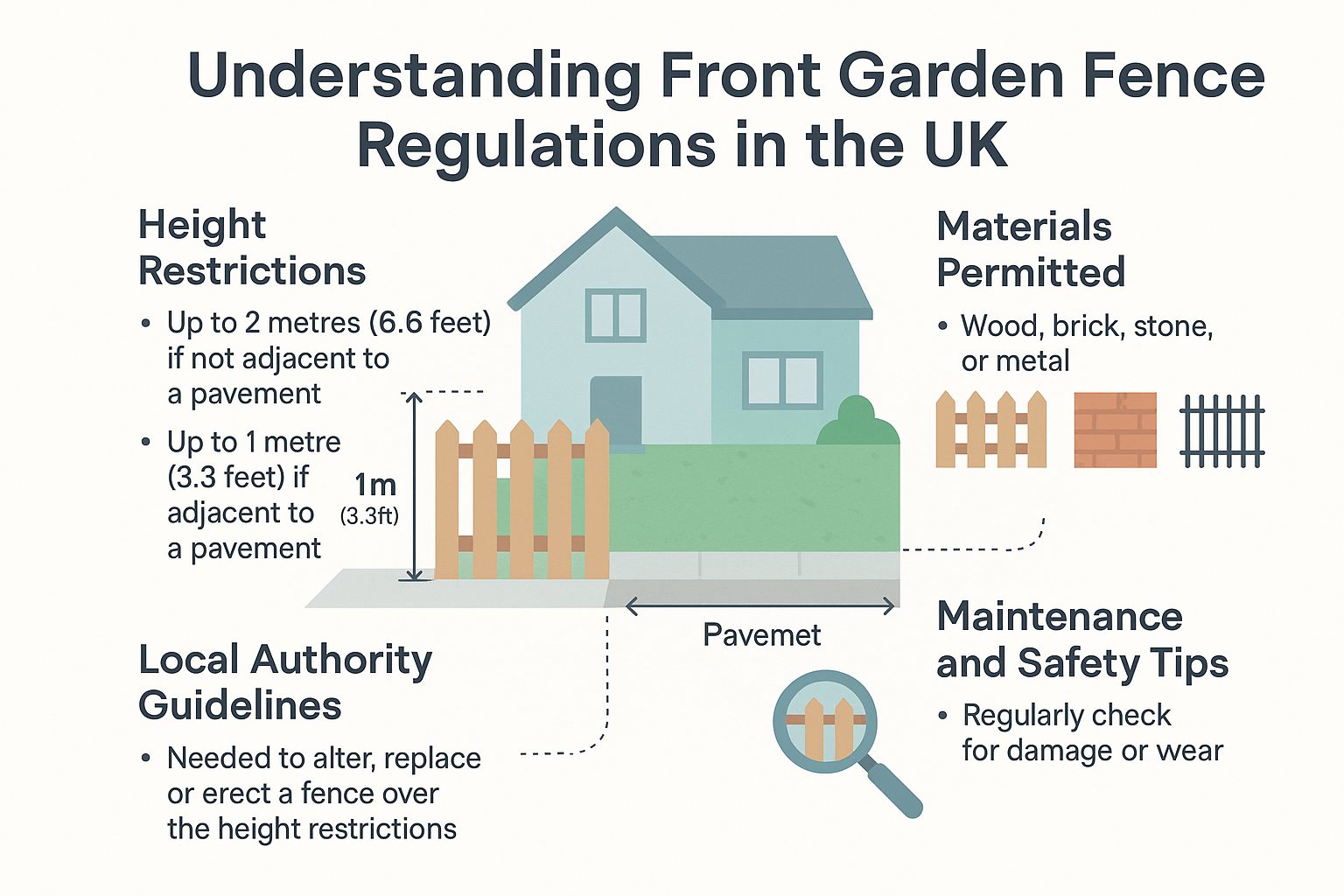
Understanding front garden fence height regulations in the UK is essential for homeowners planning to renovate. These regulations ensure safety and aesthetic harmony while maintaining neighbourhood coherence. Homeowners need to be aware of the maximum heights permissible without planning permission, which generally are up to one metre adjacent to public roads and two metres elsewhere. Engaging with local authorities, understanding key legislation, and maintaining good neighbour relations are crucial steps for compliance. By integrating practical solutions and innovative designs, homeowners can enhance their property’s curb appeal while adhering to legal requirements.
Key Highlights
- Understanding UK front garden fence regulations is key to avoiding fines and ensuring compliance with aesthetic and legal rules.
- Fence height and design in UK are influenced by laws like the Town and Country Planning Act, requiring potential planning permission.
- Front garden fences can’t exceed one metre near roads, two metres elsewhere, unless special permission is granted.
- Measurement clarity, including elements like trellises, helps avoid legal issues; it’s vital for precise, compliant fence installations.
- Collaborating with neighbors and consulting local resources can streamline legal adherence and foster community harmony.
Understanding Front Garden Fence Regulations in the UK
When planning a fence for your front garden in the UK, understanding the different regulations is crucial to ensure compliance and avoid unnecessary fines. The interpretation of what constitutes a “front garden” can affect your construction plans significantly. Furthermore, key Acts of Parliament influence how these laws are enforced, affecting both the design and the height of fences. A well-informed approach is essential for UK homeowners aiming to enhance the curb appeal of their houses while respecting existing fencing laws and building regulations. Let’s delve deeper into what these entail.
What Qualifies as a “Front Garden” and Why It’s Important
In the UK, defining a “front garden” goes beyond mere aesthetics; it carries legal significance that impacts planning and fencing regulations. A front garden is generally deemed as the portion of your property that extends from the façade of your house to the public highway, which may include a pathway, driveway, or green space. This definition is not just academic, misunderstanding it can lead to regulatory breaches, particularly when erecting a fence. Whether your property is an urban terrace or a countryside detached house, understanding this definition helps ensure your front garden fence aligns with both local planning guidelines and national laws. Being deemed as the public face of a home, the front garden plays a crucial role in setting architectural tone and community cohesion.
From picket fences to more contemporary glass panels, these structures are designed to complement the style of your home while still conforming to legal requirements. Yet, it’s not just about visual consistency. Understanding what qualifies as a front garden is vital for determining the height and type of fence that’s permissible without planning permission. Planning authorities often have region-specific rules governing front gardens, aimed at preserving local character and ensuring safety. Failing to adhere to these regulations can lead to enforcement actions, including fines and mandates to demolish non-compliant fences. Therefore, it’s important for homeowners to engage in proactive planning and consult local authorities where necessary. Accessing these guidelines through official channels, such as your local council’s website or the UK government’s planning portal, offers a practical route to a compliant fence without bureaucratic hindrance. Moreover, a well-maintained and accurately defined front garden contributes positively to the property’s overall value.
In the competitive housing market, a garden that respects all local constraints can enhance saleability. For potential buyers, an existing front garden fence that adheres to planning rules signifies fewer worries about future penalties or required changes. Ultimately, understanding these characteristics acts as both a pre-emptive strike against possible disputes and a blueprint for constructing a permissible and attractive barrier that protects your privacy and enhances your home’s curb appeal.
Key Acts of Parliament Related to Fence Regulations
The UK’s extensive legal framework ensures that front garden fencing adheres to specific standards, with several key Acts of Parliament underpinning these regulations. Foremost among these is the Town and Country Planning Act 1990, which delineates the requirement of planning permission for certain types of barriers, walls, or fences exceeding a specified height. This Act plays a pivotal role in guiding homeowners on whether their fence project can proceed without legal oversight or if it necessitates official approval. In addition, the Highways Act 1980 provides supplementary directives, particularly relevant to fences that abut public roads.
Fences in such locations must comply with height restrictions to preserve road user safety and prevent visual obstructions. A common misconception skews towards visual height as the ultimate measure for compliance; however, the law considers how conspicuously a structure affects its surroundings, informing planners and developers on acceptable boundaries. The Building Act 1984 is another significant piece of legislation influencing fence installations. This Act champions safety across all structural aspects of domestic and commercial developments, ensuring fences do not pose immediate hazards.
Similarly, this legislation ensures a consistent quality standard, indirectly coaxing homeowners toward qualified professionals rather than dubious DIY methods for setting up their front garden fences. Intertwining these regulations, the Party Wall Act 1996 further governs situations where fences form a boundary between attached properties. Though primarily safeguarding against structural disputes, it highlights the cooperative spirit required when modifying shared boundaries. In these instances, mutual agreement between homeowners may be requisite to avoid legal repercussions or neighbourly disagreements. For homeowners, understanding these Acts to the fullest can prevent unnecessary legal pitfalls and disputes.
Consent procedures vary based on specific Acts, urging individuals to familiarize themselves with both the statutes and the accompanying local ordinances. Navigating these legal waters correctly encourages the installation of compliant fences, turning bureaucratic obligations into structured, achievable plans. It’s recommended to consult with a legal advisor or a construction professional to ensure complete adherence to these laws, sparing oneself from potential fines and aiding in crafting a fence that’s both compliant and visually appealing.
Legal Fence Height for Front Gardens in the UK
Navigating the legal landscape of front garden fences in the UK is essential for homeowners aiming for both compliance and curb appeal. Understanding the legal fence height and related regulations can save you from potential fines and enforcement actions. It’s essential to grasp how these heights are determined and what fences require prior permissions. This section will explore front garden fence height regulations, key guidelines, restrictions, and how height measurement plays a crucial role in legal compliance.
Front Garden Fence Height Regulations: Key Guidelines and Restrictions
In the UK, front garden fence height is governed by a set of distinctions and rules set forth by various local authorities, commonly outlined under the Town and Country Planning Act. Generally, for front gardens, the maximum height of a fence without the need for planning permission is typically limited to two meters; however, this limit may be different if the fence borders a public road.
In these cases, the height is commonly restricted to just over one meter to maintain safety and prevent obstruction of visibility for motorists and pedestrians. The importance of understanding these guidelines involves recognizing the delineation between a “front” and an “other” location on a property, as regulations vary depending on the location of the proposed fencing.
Beyond mere measurement, the types of materials used for fences can also be subject to scrutiny. For instance, certain conservation areas or listed properties will have additional restrictions on materials that can affect the appearance and functionality of the fence. These laws are also in place to safeguard local aesthetics, maintain the character of historic areas, and ensure new constructions do not detract from neighbourhood cohesion. Thus, a homeowner must not overlook these fundamental steps when planning a front garden fence.
Failure to comply with the specified height and related fencing laws can lead to significant repercussions including financial penalties or the enforced removal of non-conforming fences. Given these high stakes, homeowners are advised to remain informed about local planning regulations and to seek clarity from local authorities should doubts arise. Engaging with professional fencing companies that are well-versed in the local laws can provide an extra layer of assurance in aligning with fencing regulations.
Homeowners can access the requirements pertaining to their area on their local council’s website, a proactive method ensuring rules and regulations are accurately followed. Such measures protect not only against possible legal action but also enhance the property’s value and curb appeal. By managing the potential legal pitfalls proactively, you steer the fence project toward a more seamless, compliant, and aesthetically rewarding completion. Reach out to local forums or join community groups where personal experiences and solutions in navigating these guidelines are shared. This not only fosters community spirit but also offers you a chance to grasp practical advice that is particularly pertinent to your local regulations.
How Height is Measured: Avoiding Common Misunderstandings
The methodology behind measuring fence height can often seem straightforward but frequently leads to confusion, creating room for misunderstandings that can lead to costly compliance issues. It’s vital to understand that fence height is measured from the ground level of the fence’s base to its topmost point. This measurement includes any trellis or decorative top features, and misconceptions often arise when these additional heights are not initially factored in.
The landscape of the garden also plays a crucial role, as uneven or sloped grounds can complicate accurate fence height measurement. In such circumstances, it’s recommended to measure from the natural ground level rather than any built-up parts that result from landscaping efforts. Placing more precision on such measurements helps avert disputes with neighbours or conflicts with local authorities. A proper understanding of these measurement techniques may also prevent unnecessary scenarios where the fence is mistakenly adjusted or built beyond specified regulations. Homeowners sometimes fall into the trap of assuming a small margin, like two inches over the legal height, will be overlooked, but this is rarely the case, as enforcement of these laws is strict for maintaining neighbourhood aesthetics and safety standards.
Furthermore, each local authority may have unique interpretations of how these measurements should be taken, which often highlights the necessity for custom advice from professionals with local knowledge. It’s advisable for homeowners to contact their local planning office if uncertainties about height exist. Additionally, employing a reputable fence installer who understands regional differences in regulation and measurement methodology can ensure your fence complies with both national and local standards.
Equipping oneself with this understanding not only ensures compliance but also facilitates responsible community integration, where shared aesthetic and safety values are preserved through the right construction choices. Misunderstandings in height measurement can be largely avoided by proactive engagement with these guidelines and maintaining open communication with local planning authorities. Ultimately, being informed grants homeowners the confidence to construct fences that not only respect legal requirements but also enhance their property’s appeal in the eyes of neighbours, potential buyers, and passers-by alike.
When Planning Permission is Required for Fencing
Understanding when planning permission is needed for your front garden fence helps avoid legal challenges and costly fines. In the UK, regulations on fence height largely dictate when you need to seek this permission. Typically, if your fence meets specific height criteria, you may proceed without further permissions. However, exceeding these limits, especially when adjacent to a public road, could necessitate navigating the planning permission process. It’s crucial for homeowners wishing to improve their property’s curb appeal to comprehend these nuances, ensuring they respect both local regulations and broader UK fencing laws.
Fence Height Limits Without Planning Permission
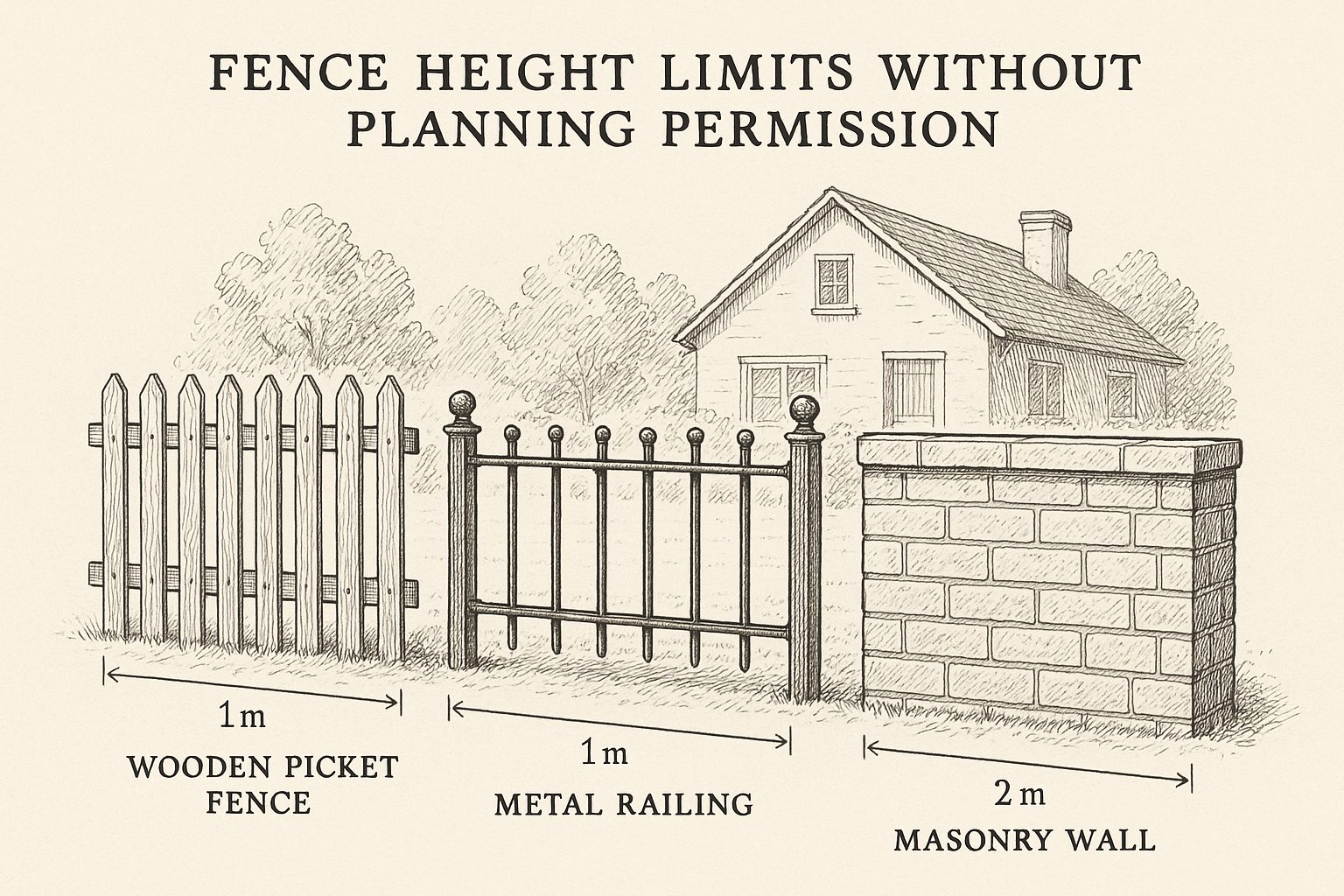
In the UK, the allowable fence height without requiring planning permission varies based on the location and distance from public pathways and highways. Typically, a fence placed within the boundaries of your front garden can stand no higher than one metre when it’s adjacent to a public road. This restriction ensures that motorists and pedestrians maintain clear lines of sight, which is crucial for safety. If the fence is placed elsewhere within your garden, the height limit can extend to two metres. However, it’s important to note that these dimensions include all structural enhancements or decorative elements such as trellises or spikes.
Homeowners should be aware that certain areas may have specific restrictions that override these general guidelines. For instance, properties within conservation areas might face additional limits not only on height but also on materials used. It’s advisable to consult your local council’s planning department to confirm any area-specific restrictions before proceeding with any work. Having this understanding prevents the need for later adjustments or, worse, dismantling a completed fence.
Furthermore, the perceived height may also be affected by the topography of your garden. Slopes or uneven ground can introduce complications in measurement. To avoid misunderstandings, always measure from the natural ground level. This attention to detail is particularly critical in light of UK fence law, where precision in measurement ensures compliance. Homeowners should remember that local authorities address fencing infractions seriously. Even minor overextensions in height, such as a couple of inches, might trigger enforcement actions.
In sum, respecting the limits without planning permission offers a straightforward means of enhancing your garden’s appearance while adhering to legal requirements. Careful planning and reference to local regulations help ensure your fencing project is both lawful and visually appealing. Engage a local professional or consult community discussions to gain insights from existing homeowners. Not only does this foster compliance, but it also contributes positively to the community’s aesthetic harmony, an essential consideration when planning an upgrade to your home’s exterior.
Navigating the Planning Permission Process
Securing planning permission for a front garden fence in the UK can often seem daunting, but a methodical approach simplifies the process. Understanding when you need to apply for this permission is the first step. For fences exceeding two metres in height, or one metre if by a roadway, you’ll need to submit a detailed application to your local planning authority. This application should include precise measurements, design details, and any relevant environmental considerations associated with the fencing materials and location.
The goal is to illustrate that your fence design aligns with local aesthetic considerations and does not impose on the safety or visual clarity of neighbours or road users. A comprehensive application should account for these community impacts and may require modifications based on feedback from planning officers. Frequently, discussions with your neighbours to gain support or approval beforehand can ease the pathway to securing permission.
Fortunately, many local councils provide online resources and portals to guide homeowners through the permission planning process. These platforms often include guidelines, necessary documentation, and contact information for council officers who can offer advice specific to your locality. Leveraging these tools helps demystify legal jargon and provides clarity on the necessary steps, ultimately making the process more transparent and manageable.
A strategic approach to obtaining planning permission involves seeking initial consultations or pre-application advice. This service, often offered by councils, provides an initial assessment of your project’s feasibility from a permissions perspective. Though it might incur an initial fee, the long-term benefits of feedback can prevent future obstacles, saving time and money by pointing out potential areas of concern before you officially submit.
Once the application is lodged, allow for processing time as planning bodies balance various ongoing community interests. Being proactive and commencing your application well before intended construction dates safeguards against potential delays.
Communicating effectively with local authorities, preparing a robust set of plans and details, and demonstrating community awareness are keys to a successful submission. By following this focused path, you’re more likely to achieve a positive outcome enabling you to enhance your garden with the necessary legal backing. In continuation of the previous discussion on navigating the planning permission process for a front garden fence in the UK, here are some strategic tips to further guide you through the journey:
- Consult with your local planning authority early in the process to understand specific requirements and avoid surprises later on.
- Consider the design and materials of your fence, as these can impact the decision; opting for styles that align with the local character can be advantageous.
- Prepare detailed plans and diagrams of your proposed fence to submit with your application, demonstrating compliance with guidelines.
- Engage with neighbours to seek their input and support, potentially preventing objections that could delay the approval process.
- Check if your property lies within a conservation area or affects a listed building, as this could introduce additional constraints and considerations.
- Research recent local planning applications similar to yours to understand what was successful and any pitfalls to avoid.
- Stay organized by keeping a checklist or timeline to track application milestones and communication with authorities. By following these strategic steps, you can enhance your preparation and improve your chances of successfully acquiring the necessary planning permission for your front garden fence.
Boundary Fence Rules and Considerations
Establishing a boundary fence requires careful understanding of the pertinent rules and considerations that come into play in the UK. Key aspects include correctly determining property lines to avoid disputes and pursuing a cooperative dialogue with neighbours. By grasping these fundamentals, UK homeowners can ensure their fencing projects are compliant and harmonious with local regulations, enhancing their property’s curb appeal and maintaining good neighbourly relations.
Determining Property Lines for Correct Boundary Fence Installation
Accurately determining property lines is the bedrock of any boundary fence installation. Misunderstandings in this area can lead to disputes and even legal complications. In the UK, property lines are typically defined by the Land Registry, where the majority of properties have a registered title plan. These plans serve as your initial point of reference, offering a general idea but not precise dimensions necessary for physical boundary fence installation. For more accurate demarcation, hiring a professional surveyor can be invaluable. Surveyors employ advanced tools and techniques, going beyond basic title plans, to establish exact property lines in challenging terrains or in areas lacking clear physical markers. Such precision mitigates the risk of encroachment, providing a solid foundation for your fence installation.
Before installation, it’s beneficial to consult the deeds of your property, which might contain specific covenants influencing fence rules and fence height limitations. Understanding these nuances will guide you in choosing suitable fence panels that adhere to these regulations. The proactive step of consulting with a surveyor helps ascertain boundaries correctly, which is pivotal for smooth fence installation. Beyond legal and technical considerations, visualizing your front garden aesthetic within the established boundaries is crucial. Strategically planning the placement and design of your fence panels ensures they complement your home’s architecture while complying with local rules. This involves balancing both aesthetic desires and regulatory demands to avoid penalties arising from contraventions related to boundary breaches.
It’s also strategically wise to keep communication channels open with any involved parties, such as neighbours sharing a boundary fence. This dialogue serves as a preliminary point of negotiation, fostering a cooperative spirit that may facilitate joint decisions on the height and type of fence, thus ensuring mutual satisfaction.
When combined, these efforts contribute significantly to an installation that’s correct not just by legal standards but also by fostering community harmony. Engaging early with local resources, municipal planning bodies, community discussions, or neighbourhood forums, can offer vital insights into both common practices and hidden challenges specific to your area.
Leveraging these platforms not only aids in obtaining tailored guidance but also considerably enriches your understanding, helping you make informed decisions. Ultimately, meticulous planning in the determining of property lines, paired with proactive engagement and consultation, ensures a compliant and aesthetically pleasing boundary fence installation that enhances your property and respects community standards.
Talking to Neighbors: Developing a Cooperative Approach
Engaging in conversations with your neighbours about a potential boundary fence project requires sensitivity and openness. Successful coordination on this matter can both avoid future disputes and nurture a strong neighbourhood relationship. Initially, approach the discussion with a spirit of transparency and a cooperative mindset. Clearly communicate your intentions, including the type of fence, the proposed height, and the boundary where it will stand. It’s crucial to share your motivations behind the project, emphasizing both security and aesthetic upgrades as mutual benefits.
Before starting the conversation, it’s wise to be informed about any specific legal fence rules and height restrictions applicable in your area, particularly in regard to property lines and shared boundaries. This knowledge positions you as prepared and considerate, encouraging a more productive dialogue. Respect for local fencing regulations, as discussed in previous content, will bolster your position when proposing changes that comply with legal standards, reassuring neighbours that the installation adheres to prescribed norms.
Timing your conversation wisely enhances the likelihood of a positive outcome. Avoid bringing up the subject during moments of stress for your neighbours and rather find a mutually convenient time where the conversation can occur amicably. During discussions, be receptive to feedback and explore potential concerns they might have regarding the planned fencing. This is an opportunity to collaboratively address their issues and adjust your plans if feasible, reflecting a respectful and inclusive approach.
Legally, boundary fences might fall under the purview of shared responsibility. Therefore, engaging in joint decision-making can simplify future maintenance and shared costs. Neighbours may be amenable to splitting expenses if the fence serves a mutual need, including improved privacy or security measures. Highlight these potential advantages as part of your cooperative approach, cultivating an environment where both parties feel they gain from the development.
In cases where disagreements persist, consider involving a professional mediator or local community association to facilitate negotiation. Mediation can offer impartial insight and propose creative solutions that align with planning rules and your respective interests. During this process, clearly document agreed terms and conditions, safeguarding against future discrepancies or memory lapses regarding property lines or fence height agreements. Maintaining a written record ensures accountability and provides clarity should disputes arise later.
Ultimately, by nurturing a cooperative spirit in boundary discussions, you contribute to a harmonious environment that values neighbourly respect and compliance with local fencing laws. This proactive approach can pave the way for a successful fencing project that enhances both the aesthetic appeal and property value for you and your neighbours. Emphasizing collaboration not only facilitates the project’s progress but also strengthens community ties, reflecting the spirit of cooperation that underpins UK property and boundary regulations.
Optimal Solutions When Facing Height Restrictions
Facing height restrictions for your front garden fence in the UK doesn’t mean compromising on style or security. Creative design ideas can offer innovative ways to stay within legal guidelines while enhancing your property’s curb appeal. Additionally, there are alternative routes for navigating planning restrictions and securing approval for taller structures. Understanding these avenues allows you to optimize fence height within legal bounds, ensuring both functionality and aesthetics are effectively balanced.
Creative Design Ideas for Your Front Garden
Innovating within the confines of height restrictions can transform your front garden into a stunning point of interest while adhering to UK regulations. Embracing creative design ideas involves selecting fence panels that align with your aesthetic aspirations and legal obligations. One approach is to use low-height fences supplemented by taller vegetation like hedges or plants, providing an elevated sense of privacy without breaching the height limits. Such solutions leverage the natural landscape to enhance security and ambiance, offering the best of both worlds, nature’s privacy coupled with a compliant structure.
Another concept involves the strategic selection of transparency-enhancing materials, such as glass panels or lattice designs. These options confer modern elegance and secure boundaries without creating an impenetrable visual barrier, crucial for areas where visibility is needed. The aesthetic versatility provided by these innovative panels can complement a wide range of architectural styles, ensuring your front garden radiates personal flair while respecting legal height constraints.
Additionally, mixing materials like stone and wood can create layers within a single structure, offering a rich, textured finish that diverges from traditional fencing styles. This layered approach not only meets functional demands but also elevates the sophistication of your property’s façade. Moreover, opting for materials that age gracefully, like untreated wood which develops a natural patina, can add historic charm and ensure durability, all while falling within specified height restrictions.
Finally, incorporating environmental considerations into your design process can yield structures that are both sustainable and compliant. Utilizing reclaimed or eco-friendly materials reduces your carbon footprint and aligns your project with broader sustainability goals, a benefit for environmentally-conscious homeowners. With a vast array of creative ideas and fence panel options available, you have the flexibility to craft a garden border that captures beauty and compliance in equal measure. Get started by drawing inspiration from local gardens, online galleries, or garden design workshops, tapping into creativity that respects boundaries and unifies form with function.
Alternative Routes: Securing Approval for Taller Fences
When it comes to securing approval for taller fences in the UK, understanding the alternative routes available can make a substantial difference. Finding the optimal solutions may involve navigating planning regulations, especially when you wish to exceed standard height restrictions. The UK planning system offers several pathways for homeowners seeking to enhance their garden’s security and aesthetics beyond the conventional limits.
One key approach is to submit a comprehensive application for planning permission. This requires detailed plans and clear justification for why a taller fence is necessary. Begin by meticulously measuring your proposed structure to ensure compliance with local parameters for accuracy in your application. Including elements that illustrate the fence’s visual impact on the surrounding environment can strengthen your case, as planning authorities place significant emphasis on maintaining local character and aesthetic cohesion.
Moreover, engage with local community forums and obtain feedback from your neighbours before submission. Demonstrating community support for your proposed changes can positively influence your application, showcasing collective agreement on the benefits stemming from improved privacy or security. Furthermore, garnering insights from residents can also mesh local sensitivities with your design, ensuring harmony in aesthetic values and robust neighbourhood relations.
Another viable path involves consulting bespoke approval services that specialize in planning processes and are familiar with the nuances of regional regulations. These services typically offer tailored solutions, from initial consultations to complete application management, easing the planning trajectory. Similarly, consulting with a professional architect or landscape designer allows for the presentation of an expertly crafted proposal that enhances the chances of approval from planning authorities. By working with professionals who understand both the aesthetic ambitions and regulatory landscapes, your project benefits from a higher likelihood of success.
Finally, consider participating in pre-application advice services that many councils offer. These consultations enable preliminary feedback on your plans and can highlight potential adjustment areas before officially commencing the process. Such strategic measures may mitigate the risks of rejection and refine your approach, aligning your vision with planning requirements. By understanding and leveraging these alternative routes, you ensure your ambitions for taller fences are pursued legally and effectively, enhancing both your property’s value and visual appeal.
| Design Strategy | Materials Used | Compliance Approach | Benefits | Approval Process |
| Stepped Design | Wood, Metal | Adhere to gradient | Visual Appeal, Privacy | Local Council Consultation |
| Trellis Extension | Timber, Metal Grid | Partial transparency | Enhanced Light, Security | Permitted Development Rights |
| Integrated Landscaping | Natural Stone, Timber | Blend with greenery | Aesthetic Integration | Landscape Architect Approval |
| Setback Design | Composite Materials | Offset from boundary | Increased Depth, Safety | Planning Application |
This table encapsulates innovative design and strategic approval pathways for exceeding conventional height restrictions while enhancing property aesthetics and security.
Understanding front garden fence height regulations in the UK is vital for homeowners aiming to enhance their property’s curb appeal while ensuring compliance with local laws. By considering planning permission requirements and height restrictions, you can make informed decisions that align with both aesthetic desires and legal obligations. Whether opting for a classic picket or a modern design, maintaining the balance between functionality and style will add value and beauty to your home. For further guidance, explore our downloadable fence planning guide and ensure your project meets all necessary criteria before commencing.
FAQs
What are the standard height regulations for front garden fences in the UK?
The UK allows front garden fences to be up to one metre adjacent to public roads and two metres elsewhere without planning permission.
Do I need planning permission for taller fences in my front garden?
Yes, if your fence exceeds the standard heights (one metre by public roads, two metres elsewhere), you will need planning permission.
How should I define my property’s front garden for fencing purposes?
In the UK, a front garden typically extends from your house’s façade to the public highway, often including paths or driveways.
How do I measure the height of a garden fence correctly?
Measure from the ground level where the fence is installed up to its topmost point, including any decorative trellises.
What should I consider when planning a front garden fence design?
Consider legal height restrictions, local aesthetic guidelines, and material suitability to balance function and style.