Navigating the various types of chimney pots can be a daunting task, but this comprehensive guide is here to shed light on every option available. Whether you’re an architect specifying details for a stunning home or a homeowner seeking to enhance your property’s aesthetic and functionality, understanding chimney pots is crucial. This guide delves into the diverse styles and materials of chimney pots, offering practical insights and product benefits that align with both traditional and modern designs. Before making your choice, ensure you’re well-versed in the advantages each type can bring to your project.
Brief Overview
Chimney pots are vital elements that enhance both the functionality and aesthetic appeal of a home. This guide dives into diverse chimney pot types—such as clay, terracotta, and louvred pots—each offering unique benefits for draft enhancement and architectural style. It also discusses essential enhancements like chimney cowls and birdguards, which protect against downdrafts and environmental damage. Investing in the right chimney pot and accessories can significantly improve your home’s heating efficiency while adding a distinct visual charm, making it a strategic consideration for homeowners and architects.
Key Highlights
- Chimney pots enhance both the functionality and aesthetic of a home’s roof, crucial for efficient smoke ventilation.
- Clay and terracotta chimney pots are favoured for their durability and traditional appeal in diverse architectural styles.
- Louvred chimney pots offer modern style and improved ventilation, suitable for areas with challenging weather conditions.
- Chimney cowls and pot inserts optimize draft control, prevent downdrafts, and increase energy efficiency.
- Proper installation and maintenance of chimney components ensure safety, efficiency, and extended lifespan of the chimney system.
Introduction to Chimney Pots and Their Importance
Chimney pots play a crucial role in the overall functionality and aesthetics of a home’s roof. They are not only an essential part of the chimney system but also contribute to the architectural appeal of a house. Understanding the significance of chimney pots in maintaining the efficiency and safety of your fireplace can help homeowners and architects make informed decisions. We’ll explore what chimney pots are and why they matter for your home, providing insights into how these components transform and enhance roofing systems.
What Are Chimney Pots?
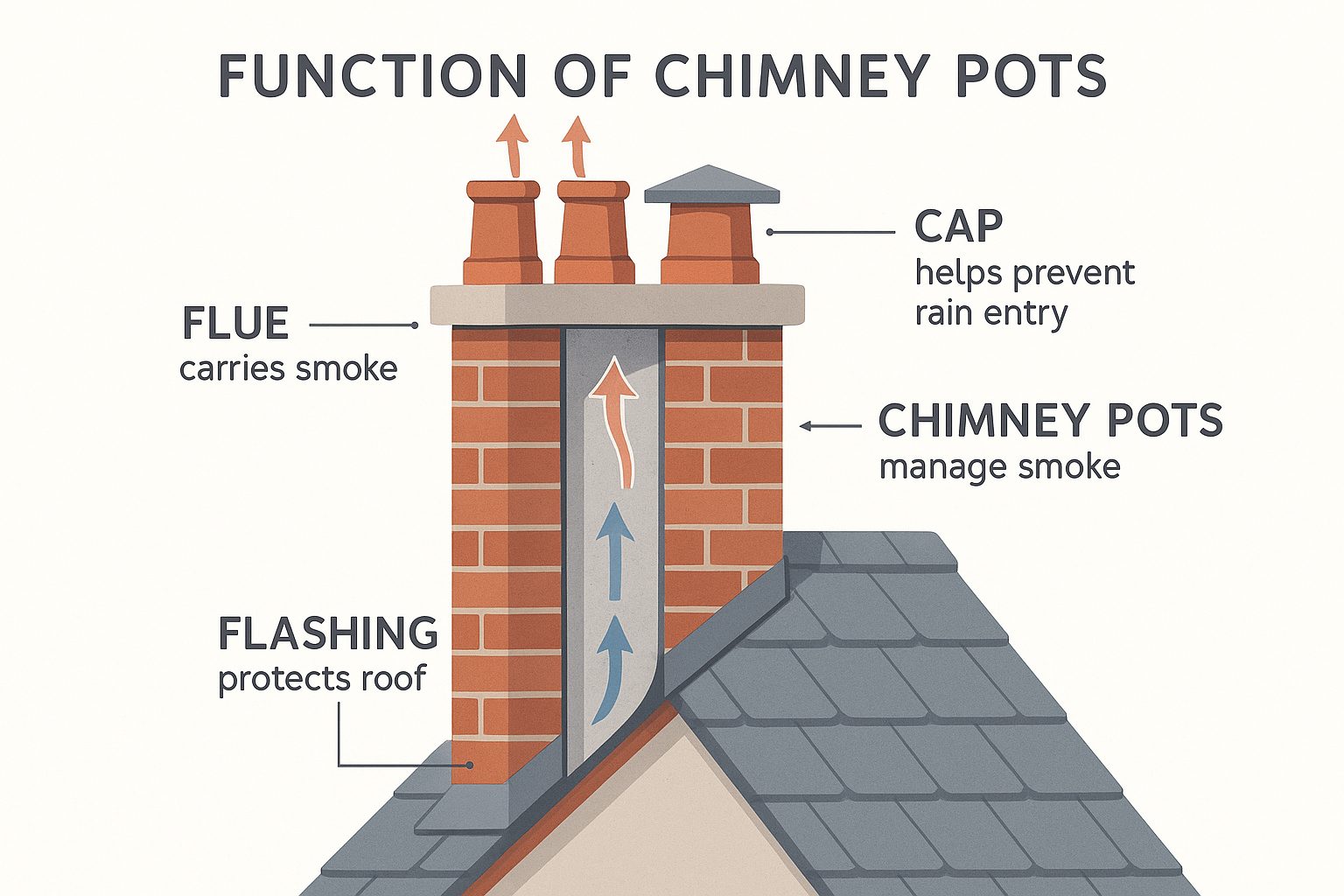
Chimney pots are extensions placed on top of a chimney stack, designed to improve chimney function and add a decorative element to roofs. The term “chimney pot” refers to these structures crafted from various materials like clay, terracotta, and metal, each bringing unique benefits to your roofing design. They serve several essential functions, including improving draught and preventing down-draughts in multi-fuel stove systems.
By enhancing airflow, chimney pots help maintain the efficiency of your chimney, ensuring smoke and gases are effectively expelled from the fireplace. Moreover, chimney pots are a visual extension of the chimney, providing a finished look to the roofline. Their variety of styles and materials means that homeowners can select a chimney pot that suits both their aesthetic preferences and functional requirements.
Whether opting for a more traditional clay pot with its classic appeal or a contemporary metal pot known for its durability, there are numerous designs to choose from. This flexibility makes chimney pots versatile components in any roofing project, catering to houses of all architectural styles. It’s also worth noting the historical significance of chimney pots; they’ve been used since ancient times to enhance chimney performance, demonstrating their long-standing utility and versatility. Homeowners considering chimney upgrades should view pots not just as functional necessities but as opportunities to elevate their home’s curb appeal.
Why Chimney Pots Matter for Your Home
The importance of chimney pots extends beyond their functional value; they significantly influence both the safety and aesthetic quality of your home. Properly selected and installed, chimney pots optimize the chimney’s draft, ensuring that smoke and harmful gases are effectively ventilated through the stack. This not only enhances the heating efficiency of your fireplace but also contributes to the overall indoor air quality, safeguarding your family from potential health risks associated with inadequate ventilation. Furthermore, chimney pots are pivotal in preventing rain from entering the chimney, protecting the internal chimney structure from moisture damage, which could lead to costly repairs over time.
From an aesthetic perspective, chimney pots are integral to the visual harmony of roofing. They add character and distinction, allowing homeowners to personalize their rooftops in line with the architectural style of their property.
For architects, chimney pots represent both a design challenge and an opportunity to integrate traditional elements with modern roofing techniques. This synthesis not only preserves the historical character of older properties but can also enhance new builds with a touch of period authenticity. As part of your home’s roofing ensemble, chimney pots offer a strategic enhancement to your chimney’s functionality, simultaneously contributing to the roof’s beauty and increasing the property value. Ultimately, they marry practicality with artistry, ensuring that from the chimney to the stack, your property remains an exemplar of design and efficiency.
Diverse Types of Chimney Pots
Chimney pots are essential components of many traditional fireplaces and stoves, serving both functional and aesthetic purposes. These decorative elements crown the top of chimneys, enhancing the overall appearance of a house while improving the chimney’s draft. They play a crucial role in the effective ventilation of both smoke and gases, making them an integral part of the home heating system. The diversity of materials and designs available for chimney pots allows homeowners to select options that best fit the architectural style of their homes and cater to their specific needs. By understanding the different types of chimney pots, you can make an informed decision that enhances your home’s charm and functionality.
Exploring Clay Chimney Pots
Clay chimney pots are among the most traditional types of chimney fixtures, revered for their longevity and rustic charm. Made from natural clay, these pots are fired at high temperatures to achieve a durable finish that withstands the elements year-round.
The appeal of clay pots lies in their natural look, which blends seamlessly with various architectural styles, from classic rustic cottages to more modern homes aiming for a vintage touch. Beyond their aesthetic allure, clay chimney pots are also highly functional. They are designed to enhance the draft of a chimney, improving the efficiency of smoke expulsion and reducing the risk of backdrafts into the living space. This makes them particularly suitable for homes relying heavily on wood-burning fireplaces and stoves. When choosing a clay pot, considerations should be made regarding the type of fuel used in your fireplace, as clay effectively complements most solid fuels.
The variety of styles available in clay, from tapered to roll-top designs, allows homeowners to select a shape that complements their roofline and enhances the structure’s overall aesthetic appeal. For those considering an upgrade to their chimney system, clay chimney pots offer a timeless blend of form and function.
The Appeal of Terracotta Chimney Pots
Terracotta chimney pots, similar in composition to their clay counterparts, bring a warm, earthy elegance to rooftops. Known for their reddish-brown hue, these pots add an additional layer of charm, making them a popular choice for enhancing the visual appeal of a building’s silhouette. Terracotta’s historical roots trace back to classic architecture where it was widely utilized due to its resistance to the natural elements and its ability to be moulded into various intricate designs. This adaptability allows terracotta pots to reflect a range of aesthetic styles, from the ornate to the minimalist, ensuring they can suit a diverse array of homes.
Apart from aesthetic considerations, terracotta is valued for its robust performance in managing the smoke flow from fireplaces. Its material properties help in enduring the high heat generated by various fuels, ensuring consistent insulation and efficient draft. As a result, terracotta chimney pots not only beautify a home but also support efficient air flow through the chimney, reducing the risk of soot build-up and maintaining the cleanliness of the flue. Choosing terracotta can be particularly advantageous for homes in damp or wet climates, thanks to its ability to resist moisture absorption, thus safeguarding the chimney’s longevity. In sum, terracotta pots offer an enticing blend of aesthetic appeal and functional effectiveness, ensuring they remain a favoured option for homeowners looking to augment their chimney’s performance and appeal.
Understanding Louvred Pots
Louvred chimney pots represent a modern twist on traditional chimney designs, tailored to provide both enhanced performance and a unique stylistic flair. These pots are particularly known for their innovative structure, which includes louvers or slats strategically designed to shield against direct rainfall and downdrafts while allowing smoke and gases to exit freely. The functional design of louvred pots not only protects the chimney’s inner components from weather-related wear but also improves ventilation by facilitating a more controlled and consistent airflow. This makes them an excellent choice for regions prone to strong winds or persistent rain, where other types of pots might falter in providing consistent draught.
The aesthetic versatility of louvred pots means they can be tailored to match various architectural styles, from sleek contemporary homes to more conservatively styled properties. When integrated with a chimney system, these pots can also be outfitted with additional features, such as birdguards or specialized cowls, to further optimize their performance and safeguard against potential blockages caused by wildlife or debris. As a result, louvred chimney pots offer a dual advantage: they enhance the chimney’s operational efficiency while also providing a modern, elegant finish to the exterior of a home. For those keen on maintaining an efficient and visually appealing chimney system, louvred pots present a worthwhile investment.
Chimney Pot Enhancements and Accessories
In the world of chimney pots, enhancements and accessories play a critical role in ensuring optimal performance and extending the lifespan of your chimney system. From preventing downdrafts to reducing heat loss, the right accessories can significantly enhance functionality, safety, and efficiency. Selecting the perfect enhancements involves understanding your chimney’s specific requirements, environmental conditions, and architectural style. With myriad options available, knowing which accessory best suits your chimney needs is essential for efficiency, durability, and appearance. This guide explores the various enhancements and accessories that can transform your chimney from functional to extraordinary, ensuring it serves you well for years to come.
Functionality of Chimney Cowl
Chimney cowls are an essential accessory that enhance the operational efficiency of chimney systems. Acting as a cap fitted on the chimney pot, their primary purpose is to boost draft control, improve safety, and extend chimney life. Chimney cowls are designed to fit most solid fuel systems, effectively preventing rain, snow, and debris from entering the chimney flue. This feature is particularly beneficial in adverse weather conditions, ensuring the interior remains dry and functional. The cowl’s unique design also helps prevent downdrafts, which can adversely affect the draft, leading to smoke spillage into the home. By stabilizing the upward airflow, chimney cowls enhance the combustion efficiency, ensuring heat is maximized. Furthermore, cowls can be tailored to mitigate bird and pest entry, which are common issues in residential settings.
The Role of Pot Cowls and Pot Inserts
Pot cowls and pot inserts serve as crucial enhancements for improving chimney performance and security. Pot cowls, similar to standard cowls, are tailored to fit over chimney pots, offering an aesthetic appeal while ensuring enhanced functionality. They are primarily used to reduce wind-related downdrafts and can be particularly useful in properties located in windy areas. By creating a buffer against wind, these cowls maintain a consistent draw, optimizing fuel efficiency and reducing heat loss through the chimney. Pot inserts, on the other hand, are designed to fit inside the chimney pot and act as a liner that improves draft and combustion. They also significantly reduce heat loss, conserving energy and promoting sustainable consumption. Both pot cowls and inserts offer a customized approach to addressing specific chimney challenges, ultimately enhancing the property’s energy efficiency and environmental comfort.
Installation and Maintenance for Longevity
Ensuring the longevity of your chimney system requires careful attention during both installation and maintenance stages. A well-positioned and correctly installed chimney pot can significantly enhance the efficiency and safety of your chimney. Proper installation involves not only choosing the right pot to match your architectural style but also ensuring it complements your chimney’s technical specifications. Additionally, regular maintenance is crucial in safeguarding your chimney against environmental damage and functional wear. This involves inspecting the stack, checking lead flashing, and ensuring all components, including cowls and terminal birdguards, are in optimal condition. Such diligence in installation and maintenance practices not only extends the life of your chimney but also ensures a safer, more efficient home heating system, whether you’re using solid, gas, or other types of fuel.
Choosing the Right Chimney Terminals and Birdguards
When selecting chimney terminals and bird guards, it’s vital to consider your chimney’s unique requirements and the types of fuel used. The right chimney terminal will facilitate the efficient exit of exhaust gases, while a suitable bird guard will protect against unwanted entry by birds and debris. Terminals, especially those designed by reputable manufacturers like Knowles, are tailored to various chimney systems and can optimize flue performance significantly. For chimneys using solid fuel, choose terminals and birdguards that offer resistance to soot and tar deposits. Installation should take into account factors such as the wind speed and local wildlife, ensuring optimal functionality and protection. When paired with pot inserts and cowls that are suitable for your roofing style, these enhancements not only maintain but elevate your chimney’s operational efficiency and lifespan.
In conclusion, selecting the right chimney pot is essential for enhancing both the aesthetic appeal and functionality of your property. With a variety of styles and materials available, there’s a perfect chimney pot for every architectural need. Beyond aesthetics, the right choice can improve ventilation and reduce the risk of downdrafts, ensuring safety and efficiency. For homeowners and architects alike, investing in suitable chimney pots promises long-term benefits. For further guidance and custom recommendations, consider consulting our downloadable guide to navigate these options seamlessly. Explore your chimney pot choices today for a more beautiful and effective home.
FAQs
What are the different types of materials used for chimney pots?
Chimney pots are made from materials such as clay, terracotta, and metal, each offering unique benefits. Clay and terracotta are favoured for traditional appeal, while metal is known for its durability.
How do louvred chimney pots enhance ventilation?
Louvred chimney pots improve ventilation by their slat design, which protects against rain and downdrafts while allowing smoke and gases to exit freely, making them ideal for areas with strong winds and rain.
What are the functions of chimney cowls?
Chimney cowls are caps placed on chimney pots to enhance draft control, prevent rain and debris entry, and avoid downdrafts which can cause smoke to spill into the home.
Why is proper installation and maintenance of chimney components important?
Proper installation and maintenance ensure the safety and efficiency of the chimney system while extending its lifespan. This involves selecting the right components and inspecting them regularly for damage or blockage.
What factors should be considered when choosing chimney terminals and birdguards?
When selecting chimney terminals and bird guards, consider the type of fuel used, environmental conditions, and the chimney’s unique requirements to ensure efficient exhaust of gases and protection against wildlife and debris.