Creating an engaging construction website is crucial for showcasing your projects and attracting potential clients. In this guide, we delve into top construction website design inspirations that will help you build stunning designs tailored to your business needs. Whether you’re launching a new site or looking to revamp your existing one, these examples will offer valuable insights and practical ideas. From user-friendly interfaces to sleek, modern aesthetics, discover the elements that make a construction website stand out. Elevate your online presence and convert visitors into customers by exploring design strategies that highlight your expertise in the industry.
Brief Overview
Creating a compelling construction website is essential for standing out in the competitive industry. Highlighting key design elements can enhance user experience and improve engagement, turning the website into a powerful marketing tool. Effective designs incorporate intuitive navigation, engaging visuals, and responsive layouts to showcase projects and services effectively. By exploring innovative web design ideas and aligning them with current trends, construction companies can elevate their digital presence, attract potential clients, and solidify their reputation as industry leaders. Stay ahead by prioritizing a visually appealing and functionally robust online platform.
Key Highlights
- Effective construction websites integrate aesthetics with functionality, creating a resonating digital presence that attracts potential clients.
- Key design elements include intuitive navigation, high-quality images, and engaging storytelling to enhance user experience.
- Innovative designs include virtual tours and integrated communication tools, ensuring a seamless client experience.
- SEO optimization improves visibility, incorporating relevant keywords and fast load times for a user-friendly experience.
- Future trends emphasize adaptive design and advanced digital tools like AI and VR for showcasing projects.
Understanding the Importance of a Well-Designed Construction Website
In the competitive construction industry, having a visually appealing website isn’t just an option, it’s a necessity. A well-crafted construction website design not only highlights your brand but also serves as a crucial touchpoint for potential clients. Emphasizing the right design elements can transform how construction companies are perceived, impacting both client trust and business success. Functional and aesthetic web design underscores the quality of services offered by construction firms. By focusing on user experience and presenting services effectively, your online presence becomes a powerful business asset.
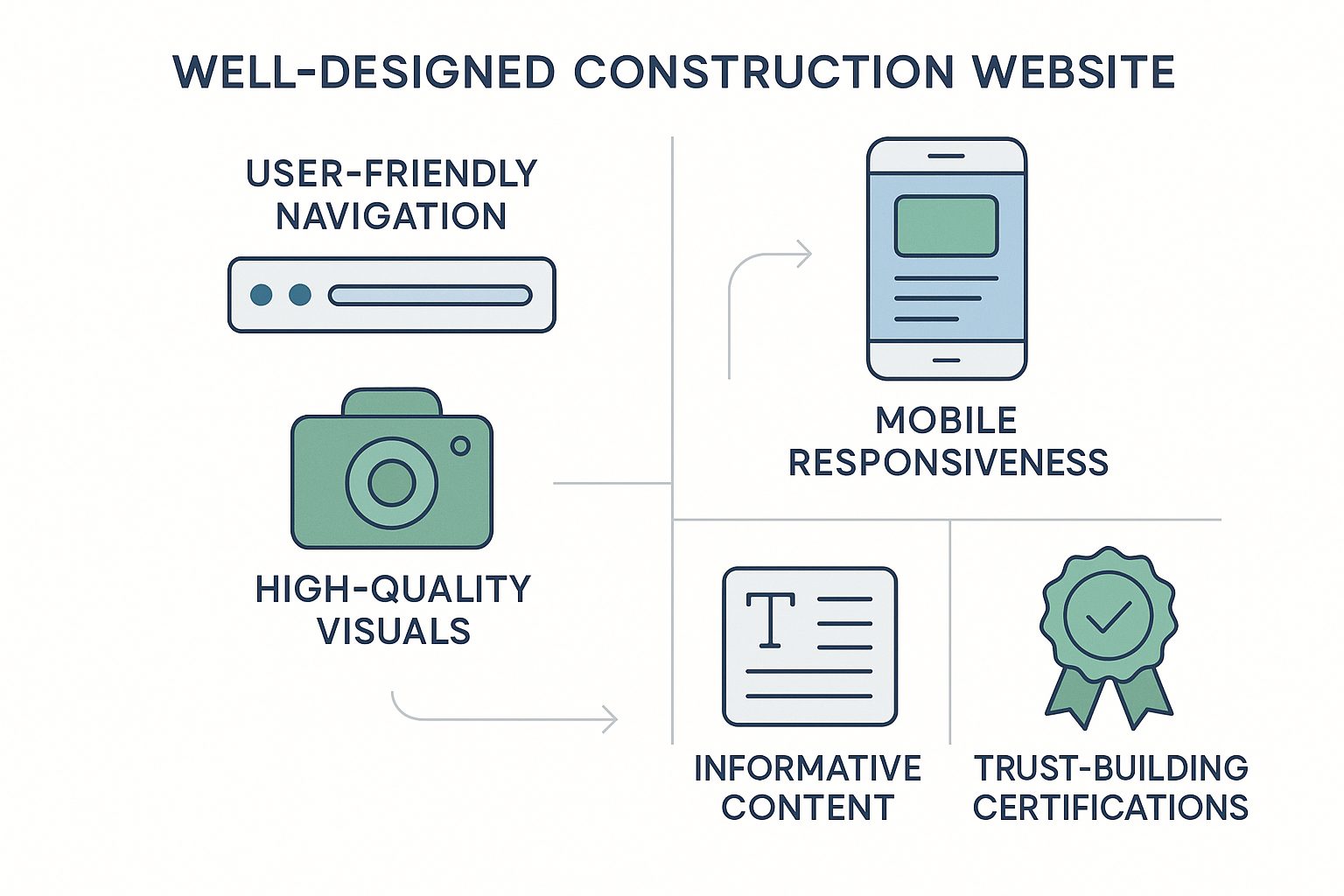
| Key Design Elements | Purpose | Impact on Business | Examples |
| Responsive Design | Ensure usability across devices | Increases user engagement and accessibility | Mobile-friendly layout |
| Clear Navigation | Facilitate easy information retrieval | Enhances user satisfaction and retention | Intuitive menu structure |
| High-Quality Visuals | Showcase projects professionally | Builds trust and boosts brand image | Portfolio galleries, video tours |
| Strong Call-to-Action | Guide users toward desired actions | Improves lead generation | Contact forms, quote requests |
This table captures the essential elements and their impact on creating an effective construction website, showcasing modern digital strategies for industry leadership.
Core Elements to Highlight on a Construction Website
To stand out, construction websites must focus on key design elements that resonate with their target audience. First, showcase your services prominently, ensuring they’re accessible with clear navigation. Incorporating content that tells your story helps establish a connection with clients. Emphasize projects by using high-quality images to create a visually appealing experience. Testimonials and case studies are vital, offering proof of quality and reliability. Remember that a responsive web design is essential since clients’ll likely view your site on various devices. A well-designed website positions your company as a leader in the construction industry.
| Key Aspect | Description | Impact | Best Practices |
| User-Friendly Design | Ensures the website is easy to navigate and visually appealing. | Enhances user experience, reduces bounce rates, and keeps visitors engaged. | Utilize clear navigation menus, responsive design, and consistent branding. |
| Quality Content | Features relevant, informative, and engaging content tailored to the target audience. | Builds authority, improves SEO rankings, and attracts potential clients. | Regularly update blogs, project showcases, and client testimonials. |
| Mobile Optimization | Ensures the website performs well on mobile devices. | Increases accessibility, caters to on-the-go users, and enhances search rankings. | Implement responsive design techniques and conduct mobile performance tests. |
| Strong Call-to-Action | Drives visitors to take specific actions, such as contacting or requesting a quote. | Increases conversion rates and leads to more client inquiries. | Place CTAs prominently, use action-oriented language, and ensure they stand out visually. |
This summary table highlights key strategies in construction website design, emphasizing crucial elements that improve user experience, enhance search engine performance, and ultimately drive business growth. Implementing user-friendly designs, quality content, mobile optimization, and strong CTAs increases client engagement and conversion rates.
Key Features for Effective Construction Website Designs
Creating a successful construction website involves integrating essential features that enhance user experience and drive business growth. Effective website design is not just about aesthetics; it plays a pivotal role in construction marketing by establishing a digital presence that resonates with potential clients. A well-designed construction website combines functionality, user-friendly design, and strategic elements to showcase your projects effectively. Highlighting key features like intuitive navigation and mobile responsiveness can transform your online platform into a powerful tool for attracting and retaining clients.
| Feature | Description | Benefit | Outcome |
| Responsive Design | Optimizes website for various devices and screen sizes. | Improved accessibility and user experience. | Increased user engagement and satisfaction. |
| Clear Navigation | Intuitive and easy-to-use menu structure. | Facilitates easy access to information. | Higher visitor retention and lower bounce rates. |
| High-Quality Visuals | Uses professional images and videos of projects. | Enhances credibility and brand perception. | Stronger client trust and interest. |
| SEO Optimization | Implements strategic keywords and meta tags. | Increased search engine visibility. | Higher website traffic and potential leads. |
| Client Testimonials | Showcases client feedback and reviews. | Builds trust and demonstrates reliability. | Attracts more clients and fosters loyalty. |
This table encapsulates the core features that define a successful construction website, underscoring their role in enhancing user experience and driving client engagement.
Essential Design Elements for Improved User Experience
To cultivate an outstanding user experience, focus on design elements that ensure visitors can easily navigate your construction web without confusion. Prioritize a clean layout that highlights key services, making it seamless for users to find what they’re looking for. Incorporating interactive elements like chatbots can enhance the digital experience, engaging visitors with quick information and assistance. A responsive design is crucial, as clients often browse using mobile devices. This adaptability fosters trust and positions your company as a modern, client-focused business leader.
Inspiring Construction Web Design Ideas
Unlock the potential of your online presence by exploring ground-breaking construction website design ideas. By integrating innovative designs from leading construction firms, you’ll discover how to make your website both visually appealing and highly functional. These ideas can transform a construction company’s brand and establish strong connections with potential clients. Crafted with precision, these web design inspirations not only highlight your projects but also strengthen your business in the competitive construction industry. Dive into unique digital strategies that construction companies use to captivate their audience and build a distinguished brand online.
Innovative Designs from Leading Construction Firms
Understanding what top construction firms are doing with their website design offers invaluable insights into industry trends. These companies often employ cutting-edge digital techniques to create websites that are not just visually appealing but also highly functional. By focusing on user-friendly navigation and engaging visuals, these designs create a seamless experience for prospective clients. They emphasize the presentation of past projects and utilize storytelling to connect emotionally with visitors. Additionally, innovative firms incorporate elements like virtual tours and integrated communication tools to engage users effectively, ensuring their brand stands out in the crowded construction industry.
Leading construction firms emphasize usability and engagement in their web design, ensuring user-friendly experiences and interactive content that captivate visitors.
- Integration of interactive 3D models allows users to explore projects virtually, enhancing their engagement.
- Dynamic content prioritizes storytelling, weaving narratives that connect emotionally with users.
- Responsive design ensures seamless navigation across devices, maximizing accessibility and user satisfaction.
- Use of augmented reality features enables users to visualize construction projects in real-world settings.
- Minimalist design with intuitive layouts guides users effortlessly, reducing bounce rates and improving retention.
- Live chat support offers instantaneous assistance, fostering user trust and reducing frustration.
- Virtual reality walkthroughs offer immersive experiences, setting these firms apart in client communication.
These innovative strategies by construction firms illustrate the evolving role of web design in fostering meaningful client interactions and lasting engagement.
How to Choose the Right Website Design for Your Construction Company
Selecting the ideal website design for your construction company can make a significant impact on its success. A thoughtfully designed construction website must effectively communicate your services and projects, enhancing client trust and engagement. Understanding the specific needs of your business and your industry’s trends is crucial. Prioritize a web design that highlights your unique strengths and aligns with your marketing strategy. By considering user experience and the evolving digital landscape, your website can become a powerful business tool in a competitive market.
| Key Considerations | Importance | Actionable Steps |
| Client Preferences | Crucial for meeting user expectations and enhancing client satisfaction. | Conduct surveys; analyze client feedback; tailor navigation aspects. |
| Business Identity | Essential for consistency and representing company values. | Incorporate brand colors and logos; ensure mission statement visibility. |
| Visual Appeal | Attracts visitors and holds their attention, impacting first impressions. | Use high-quality images and videos; maintain a clean, uncluttered layout. |
| Functionality | Ensures the website is user-friendly and operationally efficient. | Implement responsive design; test website speed and performance. |
This table offers a concise overview of strategic considerations for designing a construction company website, focusing on aligning digital presence with business and client needs.
Guidelines for Selecting Website Themes and Layouts
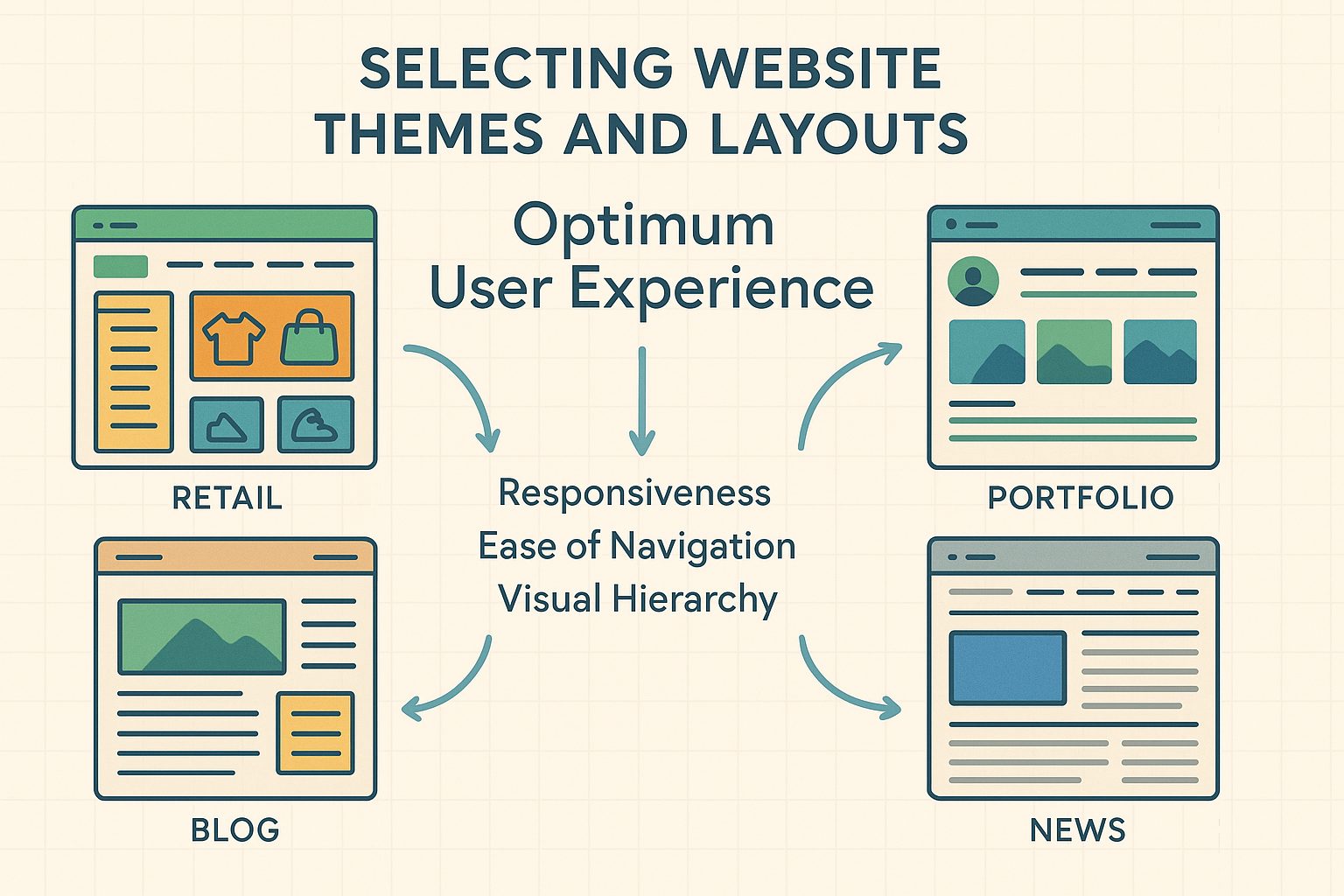
Choosing the right website theme and layout involves thoughtful consideration of your clients’ preferences and your business identity. Start by evaluating themes that reflect your construction services, ensuring they’re visually appealing and functional. A clean, intuitive design facilitates easy navigation, allowing potential clients to find information quickly. Highlight your latest projects prominently and use high-quality visuals to captivate visitors. By aligning your website design with the latest industry trends and your company’s marketing efforts, you ensure your digital presence is both engaging and effective. A user-friendly, responsive design helps solidify your firm’s reputation in the construction industry.
Optimizing Your Construction Website for SEO and Performance
Enhancing your construction website design for SEO and performance is essential in the digital age. By optimizing your website, you improve visibility in search engines and provide a seamless experience for visitors. This optimization involves focusing on content quality, ensuring fast load times, and integrating user-friendly navigation. Implementing these strategies elevates your digital presence, attracting more potential clients. It’s vital to remember that the foundation of high-performing websites lies in delivering valuable information, emphasizing services, and showcasing projects effectively to drive business growth.
| Strategy | SEO Impact | Performance Benefits | Implementation Difficulty | Tools and Resources |
| Optimize Meta Tags | Improves Search Rankings | Faster Page Understanding | Low | Google Search Console |
| Improve Page Load Speed | Better User Experience | Reduced Bounce Rate | Medium | Google PageSpeed Insights |
| Mobile-Friendliness | Higher Mobile Rankings | Increased Traffic | Medium to High | Mobile-Friendly Test |
| Quality Backlinks | Boosts Domain Authority | Enhanced Credibility | High | Ahrefs, SEMrush |
| Secure HTTPS Protocol | Trust and Ranking Signal | Data Security | Medium | SSL Certificates |
This table highlights the core strategies for enhancing SEO and performance in construction websites, reflecting on both search visibility and user engagement.
Tips for Enhancing Search Visibility and User Engagement
To boost search visibility and user engagement of your construction website, prioritize creating rich content that resonates with your target audience. Start with incorporating relevant keywords naturally into your content, not just in blog posts but throughout your website. A well-structured site map enhances navigation, improving the digital experience for clients. Regularly updating your services and projects sections keeps your content fresh and engages returning visitors. Additionally, harnessing social media platforms for marketing can drive traffic to your website, amplifying its impact in the construction industry.
| SEO Strategy | Website Performance | User Interaction |
| Keyword Research | Fast Loading Times | Responsive Design |
| On-page Optimization | Optimize Images | Intuitive Navigation |
| Meta Descriptions | Minimize Redirects | Engaging Content |
| Backlink Building | Leverage Browser Caching | Interactive Elements |
This table highlights strategic approaches to optimizing construction websites for improved search visibility and user interaction.
Showcasing Your Projects Effectively Online
Creating a strong online presence is essential for construction companies looking to showcase their projects effectively. A visually appealing construction website design that highlights your projects not only attracts potential clients but also sets your brand apart in the competitive industry. By using digital tools and best practices, you can present your portfolio in a way that resonates with audiences. This will enhance construction marketing efforts and solidify your business identity. Understanding how to best present your services can transform prospects into loyal clients.
Best Practices for Presenting Construction Portfolios
An impactful construction web design should showcase your portfolio in a way that underscores the quality and expertise of your services. Prioritize high-resolution images of your projects to provide a visually appealing experience that markets your capabilities effectively. Incorporate detailed descriptions to explain the challenges and solutions of each project, demonstrating industry expertise. Use client testimonials to reinforce trustworthiness and reliability. Highlight recent work prominently to keep your content current, ensuring your construction company is top of mind and attracts business from digital audiences.
The Future of Construction Web Design
The construction industry’s digital transformation is reshaping how construction websites are designed, blending cutting-edge technology with user-focused elements. As digital innovation permeates the industry, the design of construction websites is pivotal to showcasing a company’s projects and services effectively. Future trends focus on adaptive design, integrating construction marketing strategies, and embracing new technologies. Construction firms are keen on refining digital experiences to make project information accessible, ensuring seamless navigation for clients. This evolution in website design also enhances brand perception and positions businesses as industry leaders.
Trends to Watch in Digital Construction Firm Presence
Emerging trends in construction website design highlight the importance of integrating advanced digital elements to enhance client interaction. Embracing responsive website design is crucial, particularly as mobile browsing becomes dominant. Strategies like incorporating interactive project showcases and utilizing virtual reality tours are setting modern construction firms apart. Feature-rich content that aligns with construction marketing objectives can effectively engage users, while AI-driven customer service enhances user satisfaction. Industry leaders focus on personalizing user experiences, ensuring that their brand reflects innovation and professionalism. Staying ahead with these trends will transform how construction companies present their services digitally.
| Trend | Description | Technology | Impact |
| AI Integration | Utilizing artificial intelligence to automate and enhance user interactions. | Machine Learning | Improved customer engagement and personalized experiences. |
| Augmented Reality | Employing AR to visualize projects in a real-world environment. | AR Software | Enhanced design visualization and client satisfaction. |
| Eco-Friendly Design | Incorporating sustainable elements in web development. | Green Hosting | Reduced carbon footprint and increased appeal to eco-conscious clients. |
| Mobile Optimization | Ensuring seamless website performance on smartphones and tablets. | Responsive Design | Wider audience reach and higher user retention. |
This table underscores the evolving role of digital strategies in redefining construction web design.
Inspiring construction website designs offer an opportunity to enhance your brand’s online presence, reflecting professionalism and driving engagement. By incorporating intuitive navigation, rich imagery, and persuasive content, your site can effectively communicate your expertise and value. As you explore these inspirations, consider how each element can be tailored to your business needs to captivate prospective clients. To elevate your project further, download our comprehensive guide on website optimization, ensuring your brand resonates with excellence. Start building your stunning construction website today and let your online presence be a testament to your craftsmanship.
FAQs
What are the key elements for designing an effective construction website?
An effective construction website should incorporate intuitive navigation, high-quality images, engaging storytelling, and a responsive layout. These elements enhance user experience and improve engagement.
How can a construction website improve SEO and visibility?
Optimizing a construction website for SEO involves incorporating relevant keywords, ensuring fast load times, and implementing user-friendly navigation. These strategies improve search engine visibility and enhance user experience.
Why is mobile responsiveness important for construction websites?
With many clients browsing on mobile devices, a responsive design ensures that the website is accessible and visually appealing across various platforms, thereby enhancing user experience and fostering client trust.
How can digital tools like AI and VR benefit construction websites?
Advanced digital tools such as AI and VR can showcase construction projects in innovative ways, offering virtual tours and enhanced interaction. This can significantly improve client engagement and set a company apart from competitors.
What strategies can enhance user interaction on a construction website?
To enhance user interaction, construction websites can include features like virtual tours, interactive project showcases, chatbots, and integrated communication tools. These add-ons create a seamless and engaging client experience.