Understanding the depth of house foundations is crucial for ensuring the stability and longevity of residential buildings. In the UK, varying soil types and climate conditions necessitate careful consideration when determining foundation depths. Adequate depth prevents structural issues and mitigates risks associated with ground movement and water ingress.
This guide explores the factors influencing foundation depth, including soil composition, regional weather patterns, and construction regulations, to assist homeowners and builders in making informed decisions. By delving into these essential aspects, property stakeholders can ensure strong, durable foundations for safe living environments.
Brief Overview
Understanding the depth of house foundations in the UK is vital for ensuring a building’s stability and longevity. Factors such as soil type, climate variations, and building regulations significantly influence foundation depth decisions. By considering these elements, construction professionals can design robust foundations tailored to specific site conditions.
Effective planning and compliance with regulations help mitigate structural risks posed by environmental challenges. Engaging with experts and staying informed about soil and climate impacts fosters safer, more durable building practices. Access further insights with our comprehensive guide on UK foundation practices for detailed planning advice.
Key Highlights
Foundation depth in the UK depends on soil type, climate, and regulations for stability and safety.
Clay soils require deeper foundations due to expansion and contraction with moisture changes.
Building regulations enforce specific criteria for foundation depth, ensuring safety and compliance.
Frost protection involves setting foundations below the frost line to prevent structure damage.
Chalk areas require careful consideration of water management and geological features like sinkholes.
Introduction to Foundation Depth in the UK
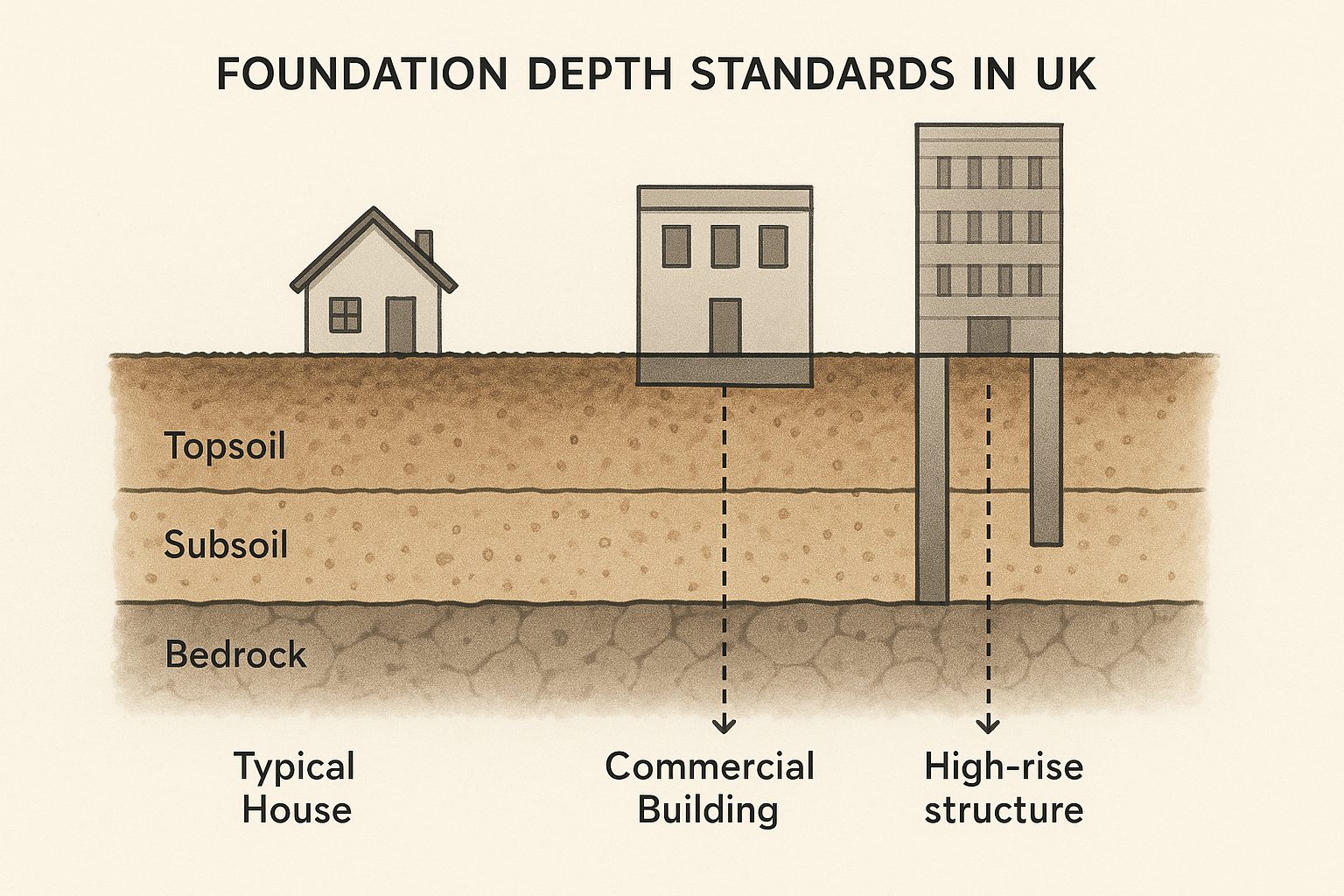
Foundation depth is an essential component of any construction project in the UK, ensuring the stability and durability of buildings. Understanding local building codes and geological conditions helps pinpoint the ideal foundation depth for each specific project. This introduction covers the significance of accurate depth requirements and the roles of soil type and load in determining the excavation depths. By ensuring foundations are tailored to unique site conditions, project success is more likely, paving the way for secure and lasting structures.
Importance of Accurate Depth Requirements
In the realm of construction, the accuracy of depth requirements for foundations cannot be overstated. Ensuring that the foundation reaches the correct depth is vital for maintaining the building’s stability, especially when considering the load it must support. In the UK, building regulations dictate specific criteria for foundation depth, which varies depending on factors such as soil type, building type, and load-bearing requirements.
For construction projects involving heavy structures, deeper foundations may be necessary to provide the needed support. The building control office will typically enforce these depth requirements, ensuring compliance with local building regulations. Accurate depth requirements consider both static and dynamic factors that a building will encounter over its lifetime. The minimum depth for any given area is determined by geological surveys which assess both the undisturbed ground and the various soil types present.
For instance, clay soils generally require deeper foundations due to their susceptibility to shrinkage and expansion. This is critical when planning whether to include a basement, as the excavation will need to account for significant depth to maintain integrity over time. Conversely, sandy or gravelly soils might not require as extensive a depth, although ground stability tests will provide precise insights. Adding further complexity to foundation planning is the necessity to consider future building extensions.
If a structure is intended to support additional storeys or expansions, the initial foundation must be planned with these future loads in mind. Not incorporating such potential developments into the original foundation design can lead to costly renovations and possible structural failure. Building control authorities offer guidance on these future-proofing strategies, often requiring a depth that goes beyond the immediate structural needs.
This proactive approach not only aligns with the building regulations but also caters to the long-term viability and safety of the building. To ensure the foundations are laid correctly, it’s imperative that construction teams consider the implications of seasonal changes and climate conditions on foundation stability. For example, the depth that protects against frost heave must be carefully calculated, as this natural process can cause substantial upheaval in improperly laid foundations.
By planning around these natural processes, builders can prevent future structural damage and ensure the longevity of the construction. It is ultimately the responsibility of architects, engineers, and construction managers to balance these factors, yielding a foundation depth that meets both practical and regulatory standards. Doing so ensures that the building will stand the test of time, weathering both the literal storms and the inevitable human expansions.
The emphasis on accurate depth requirements, therefore, is not just about regulation compliance but reflects a commitment to creating resilient and enduring structures. With these considerations, the groundwork is laid for subsequent discussions on how different soil types, foundation types, and other environmental factors influence and shape these requirements in detail.
Factors Influencing Foundation Depth
Foundation depth is a critical element that influences a building’s stability and long-term durability. Several key factors, including soil type, load demands, and environmental conditions, play pivotal roles in determining this depth. Understanding these factors can help ensure compliance with UK building regulations while tailoring construction practices to specific site needs. We’ll examine the impact of soil types, especially clay soils, on foundations to reveal the nuances of crafting a solid, enduring base.
| Soil Type | Foundation Depth Considerations | Construction Strategies |
|---|---|---|
| Clay | Prone to significant expansion and contraction; foundation must be deeper to reach stable soil layers. | Include moisture control solutions and use reinforced concrete for stability. |
| Sandy | Less moisture retention; requires consideration for potential erosion and shifting. | Compaction and stabilization methods to prevent shifting and ensure solidity. |
| Silt | Susceptible to shifting when wet; risks of uneven settling. | Utilize drainage systems to remove excess moisture and reinforce with pilings. |
| Rock | Generally very stable, but excavation can be challenging and require specialized equipment. | Use anchoring techniques and minimize disturbance to the rock’s natural structure. |
| Peat | Highly compressible and prone to decomposition, requiring particularly deep foundations. | Consider rafts or piles to distribute weight and achieve necessary support. |
This table illustrates the critical considerations for determining foundation depth based on soil type, emphasizing the need for tailored construction strategies to ensure stability and compliance with building regulations.
Impact of Soil Type on Foundations
The type of soil present at a construction site significantly impacts the depth and stability of foundations. Different soil types possess varying load-bearing capacities and moisture retention properties that directly influence foundation construction. Understanding the innate characteristics of the soil helps construction managers make informed decisions about foundation depth, ensuring compliance with local building regulations and guaranteeing structural integrity over time.
Heavy clay soils, for example, can expand and contract drastically with moisture fluctuations, a factor that necessitates deeper footings to maintain stability. In contrast, sandy soils, known for their drainage properties, might require less depth but need stabilization techniques to prevent shifting. Construction teams must assess these conditions thoroughly during site evaluations to decide the appropriate foundation type and depth. Effective soil analysis involves conducting soil tests to evaluate the soil’s bearing capacity.
This process includes understanding the soil’s density, composition, and moisture content. Insights drawn from these tests can highlight potential challenges like soil shrinkage in clay soils or erosion risks in sandy areas. By understanding these conditions, construction teams can mitigate risks, optimizing foundation designs to withstand environmental and load demands. Besides soil composition, construction teams must consider how seasonal changes affect soil characteristics.
For instance, frost depth is crucial in colder regions of the UK, where temperature fluctuations can move soil surfaces, threatening the integrity of the foundation. Adequate depth protects against frost heave, ensuring the building remains stable through seasonal cycles. In factoring soil type into foundation planning, the inevitable interaction between a building’s foundation and its natural environment must be addressed.
Construction managers play a pivotal role in liaising with geotechnical engineers to evaluate specific site conditions fully. This collaboration is essential for adapting foundation strategies to better suit regional soil types, ensuring structures are both resilient and durable. The commitment to understanding site-specific soil conditions underpins a project’s overall success, encouraging safe and sustainable building practices.
Thus, while designing foundations, acknowledging the impact of soil type, alongside adopting suitable construction techniques, ensures a structure that adheres to UK building standards. Employing these techniques helps avoid costly errors and potential structural issues down the line, reinforcing the importance of carefully considering soil conditions in every construction endeavour.
| Factor | Impact on Foundation | Considerations/Strategies |
|---|---|---|
| Soil Types | Determines bearing capacity | Conduct geotechnical surveys to assess soil characteristics |
| Load Demands | Influences depth for stability and support | Calculate load-bearing requirements for optimal foundation depth |
| Environmental Conditions | Affects potential for movement and erosion | Factor in weather patterns and water table variations |
| Frost Depth | Risk of freeze-thaw cycles impacting stability | Ensure foundation extends below frost line in colder climates |
| Clay Soil Challenges | Prone to expansion and contraction | Utilize moisture control measures and deeper footings |
This table outlines the pivotal factors that affect foundation depth, highlighting critical considerations for maintaining structural integrity in diverse soil conditions.
Considerations for Clay Soils
Clay soils present unique challenges in foundation construction, necessitating special consideration to prevent structural issues. These soils are notorious for their expansive properties, swelling significantly with moisture absorption and contracting during dry spells. This behaviour can exert tremendous pressure on foundations, leading to potential structural damage if not properly accounted for in the design phase.
In the UK, clay soils are prevalent in many regions, making them a common consideration for construction projects. Addressing the challenges posed by clay soils involves recognizing their moisture-driven dynamics and planning accordingly. Foundations in these areas often require deeper excavation to reach stable, undisturbed ground, ensuring that the building rests securely despite changes in moisture content. One critical consideration is the depth of the footings, which must often exceed standard requirements to counteract the expansive nature of clay soils.
This depth aids in reaching more stable soil layers, mitigating risks associated with surface shifts. Builders need to incorporate a buffer zone beneath the foundation to accommodate potential expansion while safeguarding against uneven settlement that could undermine the building’s integrity. Additionally, drainage plays a pivotal role in managing the effects of clay soils on foundations. Implementing comprehensive drainage systems can divert excess water away from the foundation, lessening moisture fluctuations in the clay and reducing the risk of expansion-related pressure on the structure.
These systems can include perimeter drains and strategically sloped grading around the building site. Monitoring environmental conditions is equally important in clay-heavy areas. Seasonal changes, particularly in precipitation patterns, can exacerbate the expansion and contraction cycle in clay soils. Therefore, it’s vital for construction teams to integrate protective measures, such as moisture barriers, to shield the foundation from excessive water infiltration.
The collaboration between architects, engineers, and construction managers is crucial when addressing clay soils. By pooling knowledge about soil mechanics, load requirements, and building regulations, teams can develop tailored solutions that account for the unique properties of clay. Such cooperation not only ensures compliance with regulations but also aligns with best practices for safe building development.
In summary, an in-depth understanding of clay soils is imperative for constructing durable foundations in affected areas. By employing innovative techniques and leveraging professional expertise, builders can effectively overcome the challenges these soils present, ensuring long-standing and stable structures. This focus on adapting to specific soil conditions reflects a commitment to quality construction and exemplifies a proactive approach to foundation design.
| Soil Type | Impact on Foundation | Required Techniques | Collaborative Considerations |
|---|---|---|---|
| Clay | High shrink-swell potential affects stability | Use of piers or pads to reduce movement impact | Collaboration with geotechnical engineers to assess soil behavior |
| Silt | Prone to water retention, may lead to settling | Incorporation of drainage systems and compacted fill | Coordination with hydrology experts for water management strategies |
| Sand | Good drainage, but lacks cohesive strength | Use of densification or grouting methods | Partnership with soil specialists to determine optimal compaction techniques |
| Rock | Provides solid bearing but difficult to excavate | Implementation of specialized rock-breaking tools | Engagement with structural engineers to design anchoring solutions |
This table succinctly outlines the diverse soil-related challenges and strategic approaches necessary for effective foundation planning in various ground conditions, emphasizing the importance of collaboration and tailored engineering solutions.
Understanding Different Foundation Types
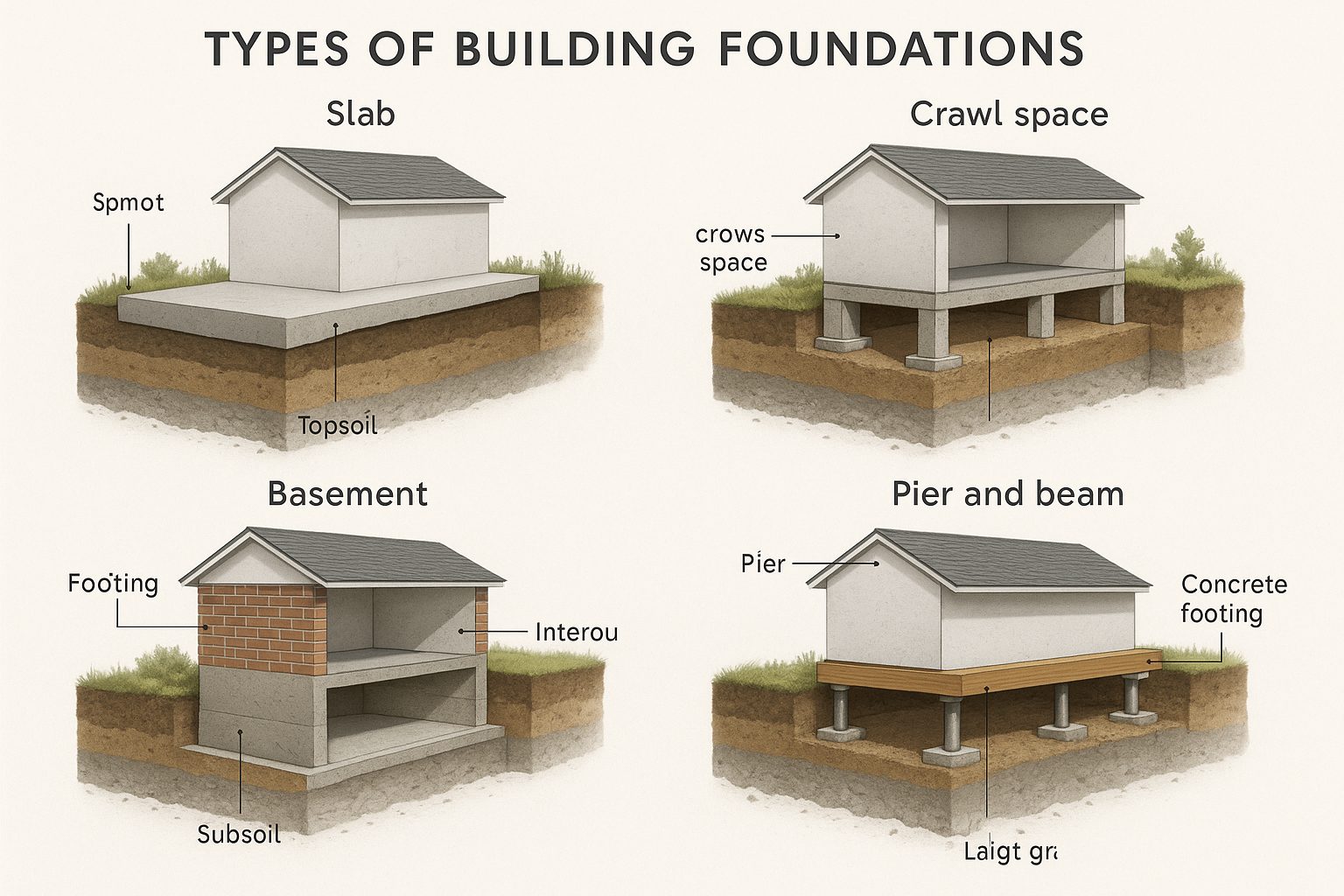
When considering construction in the UK, it’s vital to grasp the intricacies of different foundation types and how they relate to foundation depth decisions. Each foundation type holds unique characteristics, often determined by the specific soil type, environmental conditions, and the intended load of the building. This section will explore how these variables influence the depth of foundations and discuss considerations essential for various foundation types, including the impact of excavation depths, footings, and building regulations.
| Foundation Type | Depth Considerations | Environmental Factors |
|---|---|---|
| Strip Foundations | Typically require a minimum depth of 450mm in UK clay soil, but depth must increase with higher loads and poor soil conditions. | Water table levels and frost depth can affect minimum depth decisions, ensuring foundations do not suffer from heave or shrinkage. |
| Raft Foundations | Depth may vary from 150mm to 300mm, accounting for building load distribution over a wider area, thus minimizing local subsidence. | Susceptible to ground movement caused by freeze-thaw cycles; thus, often used in areas with stable ground conditions. |
| Pile Foundations | Depth depends on achieving sufficient friction or end-bearing capacity, particularly in weak, unstable soils prevalent in some UK regions. | Must navigate underground water conditions and avoid disturbing adjacent structures, common in dense urban UK areas. |
| Pad Foundations | Require sufficient depth to reach a stable soil layer that can support concentrated loads from columns, typically deeper in weaker soils. | Can be affected by seasonal changes in moisture content of the soil, common in temperate UK climates. |
This table consolidates the fundamental insights into foundation depth decisions, reflecting the unique construction challenges and considerations within the UK.
Foundation Depth Considerations for Varied Types
When delving into the world of construction, especially within the UK where geological diversity is pronounced, understanding each foundation type and their associated depth requirements is critical. Foundation depth isn’t just a measure of how deeply a foundation sits but is a calculated decision based on multiple factors including soil type, building load, and environmental conditions. These elements must align to ensure that a building has the support and durability it needs to stand the test of time, literally from the ground up.
To begin with, the soil type is one of the foremost considerations in selecting a suitable foundation depth. Different soils, from clay to sand, have unique attributes that influence the type of foundation needed. For instance, clay soils with their propensity to expand and contract necessitate deeper foundations, possibly involving extensive excavation depths to reach undisturbed ground. This ensures the building remains stable despite the shifting nature of the soil. Conversely, rocky soils might not need as extensive an excavation, but require careful footing placement to avoid structural imbalances.
Techniques such as pile foundations are often employed in rocky terrains, where holes are drilled deep enough to anchor into stable layers below. Building a structure intended for a high load or multiple storeys also requires intricate foundation planning. Multi-storey buildings, because of their significant load, typically demand deeper foundations, often incorporating footings and basements that are structurally designed to distribute weight effectively.
The building’s load must be meticulously calculated to ensure that the foundation depth is sufficient to bear the weight and any additional load from future expansions or extensions. This is often a detailed component of the construction’s architectural and engineering plans, requiring collaboration among architects, engineers, and construction managers to ensure compliance with UK building regulations.
Additionally, seasonal and environmental conditions like frost present further considerations when determining foundation depth. In areas subject to frost heave, inadequate foundation depth can lead to upheaval and cracking as the ground shifts with the freeze-thaw cycle. For these cold climate considerations, foundations need to be set below the frost line, a depth determined by local climate data, ensuring that fluctuations do not compromise structural integrity.
Building regulations in the UK provide a framework that guides the minimum depth requirements, which are subject to periodic review and updating. These regulations encompass guidelines for various foundation types, ensuring stability and safety standards are met across the board. For instance, the presence of basements within a structure alters depth requirements due to the need for additional support against lateral earth pressures.
Moreover, the type of foundation selected must also be mindful of future developments, such as potential extensions to the structure. Overlaying this is the sustainability factor , modern construction practices are increasingly steering towards reducing environmental impact through minimal excavation and soil disturbance. Given these myriad factors, selecting the right foundation type and its corresponding depth is a sophisticated process necessitating professional guidance.
Construction managers must have an in-depth understanding not only of the technical specifications but also of the regulatory landscape encompassing foundation design. Thus, projects succeed best when early-stage interactions between all stakeholders lead to informed decisions that accommodate present requirements and anticipate future possibilities.
An education-driven approach, as promoted by the UK Construction Blog, can empower project managers to become adept at making such critical decisions, ensuring foundations that are both compliant and tailored perfectly to site-specific demands.
Factors influencing foundation depths in UK construction:
- Assess soil composition meticulously for depth variance due to unique subsoil behavior.
- Ensure rigorous load calculations for multi-storey buildings to prevent structural failure.
- Collaborate with architects and engineers to align with UK building regulations.
- Factor in climate concerns to determine depth relative to frost line disturbances.
- Evaluate future extension needs for adaptable foundation planning.
- Select foundation types to reduce environmental impact through minimal excavation.
- Regularly review building regulations for updated depth requirements.
Addressing these factors leads to safe and sustainable constructions.
Building Regulations and Minimum Depth Standards
The depth of a house foundation in the UK hinges on a complex interplay of factors such as soil conditions, load demands, and building regulations. Properly adhering to building regulations not only ensures compliance but also safeguards the structural integrity and longevity of a building.
This section delves into the intricacies of ensuring compliance with the minimum depth required by regulations and the implications of frost protection on foundation depths. Contractors, architects, and homeowners can gain valuable insights into maintaining compliance while addressing environmental and soil-related challenges.
| Factors | Considerations | Regulations | Solutions |
|---|---|---|---|
| Soil Type | Clay, Sandy, Loamy | Depth varies based on type | Conduct soil analysis |
| Moisture Content | High variability | Adapt depth accordingly | Drainage systems |
| Frost Depth | Local climate impact | Exceed frost line requirements | Use insulation materials |
| Load Bearing | Structural demands | Ensure adequate support | Engineer consultation |
| Regulatory Compliance | UK Building Codes | Follow minimum standards | Regular updates on codes |
This table emphasizes the interconnected aspects of building regulations, aiming to safeguard structures against environmental and structural risks. It highlights the need for careful consideration of soil types, moisture levels, and local climatic conditions, alongside the importance of adherence to regulatory standards and innovative solutions to future-proof constructions.
Ensuring Compliance with Minimum Depth
Compliance with building regulations concerning foundation depth is crucial in the UK, given the country’s varied geological and climatic conditions. At the forefront is the requirement for foundations to reach a minimum depth that is appropriate to the soil conditions and the building load. The minimum depth ensures that foundations are securely anchored, providing adequate support regardless of the structural load or environmental conditions.
In this context, adherence to building regulations is not only a legal necessity but a fundamental practice in risk management and structural safety. Understanding the specific regulations that dictate minimum depth requirements is essential for ensuring compliance. These regulations provide a framework for architects and builders to develop foundation designs that meet current safety and durability standards.
In the UK, building control authorities enforce these regulations, often requiring thorough documentation and inspection of the proposed foundation plans. This ensures that the foundation design takes into account factors like soil type, undisturbed ground level, and potential loads. Particularly in urban areas, where multi-storey extensions and modifications are common, the foundation’s capacity to handle increased loads without compromising its integrity is critical.
For successful compliance, engaging geotechnical experts is often necessary to conduct comprehensive soil analyses. These assessments establish the soil’s load-bearing capacity, identify the depth of undisturbed soil, and reveal any environmental concerns, such as moisture content that could affect the foundation’s stability. Such detailed evaluations ensure that foundation plans submitted for planning permission accurately reflect necessary depth adaptations to meet minimum depth standards.
Moreover, builders need to consider potential excavation depths to reach undisturbed soil, especially in overbuilt or redeveloped areas where previous construction may have altered the soil landscape. Collaboration among construction teams, architects, and building inspectors fosters an environment of transparency and diligence. Contractors must stay updated on changes to building codes, ensuring that all documentation and construction practices are in line with current regulatory standards.
Failure to comply with these standards can lead to project delays, increased costs, and potentially hazardous outcomes, including structural failure. Thus, staying informed about regional building regulations concerning foundation depth and integrating these requirements into all planning processes is vital for project success. Maintaining compliance isn’t solely about meeting the minimum requirements; it’s about anticipating potential future changes within a structural context.
This forward-thinking approach is integral in construction, especially when considering any extensions or additional storeys. The foundation should be engineered not only for the present building but also with regard to future development possibilities. Well-planned foundations not only align with compliance standards but also protect investments by being structurally sound, adaptable, and enduring.
Such strategic planning and compliance with building regulations affirm a commitment to quality construction practices, positioning projects for long-term success.
| Key Factors | Regulatory Requirements | Implications | Challenges | Best Practices |
|---|---|---|---|---|
| Soil Conditions | Compliance with local soil testing standards | Potential for soil erosion or expansion | Variable soil quality and types | Conduct thorough geotechnical assessments |
| Load Demands | Meet structural load-bearing regulations | Foundation stability and longevity | Accurate load calculations | Consult structural engineers for precise designs |
| Frost Protection | Adherence to frost line depth guidelines | Prevention of frost heave damages | Varying frost depths in different regions | Insulate foundations in colder climates |
| Regulatory Compliance | Follow national and local building codes | Ensures safety and legal conformity | Navigating complex regulations | Stay updated with regulatory changes |
This table concisely illustrates the critical considerations in foundation depth planning, emphasizing regulatory compliance and environmental challenges.
Frost Protection and Depth Implications
Frost protection is a critical consideration in determining the appropriate foundation depth for buildings in the UK. The country’s climate, characterized by seasonal temperature fluctuations, necessitates specific measures to guard against frost heave, which can severely compromise foundation stability. Understanding the impact of frost on foundation depth is vital for builders and architects who aim to design structures that withstand environmental challenges over the long term.
Frost heave occurs when moisture-rich soil freezes and expands, causing the ground to shift upwards. This can exert significant upward pressure on foundations, leading to potential structural damage. To mitigate this risk, foundations must be dug below the frost line, the depth at which soil remains unfrozen, to prevent the foundation from moving with the freeze-thaw cycle of the soil above. Determining this depth requires a thorough understanding of local climate data and soil conditions, as these factors influence the extent of frost penetration.
The implications of frost on foundation depth necessitate adaptations in foundation design and construction approaches. Builders must consider the type of soil present, as certain soils, like clay, are particularly susceptible to frost heave due to their moisture-retention properties. Additionally, planning for frost protection involves integrating features like frost aprons or techniques such as using insulation materials around the foundation perimeter to minimize temperature interactions that encourage soil freezing.
Solutions to frost-related foundation issues extend beyond merely increasing depth. Effective drainage solutions are paramount, preventing water accumulation around the foundation that could freeze. Construction teams are tasked with implementing systems that keep water away from the foundation, thus reducing moisture levels in the surrounding soil. Options like French drains or strategically graded landscaping can redirect water flow, ensuring that the areas most likely to freeze are dry. Furthermore, regulation compliance is crucial.
Building regulations in the UK encompass depth recommendations tailored to prevent frost damage. Ensuring compliance not only satisfies legal requirements but also enhances a structure’s durability by embedding best practices into standard construction procedures. Additionally, planning permissions often include specific clauses addressing frost protection, depending on the building’s location and proposed depth.
Future-proofing against environmental variations means employing robust construction techniques that shield foundations from frost impacts over time. This includes selecting durable materials and innovative design methods that resist weather-induced shifts. A proactive approach incorporates both proven strategies and emerging technologies to create resilient foundations capable of withstanding the United Kingdom’s climatic challenges.
Educating construction professionals and stakeholders on the importance of frost protection and its depth implications elevates the standard of construction practices. The UK Construction Blog champions such knowledge dissemination, fostering an industry-wide commitment to safe, durable, and regulation-compliant building. By embracing these measures, foundations can be constructed to support enduring structures, safe from the vagaries of frost and time.
| Key Considerations | Regulatory Requirements | Best Practices | Potential Challenges |
|---|---|---|---|
| Foundation Depth | Minimum depth of 1 meter for standard soil conditions | Conduct soil investigations to determine appropriate depth | Variable soil conditions impacting depth requirements |
| Frost Protection | Ensure foundation depth exceeds local frost line | Use insulating materials to mitigate frost effects | Frost heave causing structural instability |
| Soil Type | Adhere to specific regulations for clay and sandy soils | Adjust foundation type and depth based on soil analysis | Soil susceptibility to changes in moisture content |
| Water Drainage | Comply with regulations to prevent water pooling | Implement drainage solutions around the foundation | Poor drainage leading to water damage and settlement |
This table underscores the critical aspects of foundation depth compliance and frost protection, emphasizing the role of regulations and best practices in ensuring structural integrity. By highlighting these foundational considerations, the table supports informed decision-making in building design and construction.
Special Considerations for Foundations in Chalk Areas
When constructing in the UK’s chalk regions, understanding local geological and environmental nuances is crucial for determining foundation depth. Chalk areas, known for their unique soil type composed primarily of calcium carbonate, demand specific considerations due to their distinct characteristics. Unlike clay or sandy soils, chalk is relatively stable and offers a higher load-bearing capacity, but its porosity can lead to challenges, particularly concerning moisture management.
In chalk soils, foundation depth must be carefully calculated to ensure stability. While these soils provide a firm footing due to their compact nature, they are also highly permeable, allowing water to pass through easily. This permeability can affect the foundation’s integrity if not properly addressed. Excavation depths should extend into undisturbed ground within the chalk to anchor the structure securely, preventing potential subsidence issues.
Building regulations in the UK provide specific guidelines tailored to address the depth requirements in chalk areas, often necessitating different excavation depths compared to other soil types. These regulations ensure that foundations can adequately support the load of the building while accommodating the soil’s properties. Additionally, for projects involving extensions or additional storeys, deeper foundations or alternative solutions like piling may be necessary to manage the increased load and maintain compliance with building standards.
One critical consideration in chalk areas is the potential for solution features, such as sinkholes or fissures, which can arise from the natural weathering processes of chalk. These features can significantly impact foundation planning, requiring thorough geological surveys to identify the safest and most stable locations for construction. Identifying such natural formations early can save on future cost implications and structural risks.
Incorporating effective drainage systems in areas with chalk foundations is essential for mitigating moisture-related problems. Chalk’s permeability means water can accumulate beneath footings if not properly managed. This can lead to frost-related issues, particularly in colder regions, where freezing temperatures could exacerbate the risk of frost heave. Building on chalk requires careful moisture control, possibly through perimeter drainage systems or integrating moisture barriers, to shield against these risks.
For construction involving basements, chalk’s permeability poses additional challenges. Proper waterproofing measures should be implemented to safeguard against groundwater seepage, which can compromise the structural integrity of the basement and the overall building. Builders might consider using innovative materials designed to withstand the specific conditions found in chalk landscapes.
As with any construction project in the UK, ensuring compliance with building regulations remains a cornerstone of foundation planning in chalk areas. These regulations not only address load-bearing and environmental considerations but also emphasize proper depth requirements. Engaging with experts, including geotechnical engineers, during the early planning stages can facilitate efficient design solutions and compliance with regulatory frameworks, ensuring that the foundations are both stable and durable.
Ultimately, adapting foundation practices to the unique characteristics of chalk soils can lead to long-lasting structures that maintain their integrity over time. By acknowledging the peculiarities of chalk areas, construction professionals can design and implement robust strategies to overcome the specific challenges posited by this distinctive soil type. The UK Construction Blog serves as a valuable resource for such specialized knowledge, fostering an informed approach to tackling the complexities of foundation design in chalk areas.
Understanding the depth of house foundations is crucial for ensuring the structural integrity and longevity of a building in the UK. By considering factors such as soil type, climate, and building regulations, construction project managers can make informed decisions that provide stability and safety. Whether you’re involved in new construction or renovating existing structures, a well-chosen foundation depth offers peace of mind and protection against environmental challenges. Stay informed, consult with experts, and plan thoroughly to build a foundation that stands the test of time. For further insights, download our comprehensive guide on UK foundation practices.
Frequently Asked Questions
What factors determine the depth of house foundations in the UK?
The depth of house foundations in the UK is determined by several factors including soil type, climate conditions, and compliance with building regulations. Specific soil characteristics require different depth considerations, especially expansive soils like clay. Additionally, environmental conditions such as frost require foundations to be set below the frost line to avoid structural damage.
Why are deeper foundations often required in clay soil areas?
Clay soils expand and contract significantly with changes in moisture, which can exert added pressure on foundations. To counteract this, deeper foundations are usually required to reach more stable soil layers, preventing structural shifts and ensuring long-term stability.
How do building regulations influence foundation depth in the UK?
Building regulations in the UK set out specific criteria for foundation depth to ensure safety and structural integrity. These regulations take into account factors like soil type, load-bearing requirements, and environmental conditions, guiding construction professionals to meet minimum requirements while allowing for future structural changes.
What is the significance of frost protection for house foundations?
Frost protection involves setting foundations below the frost line, the depth at which soil does not freeze. This is crucial to prevent frost heave, which can cause the soil to expand and disturb foundation stability, leading to structural damage over time.
Are there special considerations for constructing foundations in chalk areas?
Yes, chalk areas require careful water management due to their permeability and potential geological features like sinkholes. Foundation depth must account for these characteristics, often necessitating comprehensive drainage systems to redirect water and prevent moisture-related problems.