Exploring an interior design apprenticeship opens doors to a dynamic career, merging creativity with practical skills. This pathway provides aspiring designers with hands-on experience and access to impactful training courses, tailored to cultivate professional growth. Whether you’re passionate about crafting aesthetic spaces or eager to implement sustainable design solutions, apprenticeships offer invaluable opportunities.
By blending technical training with industry insights, these programs prepare you for a successful future in the thriving design sector. Join us as we delve into diverse work opportunities and cutting-edge design courses that can elevate your career journey.
Brief Overview
Embarking on an interior design apprenticeship offers a gateway to a creative and flourishing career by combining hands-on experience with extensive training courses. Aspiring designers gain invaluable insights and practical skills in areas like space planning, colour theory, and client interaction, all while receiving tailored mentorship from industry experts.
These apprenticeships provide diverse career opportunities, from entry-level certifications to advanced qualifications, equipping participants with essential skills to excel in the evolving design industry. Ultimately, this path fosters professional growth, enabling individuals to transition smoothly into specialized roles like design engineers and beyond, promising both personal and professional advancement.
Key Highlights
- Interior design apprenticeships offer practical experience and essential training for a creative career.
- Navigating different apprenticeship levels provides a foundation for technical skills and industry understanding.
- Key skills include creativity, spatial awareness, and effective communication for successful interior design.
- The transition to design engineer roles merges design skills with technical and analytical expertise.
- Post-apprenticeship, careers expand through jobs, further education, and strategic networking opportunities.
Understanding the Interior Design Apprenticeship
Taking the leap into an interior design apprenticeship offers budding designers a blend of practical experience with apprenticeship training. It’s an invaluable opportunity to gain real-world insights while achieving the qualifications needed for a creative career. These types of apprenticeships are accessible at various levels, enabling participants to choose the apprenticeship level that suits them best, whether aiming for foundational certifications or more advanced achievements like a foundation degree.
Maximum funding and resources from educational bodies ensure that aspiring designers can access essential training. Here, we’ll delve into what you can expect from a design apprenticeship and the value of work experience.

| Apprenticeship Levels | Key Benefits | Skills Acquired | Role of Mentorship |
|---|---|---|---|
| Entry Level | Hands-on Experience | Basic Design Principles | Guidance from Experienced Designers |
| Intermediate Level | Professional Networking | Advanced Technical Skills | Opportunities for Feedback and Improvement |
| Advanced Level | Industry Certification | Project Management | Career Path Development |
This table provides a comprehensive overview of the structure and benefits of interior design apprenticeships, illustrating how these programs prepare individuals for dynamic careers in an evolving industry.
What to Expect from an Interior Apprenticeship
An interior design apprenticeship presents a vibrant pathway to gain practical knowledge of the industry. You’ll embark on a process where you’re trained by skilled professionals, giving you first-hand experience that mere academic study can’t replicate. Along the way, apprentices are encouraged to use this service to create their perfect design, honing their skills to deliver bespoke solutions for clients. The apprenticeships typically cater to various demands, ensuring a broad skill set that reflects those in actual design jobs.
Entry requirements differ based on the apprenticeship level, with some stressing qualifications in design, creativity, or technical skills. By the end of your apprenticeship job, you should be prepared to navigate career jobs with a firm grasp of industry standards and customer expectations. The blend of classroom learning and on-the-job training helps forge a deep understanding and technical skillset, readying you for a fulfilling career in interior design.
Aspiring designers must view each project as an opportunity to create their chosen interior and showcase their developing expertise. These experiences are crucial, leading to resourceful designers capable of adapting to the ever-evolving design landscape.
| Apprenticeship Level | Skills Developed | Experience Opportunities | Career Outcomes |
|---|---|---|---|
| Beginner | Basic Design Principles, Color Theory | Hands-on Workshops, Small-Scale Projects | Assistant Designer, Junior Consultant |
| Intermediate | Technical Drawing, Materials Knowledge | Site Visits, Client Interactions | Design Associate, Technical Specialist |
| Advanced | Project Management, Advanced CAD | Mentored Projects, Team Leadership | Senior Designer, Project Manager |
| Expert | Innovative Design Solutions, Sustainable Practices | Industry Networking, International Exposure | Design Director, Entrepreneur |
This table distills the fundamental components of interior design apprenticeships, highlighting the progression from foundational training to career readiness.
The Importance of Work Experience in Interior Design
Work experience stands as a cornerstone of the design apprenticeship landscape. It’s what transforms theoretical knowledge into practical application, allowing individuals to engage directly with the market. The hands-on approach facilitates a deeper understanding, offering experiential learning that enriches one’s future careers. Many clients value this blend of expertise, expecting their chosen designers to craft interiors that truly reflect the customer’s vision.
A wealth of resources is available during the apprenticeship to support your growth, from maximum funding to essential training materials. In every apprenticeship job, you’ll interact with experienced mentors who’ll guide you through challenging scenarios, teaching you to implement design theory in practice. This mentorship also enables apprentices to build a network within the industry, making future job searches significantly more fruitful.
Real-world exposure during work experience enables designing abilities to flourish, providing insights that classroom environments simply cannot. Through these experiences, apprentices are equipped with the tools and confidence to pursue jobs that demand innovative solutions and creative excellence.
Levels and Skills in Interior Design Apprenticeships
Embarking on an interior design apprenticeship involves navigating different apprenticeship levels and honing essential skills. Understanding the various pathways available ensures you can choose the best fit for your career aspirations, whether you’re aiming for foundational competency or advanced expertise. Key skills acquired during an apprenticeship program play a vital role in shaping your proficiency as an interior designer.
This journey not only enhances technical abilities but also prepares you for the diverse challenges encountered in the field. Learn more about how these elements come together to foster growth and opportunity in interior design.
| Apprenticeship Level | Skills Developed | Career Opportunities |
|---|---|---|
| Level 2 | Basic design principles, communication skills, and work safety practices | Entry-level positions such as junior assistant and design support roles |
| Level 3 | Intermediate design techniques, project management basics, and client interaction | Roles like design assistant, project coordinator, or associate designer |
| Level 4 | Advanced design software proficiency, strategic planning, and material selection expertise | Opportunities as an interior designer, space planner, or design consultant |
| Level 5 | Specialized design innovation, leadership, and business management skills | Senior designer, design manager, or entrepreneurial ventures in design |
This table illustrates how the structured progression of apprenticeship levels equips aspiring interior designers with vital skills and opens doors to varied career paths in the design industry.
Navigating Different Apprenticeship Levels
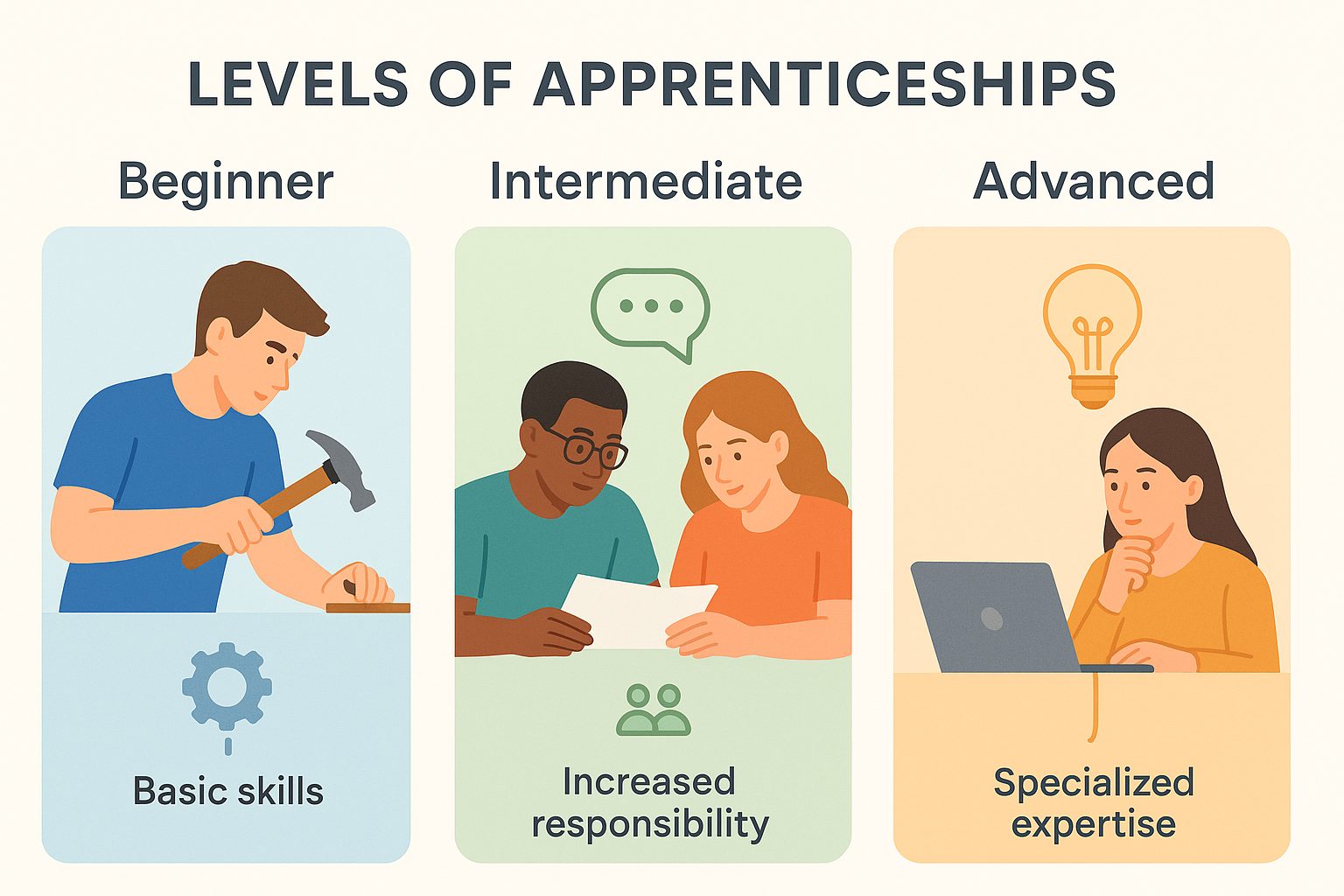
The journey through interior design apprenticeships is structured around distinct apprenticeship levels, each catering to different stages of your learning and career progression. Generally, you start with an entry-level apprenticeship, designed to introduce you to the basic principles of design and industry nuances. This level often involves formal training combined with work experience, giving you the foundation needed to understand the mechanisms of the design world.
As you advance, higher apprenticeship levels such as advanced or higher-degree apprenticeships offer more specialized skills and responsibilities. These levels align with roles demanding more complex design techniques and client management capabilities. It’s crucial to consider these levels as stepping stones, each with specific entry requirements, aimed at elevating your standing in the interior design field. By strategically selecting the right type of apprenticeship, you harness the training and experience necessary to propel you into renowned design jobs across England.
Ultimately, these apprenticeships open doors to various job opportunities, preparing you for a thriving career in interior design.
| Apprenticeship Level | Key Features | Critical Skills | Career Opportunities |
|---|---|---|---|
| Level 1: Introduction | Foundation knowledge in design principles, basic drawing and CAD skills. | Color theory, basic drafting, introductory CAD usage. | Assistant Designer, Junior Drafter. |
| Level 2: Intermediate | Enhanced technical skills, project involvement, use of design software. | Advanced CAD, space planning, materials and finishes expertise. | Interior Designer, CAD Technician. |
| Level 3: Advanced | Full project lifecycle involvement, leadership experience, client interaction. | Project management, client communication, advanced design execution. | Senior Designer, Design Project Manager. |
| Level 4: Specialization | Focused expertise in niche areas, mentorship roles, industry networking. | Specialized design skills (e.g., sustainable design, lighting design), team leadership. | Design Specialist, Interior Design Consultant. |
This table underscores the structured progression and skill acquisition in interior design apprenticeships, highlighting pathways to a successful career.
Key Skills to Learn as an Interior Designer Apprentice
During an interior design apprenticeship, acquiring key skills is paramount to your development as a proficient designer. Creativity is at the core, enabling you to craft unique design solutions tailored to individual client needs. Alongside creativity, technical skills involving furniture arrangement, tv unit with storage, spatial awareness, and resource management are crucial.
These skills form the backbone of your apprenticeship, driven by resources like workshops and mentorships that enhance your learning experience. Additionally, effective communication is emphasized, as conveying ideas and collaborating with clients or team members is essential for success in designing interiors. Throughout your apprenticeship, you will learn to balance these skills with business acumen, understanding budgets, and client needs.
This comprehensive skillset not only equips you for immediate roles but also lays the foundation for future advancements, such as pursuing a foundation degree or other higher qualifications in interior design. By applying these learned skills to real-world scenarios, you’ll emerge as a versatile and resourceful interior designer, ready to tackle the evolving demands of this creative industry.
Exploring Career Paths: From Apprentice to Design Engineer
Transitioning from an interior design apprentice to a design engineer is an exciting journey filled with opportunities for growth and skill enhancement. This path not only enhances your creative abilities but also expands your technical prowess, allowing a seamless move into roles demanding engineering expertise. As you progress from foundational knowledge to advanced applications, you’ll find that the integration of design and engineering offers numerous career paths.
These roles range from hands-on design jobs to strategic career opportunities within engineering firms. Here, we explore the intricacies of this evolution and the potential for remarkable career advancements.
Transitioning from Interior Designer to Design Engineer
The transition from being an interior designer to a design engineer marks a significant shift in your career path, embracing more technical challenges and opportunities for innovation. This evolution often begins with apprenticeships that integrate foundational skills in design with basic engineering principles. As a design engineer, you’ll delve into areas such as structural integrity, material science, and computational design, demanding a more analytical mindset.
Training programs and resources facilitate this shift, offering you the necessary qualifications to excel in engineering roles that emphasize precision and technical acumen. These programs often include specialized courses and workshops that introduce you to the engineering aspects of design, paving the way for smooth transitioning in your career. Embracing this dual expertise can lead to innovative solutions and broadened career opportunities, enabling you to work in diverse environments from architectural firms to construction projects.
Ultimately, the transition offers a rewarding fusion of creativity and technical skill, catering to both artistic sensibilities and engineering demands.
| Career Stage | Skills Developed | Training and Resources | Career Opportunities | Growth Potential |
|---|---|---|---|---|
| Apprentice | Basic Technical Skills, Safety Protocols | Hands-on Workshops, Mentorship | Junior Technician, Entry-level Positions | Foundation for Further Specialization |
| Junior Engineer | Intermediate Design Skills, Software Proficiency | Formal Courses, Software Training | Project Assistant, CAD Designer | Pathway to Specialization in Design |
| Design Engineer | Advanced Design Skills, Project Management | Continuous Professional Development, Networking | Senior Design Engineer, Project Manager | Leadership Roles, Innovation Opportunities |
This table encapsulates the journey and growth potential from apprenticeship to design engineering, underlining the breadth of opportunities and skills involved
Opportunities and Growth Beyond Apprenticeships
After completing an apprenticeship, the opportunities for growth in the design and engineering sectors are vast and varied. By leveraging the experience and skills gained as an apprentice, you can explore jobs that align with your enhanced capabilities, whether it’s in design engineering or a related field. The comprehensive foundation provided by apprenticeships prepares you to tackle complex challenges and embrace diverse responsibilities.
Opportunities for continuing education, such as pursuing a foundation degree or specialized engineering courses, further enrich your skillset and increase your employability. Growth is driven not only by professional advancement but also by the personal development achieved from mastering both design and engineering disciplines. Networking with industry professionals during your apprenticeship opens doors to future job opportunities and collaborations.
As you seek jobs following an apprenticeship, remember that your dual-focus training positions you uniquely in the market, making you an attractive candidate for roles that value both creative design and engineering precision. The dynamic landscape of interior design and engineering offers countless pathways for career progression and personal fulfilment.
Apprenticeships in design and engineering provide a solid foundation, equipping individuals with the essential skills and experience needed to pursue diverse and rewarding career paths. Some potential opportunities include:
- Product Designer: Transform innovative concepts into functional products using CAD and creative problem-solving skills.
- Project Manager: Lead and coordinate design and engineering projects, ensuring timely and successful delivery.
- Mechanical Engineer: Develop, design, and improve mechanical systems and products, emphasizing efficiency and reliability.
- UX/UI Designer: Create user-friendly digital interfaces that enhance customer experience and engagement.
- Construction Engineer: Oversee site operations, manage construction projects, and ensure adherence to regulatory standards.
- Industrial Designer: Blend art, business, and engineering to develop products that meet consumer and commercial needs.
- Architectural Drafter: Assist architects by preparing detailed drawings and blueprints for building and construction projects.
- Quality Assurance Engineer: Implement testing procedures to ensure product quality and compliance with design specifications.
These career paths highlight the versatility and breadth of opportunities that emerge from combining hands-on apprenticeship experiences with further learning and professional development.
Pursuing an interior design apprenticeship presents a dynamic path filled with opportunities to learn from industry professionals while gaining hands-on experience. These apprenticeships combine practical skill development with academic pursuits, ensuring a comprehensive understanding of design principles and trends.
As you embark on this journey, you’ll build a robust portfolio, enhance your creativity, and establish connections that could shape your future career. Whether you’re drawn to residential projects or commercial spaces, the skills and experiences gained through an apprenticeship will be invaluable, positioning you for success in the constantly evolving field of interior design.
Frequently Asked Questions
What are the advantages of pursuing an interior design apprenticeship?
Embarking on an interior design apprenticeship offers hands-on experience, mentorship from industry experts, and exposure to real-world design scenarios. These apprenticeships blend practical training with academic learning, enhancing your skills in areas like space planning, color theory, and client interaction.
What types of skills can I expect to learn during an interior design apprenticeship?
During an apprenticeship, you’ll develop key skills such as creativity, spatial awareness, and effective communication. Technical skills in furniture arrangement, resource management, and an understanding of design principles are also crucial components of your learning journey.
How does an interior design apprenticeship prepare you for a career as a design engineer?
An interior design apprenticeship can set the foundation for transitioning to a design engineer role by enhancing your technical skills and expanding your understanding of engineering principles. This path allows you to address both design and technical challenges in your future career.
What opportunities are available after completing an interior design apprenticeship?
Post-apprenticeship, you can explore various career paths, pursue further education, or engage in strategic networking. Apprenticeships broaden your skillset and open opportunities in residential, commercial design, and beyond, allowing for professional growth and development.
What is the importance of work experience in an interior design apprenticeship?
Work experience is essential in an apprenticeship as it allows you to apply theoretical knowledge to real-world scenarios. Engaging directly with the market provides a deeper understanding of industry practices and enhances your design capabilities, making you a more resourceful designer.