You’re staring at two purchase orders on your desk, one for pristine, factory-fresh containers at premium pricing, the other for weathered units at half the cost. Both promise to keep your cargo secure, but which choice actually serves your operation better? The decision seems straightforward until you factor in lifespan, certification, modification potential, and the hidden costs that emerge months down the line. Let’s cut through the marketing noise and examine what truly matters when choosing between new and used shipping containers for your logistics operation.
Key Takeaways
- New containers cost 60–80% more than used units but offer 25–30+ years of service life, making them ideal for long-term operations and high-value cargo protection.
- Used containers deliver 30–50% cost savings and typically provide 10–15 years of reliable service, making them excellent for budget-conscious projects and short-term applications.
- Understanding container grades (A, B, and C) helps match used units to specific operational requirements without overspending on unnecessary quality levels.
- Choosing between new vs used containers requires honest assessment of your actual needs—appearance requirements, project duration, cargo value, and whether certification is essential for shipping.
- Thorough pre-purchase inspection of used containers is critical, examining rust severity, door functionality, floor condition, and structural integrity to avoid costly surprises.
- Used containers represent the environmentally responsible choice by extending existing resources’ lifespan, whilst new containers maintain better resale value for future equipment turnover.
Understanding Container Classifications
New (One-Trip) Containers Defined
New containers carry the label “one-trip” because they complete a single cargo voyage from factory to destination before entering the resale market. This initial journey allows manufacturers to offset production costs whilst delivering units in near-pristine condition. You’ll find these containers arrive structurally sound, free from dents, rust, or floor wear. Their factory-perfect paint and complete structural integrity make them ideal when appearance and maximum operational life matter most to your operation.
The term “new” can be slightly misleading, these units have technically been used once. But, that single voyage leaves them virtually indistinguishable from factory condition. You won’t spot faded paint, corroded corners, or worn floor boards. For logistics managers overseeing high-value shipments or client-facing applications, this distinction matters.
Used Container Grades and Condition Standards
Used containers follow a grading system that reflects condition and remaining service life. Understanding these classifications helps you match units to specific operational requirements without overspending.
Grade A containers represent the premium tier of used units. They display excellent condition with minimal wear, perhaps light surface marks or minor cosmetic blemishes. These containers remain suitable for international shipping and secure storage applications where structural integrity cannot be compromised. If you need reliability but can’t justify new pricing, Grade A units deliver strong performance.
Grade B containers show moderate use. You’ll notice minor dents, surface rust patches, or faded paintwork, but these units remain cargo-worthy. They offer durability at reduced cost, making them popular for domestic shipping routes and general storage where pristine appearance isn’t essential. Many logistics managers find Grade B provides the sweet spot between cost and functionality.
Grade C containers exhibit significant wear. Expect visible rust, structural concerns, or damage that prevents cargo-worthy certification without repairs. These units typically sell as-is, suitable for stationary storage in low-risk environments or projects where structural modification will occur anyway.
Refurbished containers occupy a distinct category. These units undergo inspection, repair, and certification as wind and watertight (WWT). They provide affordable reliability, a middle ground between pristine new units and heavily worn Grade C stock. Refurbishment addresses structural issues whilst maintaining cost advantages over new purchases.
Cost Analysis: Balancing Budget Against Requirements

Price differences between new and used containers are substantial enough to impact your annual equipment budget significantly.
New containers typically cost 60–80% more than comparable used units. That’s not just a marginal difference, it’s the gap between equipping your operation with ten containers or seventeen for the same capital outlay. Used containers deliver 30–50% savings, with regional variations affecting exact pricing.
Steel and freight volatility pushed new container prices up by 8% during 2025, whilst used pricing remained relatively stable. This stability matters for budget forecasting. When you’re planning equipment acquisitions for the next fiscal year, used container costs present fewer surprises than new unit pricing, which fluctuates with global manufacturing and shipping dynamics.
But here’s where the calculation gets interesting: upfront savings don’t always translate to long-term value. A used container at £1,500 might seem brilliant until you factor in a 10-year operational life versus 25+ years for a new unit. Your cost-per-year calculation shifts dramatically. For operations planning 15+ year horizons, new containers often deliver better lifetime value even though higher initial investment.
Consider your operational tempo too. High-turnover operations that cycle through containers every 5–7 years benefit enormously from used pricing. Long-term storage facilities or businesses building permanent container infrastructure should weigh the extended lifespan new units provide. If you are considering your options, it is best to seek advice from experts such as HK Containers to ensure you are making the best choices.
Structural Integrity and Longevity Considerations
Expected Lifespan of New Containers
New one-trip containers offer maximum durability, with potential service lives reaching 25–30+ years under proper maintenance. That’s not a theoretical number, containers in dry, moderate climates with basic upkeep routinely exceed three decades of use. You’re looking at 10–20 years of intensive operational use immediately following purchase, with another 10+ years available for secondary applications like stationary storage.
Their factory-fresh condition eliminates concerns about hidden structural degradation. You won’t discover rust perforations three years in, or find floor boards rotting from previous water damage. This predictability matters for operations planning and risk management.
Maintenance requirements for new containers remain minimal during early service years. A simple inspection schedule and basic rust prevention measures keep them operational. You’re not budgeting for repairs, floor replacements, or door mechanism overhauls during the first decade.
Durability Assessment for Used Units
Used containers still deliver impressive durability even though their age and cosmetic wear. These units are constructed from Corten steel, a material specifically engineered to withstand extreme maritime conditions, temperature swings, and mechanical stress. A 10-year-old container that’s been properly maintained retains substantial structural integrity.
Remaining useful life for quality used containers typically spans 10–15 years with appropriate care. That’s shorter than new units, certainly, but hardly insignificant. For operations not requiring multi-decade service, this lifespan provides reliable performance at compelling prices.
The key variable is maintenance history. A container that spent eight years in a humid coastal environment will show more degradation than one used inland in a dry climate. Unfortunately, detailed maintenance records rarely accompany used container purchases. You’re making educated assessments based on visible condition rather than documented service history.
Proper post-purchase maintenance extends used container lifespan considerably. Regular inspections, prompt rust treatment, and weatherproofing measures add years of service life. Budget for these interventions when calculating total ownership costs.
Seaworthiness and Certification Requirements

Certification separates containers suitable for cargo transport from those relegated to stationary storage. If your operation involves actual shipping, moving goods via sea, rail, or intermodal routes, certification isn’t optional.
Refurbished containers must meet wind and watertight (WWT) standards before certification. This designation confirms the unit can protect cargo from weather elements during transport. WWT certification requires intact door seals, rust-free structural members, and properly functioning locking mechanisms. Inspectors examine floor integrity, wall panels, and roof conditions before issuing certification.
Grade A and Grade B containers generally maintain cargo-worthy status without additional work. Their structural condition meets transport requirements, though you should verify certification rather than assume it. Grade C units typically require repairs before achieving seaworthiness, factor these costs into your purchase decision if transport use is planned.
Reputable suppliers conduct thorough pre-sale inspections and provide documentation verifying structural soundness and certification status. Don’t accept verbal assurances. Request written certification and recent inspection reports. Your insurance requirements may mandate specific certification levels, particularly for international shipping routes.
For stationary storage applications, certification matters less. A Grade C container lacking cargo-worthy certification can still provide excellent secure storage at your facility. But if there’s any possibility you’ll need to transport the unit later, relocating to a new site, for example, certification becomes relevant again.
Certification lapses over time. A container certified three years ago may not meet current standards without re-inspection and potential repairs. Verify certification currency, not just historical status.
Aesthetic Condition and Modification Potential
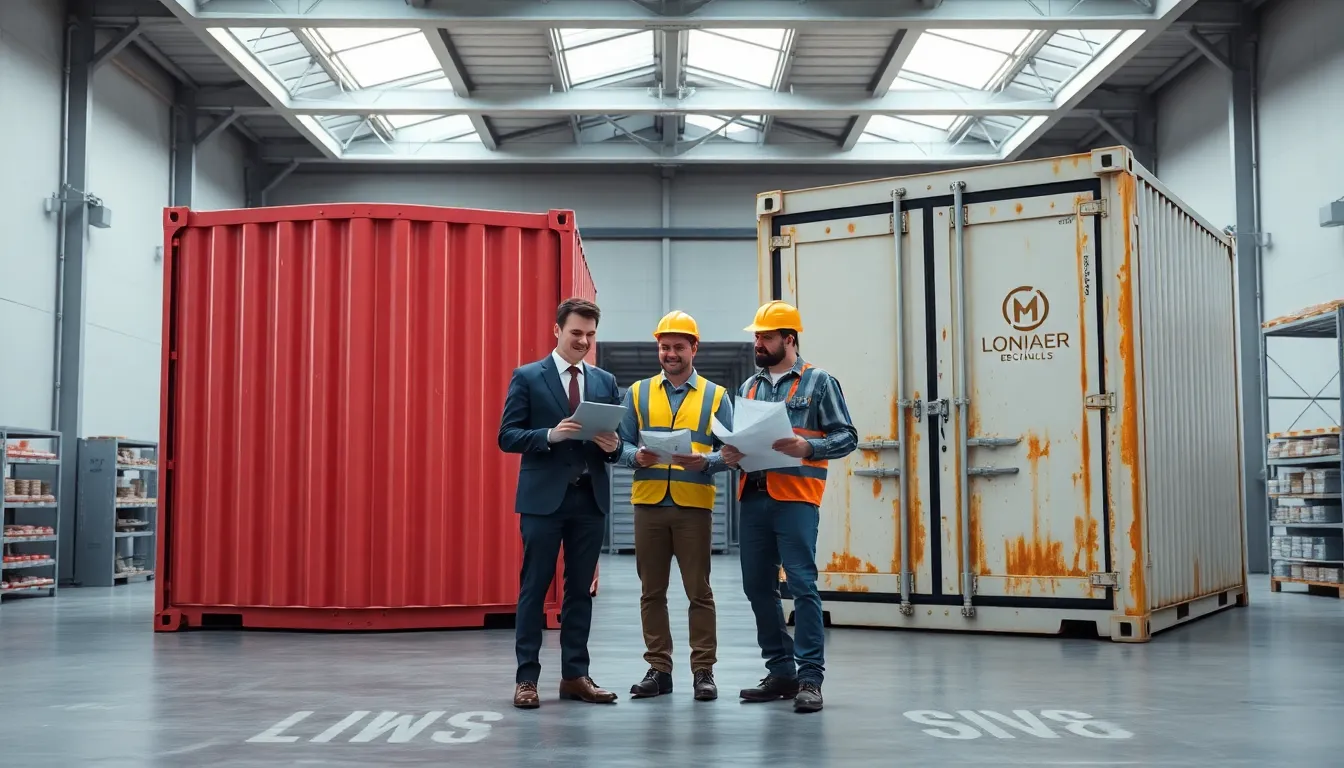
Appearance might seem secondary to logistics managers focused on functionality, but aesthetic condition impacts several practical considerations.
New containers arrive in pristine condition, factory paint, unmarked surfaces, clean interiors. This matters for visible applications: retail spaces, office conversions, residential projects, or client-facing storage at premium facilities. If your containers will be seen by customers or the public, pristine appearance projects professionalism and quality.
Their clean, rust-free surfaces also help high-end modifications. Installing windows, insulation, electrical systems, or custom finishes works better on containers free from existing damage. You’re not grinding rust, repairing dents, or working around structural compromises. Modification contractors often prefer new containers because preparation work is minimal.
Used containers display cosmetic imperfections, dents, scratches, surface rust, faded paint, shipping line logos from previous owners. For industrial yards, construction sites, or back-of-facility storage, these blemishes are irrelevant. The weathered appearance can even provide character and rugged appeal for certain industrial-themed projects.
But cosmetic damage sometimes signals deeper issues. That surface rust might be superficial, or it could indicate structural corrosion requiring attention. Dents from rough handling might be purely cosmetic, or they could affect door alignment and weather sealing. You can’t always distinguish surface wear from functional compromise through casual inspection.
Modification potential for used containers depends on their condition. Grade A units accommodate most modification projects successfully. Grade B containers work for moderate modifications but may require additional preparation. Grade C units often need substantial repair work before modification projects begin, factor these costs into your planning.
Some logistics managers actually prefer the weathered aesthetic of used containers for specific applications. That industrial, well-traveled appearance can be desirable for certain retail concepts or artistic projects. It’s not always about pristine surfaces, sometimes character matters more.
Matching Container Choice to Operational Use Cases
Long-Term Storage and High-Value Cargo
New containers suit specific operational scenarios where their premium pricing delivers genuine value. Consider new units when:
Appearance is critical. Customer-facing applications, retail environments, office spaces, or premium storage facilities benefit from flawless aesthetics. The professional appearance justifies higher costs.
Maximum lifespan matters. Operations planning 20+ year horizons should calculate cost-per-year rather than focusing solely on acquisition price. New containers often deliver better lifetime value for long-term applications.
High-value cargo requires protection. When you’re storing or shipping goods worth tens of thousands of pounds, container failure risks far exceed the price difference between new and used units. Complete peace of mind justifies premium investment.
Extensive modifications are planned. Architectural conversions, specialised equipment installations, or complex internal configurations work better with pristine starting points. Modification contractors work more efficiently on undamaged containers.
Certification cannot lapse. Operations requiring guaranteed cargo-worthy certification for 10+ years benefit from new containers’ extended certification validity.
Short-Term Projects and Cost-Sensitive Operations
Used containers excel in different scenarios:
Budget constraints are real. Not every operation can allocate £4,000+ per container. Used units at half the price make projects financially viable that would otherwise be impossible.
Rapid deployment is required. Used containers typically sit at depots ready for immediate delivery. New containers often require ordering with lead times extending weeks or months during high-demand periods.
Industrial aesthetics are acceptable. Construction sites, industrial yards, back-of-facility storage, or agricultural applications don’t require pristine appearance. Functionality trumps aesthetics.
Project duration is limited. Temporary storage during facility renovations, short-term construction site offices, or seasonal operations don’t require multi-decade container lifespans.
Environmental goals prioritise reuse. Organisations committed to sustainability prefer giving existing containers second lives rather than purchasing new manufactured units.
Some operations benefit from mixed approaches, new containers for customer-facing applications or high-value storage, used units for back-end operations or lower-risk applications. There’s no requirement to standardise across your entire operation.
Pre-Purchase Inspection Criteria for Logistics Managers
Thorough inspection before purchasing used containers prevents expensive surprises. Don’t rely solely on grade classifications or supplier descriptions, verify condition yourself or through trusted third-party inspectors.
Rust severity assessment: Surface rust differs dramatically from structural corrosion. Surface rust appears as discolouration or light flaking that sands away easily. Structural rust penetrates metal, creating holes or significant metal loss. Examine corners, roof edges, and floor supports where water accumulates. Probe suspicious areas with a screwdriver, corroded metal yields easily under pressure.
Dent extent evaluation: Minor dents are cosmetic. Large dents that deform structural members or affect door operation signal more serious problems. Check whether dented areas show stress cracks or metal fatigue. Open and close doors several times to verify dents don’t interfere with sealing.
Door alignment and functionality: Container doors should open and close smoothly without binding or forcing. Inspect locking mechanisms for wear or damage. Check rubber door seals for deterioration, compromised seals allow water intrusion. Stand inside with doors closed and look for light penetration around door edges, indicating seal failure.
Floor condition: Floors endure enormous stress from cargo weight and forklift traffic. Examine for soft spots, cracks, or rot in wooden floors. Steel floors should be checked for rust perforation or structural compromise. Jump on suspicious areas, compromised flooring feels spongy or unstable.
Previous cargo history: This remains difficult to ascertain definitively. Chemical residues, unusual odours, or staining can indicate hazardous previous cargo. Reputable suppliers maintain inspection standards and reject containers with concerning cargo histories, but verification is imperfect.
Structural integrity verification: Check corner posts, roof beams, and side rails for damage or repair. Look for welding repairs, they’re not automatically problematic, but substantial repairs warrant questions about what necessitated them.
Reputable suppliers provide condition documentation and inspection reports. Request these documents and review them carefully. If suppliers refuse to provide documentation or prevent pre-purchase inspection, walk away, you’re likely avoiding serious problems.
For major acquisitions, consider hiring independent inspectors. Their fees are minimal compared to the cost of purchasing compromised containers.
Sustainability and Resale Value Implications
Purchasing used containers represents the environmentally responsible choice, giving second life to existing resources and reducing manufacturing demand. Container production requires substantial energy and raw materials, steel manufacturing, paint application, and international transport from factories all carry environmental costs. By choosing used containers, you avoid these manufacturing impacts.
This sustainable practice aligns with organisations prioritising environmental stewardship or pursuing formal sustainability certifications. Many companies now include supply chain sustainability in corporate reporting, used container purchases contribute positively to these metrics.
But sustainability considerations exist alongside practical business realities. Used containers typically carry limited resale value compared to new units. A 10-year-old container you purchase today will be 15–20 years old when you’re ready to sell. Its remaining useful life is short, and market demand for very old containers is limited. You might recover 20–40% of your purchase price, or find resale difficult entirely.
New containers maintain resale value better. After 5–10 years of use, they’re still attractive to buyers seeking quality used units. You might recover 40–60% of your original investment, sometimes more if market conditions favour sellers.
This resale difference affects total ownership cost calculations. A new container at £3,000 with £1,500 eventual resale value costs £1,500 net. A used container at £1,500 with £300 resale value costs £1,200 net. The gap narrows considerably when resale is factored in.
For operations planning to use containers until end-of-life rather than reselling, this consideration becomes irrelevant. But if you anticipate equipment turnover or business changes that might prompt container sales, resale value matters.
Environmental considerations and financial calculations don’t always point in the same direction. There’s no universally correct answer, you’re balancing competing priorities based on your organisation’s values and circumstances.
Conclusion
The choice between new and used containers isn’t about identifying a universally superior option, it’s about matching container characteristics to your specific operational requirements, budget realities, and time horizons.
New containers deliver pristine quality, maximum durability, and aesthetic appeal that justify premium pricing for high-value applications, long-term infrastructure, or customer-facing uses. You’re paying for 25+ years of reliable service, predictable performance, and complete peace of mind. When those factors align with your needs, new containers represent sound investment even though higher acquisition costs.
Used containers provide compelling value and immediate availability for cost-sensitive projects, short-term applications, or situations where appearance and maximum lifespan are secondary considerations. That 30–50% cost reduction makes projects financially viable and frees capital for other operational priorities. For many logistics operations, used containers deliver everything required at prices that make financial sense.
Some of you will benefit from mixed approaches, new containers where they truly add value, used units where they’re sufficient. There’s no requirement to standardise religiously across your operation.
What matters most? Honest assessment of your actual requirements versus aspirational preferences. A Grade B used container that costs £1,500 and serves your needs for 12 years beats a £3,000 new container providing capabilities you’ll never use. Conversely, saving £1,500 upfront means nothing if the used container fails to protect high-value cargo or requires replacement after seven years when you needed fifteen.
Make your decision based on genuine operational analysis rather than budget pressure alone or feature appeal that doesn’t match your use case. Both options work brilliantly, when matched to appropriate applications.
Frequently Asked Questions
What is a one-trip container and how does it differ from a new container?
A one-trip container has completed a single cargo voyage from factory to destination before entering the resale market. Whilst technically ‘used’, these containers arrive in near-pristine condition—structurally sound, free from dents, rust, or floor wear—making them virtually indistinguishable from factory-fresh units.
What is the expected lifespan of a used shipping container?
Quality used containers typically provide 10–15 years of reliable service with proper maintenance. Grade A used containers can deliver impressive durability even though cosmetic wear, whilst new containers offer 25–30+ years under appropriate care, making lifespan a key consideration when choosing between options.
Can you use shipping containers for permanent buildings or housing?
Yes, shipping containers are increasingly used for permanent structures including homes, offices, and retail spaces. New containers work best for architectural conversions requiring extensive modifications, as their pristine, rust-free surfaces simplify installation of windows, insulation, electrical systems, and custom finishes.
What does cargo-worthy certification mean for shipping containers?
Cargo-worthy certification confirms a container meets wind and watertight (WWT) standards for transporting goods via sea, rail, or intermodal routes. Certification requires intact door seals, rust-free structural members, and properly functioning locks. Grade A and B containers typically maintain this status without repairs.
When should I choose new containers over used containers for my business?
Choose new containers when appearance is customer-facing, you’re planning 20+ year operations, protecting high-value cargo, undertaking extensive modifications, or require guaranteed long-term certification. New containers justify premium pricing through maximum lifespan, predictability, and pristine aesthetics for specific applications.