

Across the United Kingdom, moving heavy equipment and route planning between job sites is a logistical challenge shaped by narrow roads, strict regulations, and tight project timelines. From construction machinery and oversized loads to specialised vehicles and trailers, every move must be carefully planned.
For construction companies, reliable transportation services are not just a convenience; they are essential to keeping a construction project on schedule. Effective heavy equipment transport ensures the right machinery arrives safely, legally, and exactly when it is needed.
Strategic Planning and Documentation
Successful heavy equipment transport begins with a detailed transport plan that accounts for site access, bridge limits, road widths, and local authority restrictions. This planning phase ensures construction equipment and heavy cargo can be moved efficiently without disrupting surrounding traffic or delaying the construction project.
In the UK, legal compliance is equally critical. Many moves qualify as an Abnormal Load, requiring advance notifications, permits, and coordination with highway authorities and, in some cases, the police. Working with an oversize load transport specialist and experienced teams helps construction companies navigate these requirements confidently. Proper documentation, risk assessments, route surveys, and specific packaging like that from SafePack plywood boxes reduce uncertainty and ensure that heavy machinery transport is safe, lawful, and fully aligned with national safety standards for plant and machinery.
Choosing the Right Transport Solution
Selecting the appropriate transport solution is critical when relocating heavy machinery between construction sites. The process begins with matching the load to the right vehicle within the transport fleet. Standard construction equipment may be well-suited to a flatbed trailer, while oversized or irregularly shaped machinery often requires custom trailers designed to distribute weight safely.
For exceptionally large or heavy assets, such as power-generation units or major infrastructure components, SPMT transport offers unparalleled control and stability. These self-propelled modular transporters allow precise manoeuvring in confined sites and urban environments. By aligning equipment specifications with the correct transport method, construction companies minimise risk, protect valuable assets, and ensure heavy equipment transport is carried out efficiently and safely across the UK road network.
Safety Protocols and On-Site Loading
Safety is paramount during the loading and transport of construction equipment, and sometimes machinery installation, particularly when handling heavy or complex machinery. Robust safety protocols must align with UK safety standards set by the Health and Safety Executive (HSE), covering risk assessments, lifting plans, and clear communication between site personnel.
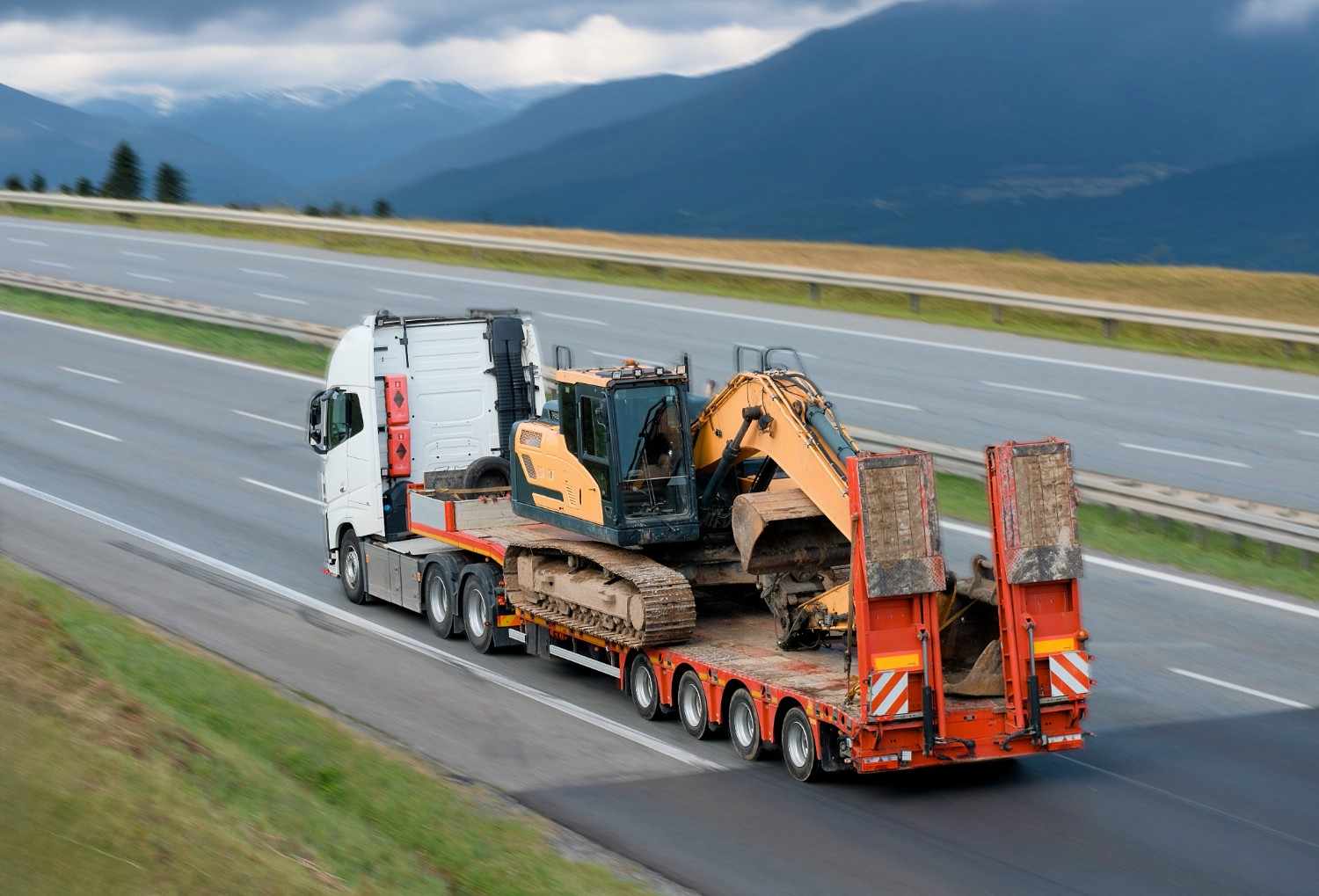
During the loading process, machinery such as a crawler excavator or mini excavator must be positioned correctly and secured using approved restraints to prevent shifting in transit. Load distribution, centre of gravity, and ground conditions are all carefully evaluated. The presence of a dedicated transport specialist during this high-risk phase is essential.
Their expert oversight ensures procedures are followed precisely, reducing the likelihood of accidents, equipment damage, or costly project delays while maintaining full regulatory compliance.
Managing Costs and Efficiency
Controlling the cost of heavy equipment transport requires clear budgeting and realistic expectations. Expenses typically extend beyond fuel and driver hours to include permits, route surveys, escort or pilot cars for oversized loads, and specialised vehicles. Without careful planning, these elements can quickly inflate overall project costs. Working with experienced transport providers helps construction companies forecast expenses accurately and avoid unexpected charges.
Efficiency also depends on agility. Construction schedules can change with little notice due to weather, site conditions, or supply delays. Having access to an urgent same-day transport solution allows critical construction equipment to be relocated quickly, minimising downtime and keeping the construction project moving forward without costly interruptions.
Partnering with Professionals
For construction projects that span multiple counties, partnering with a transport provider supported by a nationwide team offers a clear advantage. National reach ensures consistent service, local route knowledge, and rapid coordination, regardless of where construction equipment needs to be moved. Professional transport providers bring experienced teams, well-maintained transport fleets, and proven transportation solutions that adapt to regional regulations and site conditions.
Quality assurance is equally important. Choosing a provider known for an exceptional transport experience means prioritising safety standards, clear communication, and reliable scheduling. With the right professional partner, construction companies can streamline heavy equipment transport, reduce risk, and maintain momentum across every stage of the construction project.
Conclusion
Efficient heavy transport is a vital component of successful construction operations, protecting valuable assets while keeping project timelines on track. From strategic planning and legal compliance to specialist equipment and rigorous safety standards, professional heavy equipment transport minimises risk at every stage.
Experienced teams and dedicated transport specialists ensure construction machinery is moved safely, legally, and with minimal disruption across the UK. For construction companies seeking reliable transportation solutions, expert support makes all the difference. To streamline your next site transfer and better manage the cost of heavy equipment transport, consider requesting a ‘Free, No-Obligation Transport Quote’ from a trusted provider.