In the fast-paced construction industry, effective project management is crucial for success. However, selecting the right tools can often be daunting, especially when budgets are tight. Our guide to the best free construction project management software aims to simplify this process, offering insights into top-rated, no-cost solutions that enhance productivity and streamline project workflows. Discover powerful tools tailored for construction company owners and project managers, enabling them to manage projects efficiently without breaking the bank. Dive in to explore software options that ensure project timelines, resources, and communications are seamlessly managed across all stages.
Brief Overview
The comprehensive guide on free construction project management software outlines essential tools for enhancing productivity and managing projects efficiently. It highlights the importance of selecting free software solutions that provide features like task scheduling, document management, and real-time collaboration to streamline workflows. Focusing on scalability, these platforms cater to construction companies of various sizes, offering opportunities to start with basic plans and upgrade as business needs grow. By leveraging these tools, project managers and construction company owners can optimize operations, minimize costs, and deliver successful projects within timelines and budgets.
Key Highlights
- Free construction project management software enhances productivity without incurring high costs, making it ideal for small to medium-sized businesses.
- These platforms offer centralized communication and efficient document management to minimize errors and enhance teamwork efficiency.
- Scalable solutions cater to growing construction needs, allowing businesses to upgrade plans as project complexity increases.
- Tools like Zoho and Odoo offer robust free plans for task coordination and project management, optimizing operational processes.
- Choosing the right software ensures effective resource allocation, timely project completion, and enhanced competitive edge.
Introduction to Free Construction Project Management Software
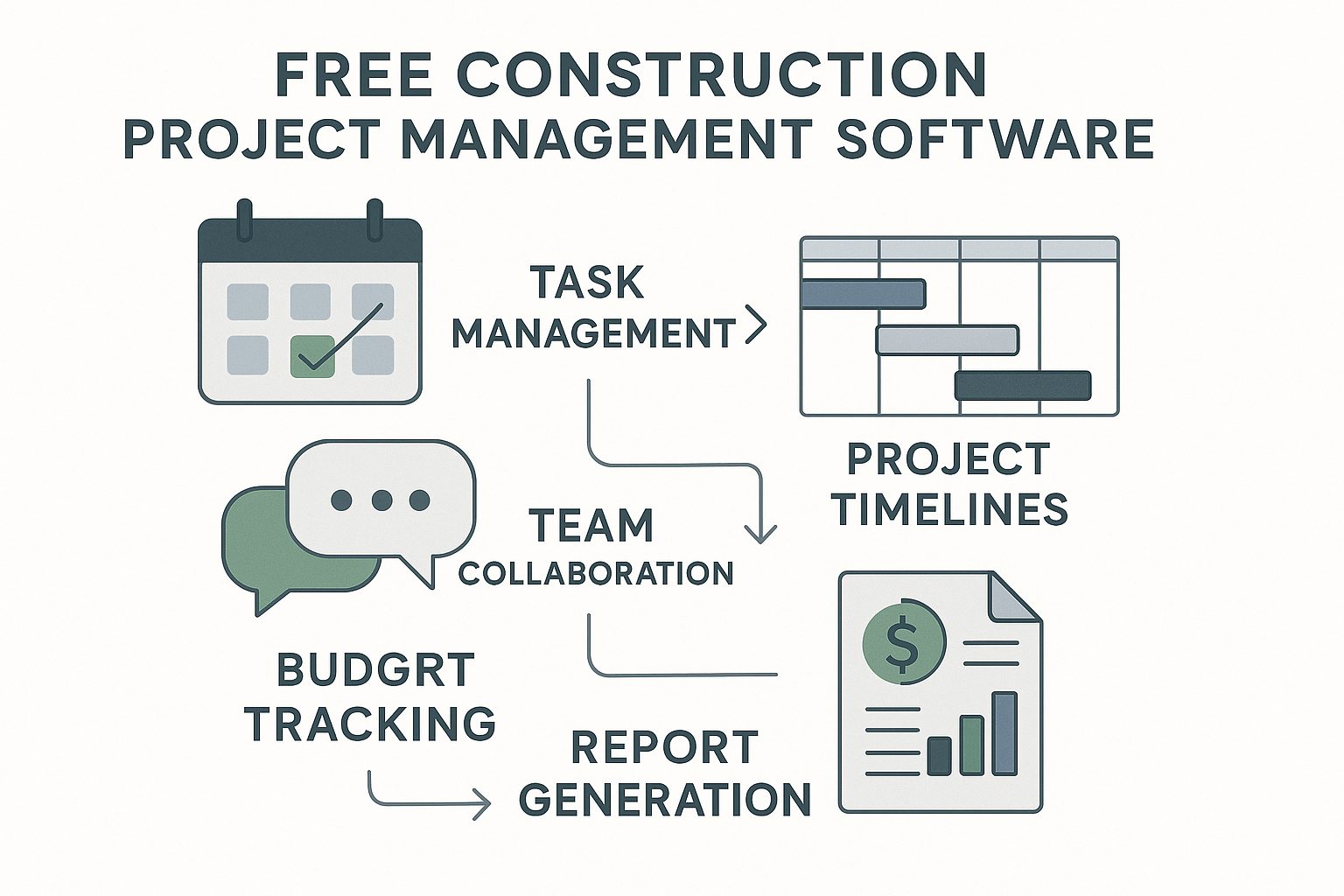
In today’s fast-paced construction industry, the demand for efficient project management is paramount. Free construction project management software offers a versatile solution for managing complex tasks, supporting construction professionals with powerful tools without the hefty price tag. These platforms provide project managers and project coordinators with the ability to manage drawings, document management, and streamline various operations seamlessly. By embracing such software, businesses can enhance productivity and achieve successful project execution. This guide delves into the pivotal role construction software plays in modern projects and the advantages of opting for a free plan.
The Role of Construction Software in Modern Projects
In the realm of construction management, the introduction of construction software has fundamentally transformed how projects are executed. These digital tools offer a centralized platform where project managers can handle everything from resource allocation to timeline adjustments with ease. With a free download, smaller businesses can explore these benefits without committing to a costly subscription. The software not only facilitates communication among teams but also ensures all stakeholders have access to the latest project updates in real-time.
This level of transparency is crucial, especially when dealing with large-scale construction projects that require close coordination between diverse teams and contractors. Solutions such as Microsoft teams connectors for search can improve your workflows. Furthermore, this technology supports effective document management, enabling teams to manage drawings and revise documents efficiently. By storing all relevant information in a digital format, construction software eliminates the inefficiencies associated with paper-based processes. Project coordinators find this particularly beneficial as it minimizes errors and enhances the accuracy of project data. These systems also offer integrations with other tools, allowing teams to synchronize their tasks with existing workflows seamlessly. Another critical feature of this software is its ability to track project progress and adjust timelines as necessary.
This adaptability ensures that any unforeseen changes can be accommodated without disrupting the overall project schedule. By maintaining a comprehensive overview of project milestones, construction managers can make informed decisions, reducing delays and optimizing resource allocation. Businesses using free construction project management software gain a competitive edge by delivering projects within budget and on time, thereby bolstering their reputation in the industry. In today’s competitive market, leveraging construction software is no longer a luxury but a necessity. Offering essential tools for project management, these platforms empower construction businesses to enhance productivity and foster collaboration among team members. By adopting such technology, companies can improve work efficiency and achieve greater success in their projects.
Benefits of Implementing a Free Plan
Choosing a free plan for your construction management needs can provide an ideal starting point for businesses new to the digital project management landscape. One of the most significant advantages is the cost savings; a free plan eliminates the initial financial barrier, allowing construction companies to test various software functionalities without a significant investment. This approach is particularly beneficial for smaller firms or startups that need robust solutions to manage multiple projects but lack the budget for premium plans.
Moreover, a free construction management platform often includes essential features like task scheduling, document management, and communication tools, all crucial for successful project execution. By providing a user-friendly interface, these platforms ensure that users can quickly acclimate to the software, minimizing downtime associated with training. This ease of use is a vital consideration for project coordinators and managers who manage multiple aspects of the construction process and require a seamless transition to digital tools.
The potential for scalability is another key benefit. As your business grows, many free construction software solutions offer scalable options, allowing you to easily upgrade to paid plans with enhanced features once your needs expand. This flexibility ensures that as projects grow in complexity, your software can grow with them, ensuring continuous efficiency and insight into all ongoing work. Additionally, such platforms encourage enhanced collaboration across project teams. By centralizing all project information, planners, engineers, and construction workers can communicate more effectively, reducing miscommunication and mistakes. Whether it’s through sharing real-time updates or managing drawings collaboratively, the right project management software fosters a more aligned team dynamic. Adopting a free plan not only optimizes operational costs but also equips businesses with the tools they need to stay competitive in a challenging market. It empowers teams by providing them with the knowledge and capability to better manage tasks and streamline workflows. For any construction business looking to enhance its project outcomes, considering a free construction management software is a strategic move that could lead to long-term gains and excellence in service delivery.
Key Features to Look for in Construction Management Tools
In the dynamic field of construction, selecting the right management tools is essential for efficient project execution. Construction project management software is defined by its features, which are designed to address various project management facets such as task handling, timesheet management, and collaboration flexibility. Understanding these features can determine a company’s success in managing its operations. This section focuses on pivotal aspects like effective task management and collaboration, along with scalable solutions that can grow with your construction needs.
Effective Task Management and Collaboration
One of the cornerstone features of construction project management software is its capacity to facilitate effective task management and collaboration among team members. In the bustling environment of a construction site, the need for a tool that can efficiently manage tasks and coordinate staff activities cannot be overstated. The right management app should help construction managers assign, track, and update tasks seamlessly, ensuring that everyone is on the same page and project milestones are achieved. This is often accomplished through intuitive dashboards and customizable alerts that keep team members informed and engaged.
Effective task management systems offer a comprehensive approach that includes creating task hierarchies, setting deadlines, and tracking progress. These systems enable managers to view real-time tasks statuses, identify potential bottlenecks, and allocate resources more effectively. For instance, using timesheets integrated with the project management app, project coordinators can monitor daily work logs, ensuring transparency and facilitating accurate job costing. This enhances accountability as every team member is aware of their responsibilities, which minimizes delays and project mishaps. In terms of collaboration, the ability to centralize communication is vital. Modern construction management tools offer integrated communication platforms where all project communications, from RFIs (Requests for Information) to drawings sharing, are archived and accessible in one place.
This feature eliminates the fragmentation often seen in email-based communications, reducing miscommunication and ensuring that information flow is streamlined across the board. Moreover, these tools often support mobile app access, allowing team members to collaborate effectively no matter where they are. Whether in the office or onsite, the ability to update project status, log timesheets, and consult design documentation is crucial for dynamic construction environments. Effective task management and robust collaboration features ensure that despite the inevitable challenges in construction projects, teams can work cohesively towards a successful project completion.
Scalable Solutions for Growing Construction Needs
As construction companies expand, their project management needs inevitably grow, which means scalability becomes a critical consideration for selecting the right tool. A scalable solution is not just about handling current projects efficiently; it also accommodates future growth and increased project complexity. The best construction management tools, therefore, should offer scalability both in terms of features and capacity.
Scalability typically manifests in tiered service offerings, where businesses can start with a basic free plan and gradually upgrade to more sophisticated plans as their requirements expand. This feature is beneficial as it allows a construction company to adjust its capabilities without disrupting existing operational workflows. For example, basic features may include fundamental task management, timesheet logging, and basic RFI handling, while advanced plans might offer enhanced data analytics, integration with other enterprise systems, and more extensive reporting capabilities. Moreover, software scalability ensures that as the number of projects increases, and as the scope and size of individual projects grow, the software can efficiently manage these demands.
This capacity translates to being able to handle more extensive data inputs, larger teams, and more intricate document management systems. In essence, a scalable app grows alongside your company, enabling you to maintain high productivity levels without needing to constantly switch platforms or juggle multiple software systems. Additionally, the scalability of construction management services also involves flexibility in adding or removing users and managing various types of projects, from small-scale residential builds to large commercial developments. This adaptability allows a company to tailor its software usage precisely to its changing business landscape.
Furthermore, scalable solutions often bring enhanced support services to the table, ensuring that as your needs grow, you have the assistance necessary to adapt smoothly without losing performance or efficiency. In an industry where project demands can change rapidly, investing in an app that offers these scalable solutions empowers construction businesses to remain agile and competitive. It ensures that no matter how the market evolves or how complex your projects become, there’s a reliable management tool ready to support your business objectives and drive service excellence.
Scalable construction management tools offer a myriad of advantages that streamline processes and elevate operational efficiency for construction companies.

Here are some specific benefits and features they provide:
- Real-time collaboration among teams enhances communication, minimizing errors and accelerating project timelines across multiple sites.
- Automated scheduling and resource allocation optimize resource use, reducing costs and improving project delivery speed.
- Centralized document management ensures easy access to important files, enabling better decision-making and reducing administrative burdens.
- Advanced analytics provide actionable insights, helping companies manage risks and drive continuous improvement in performance.
- Customizable dashboards allow managers to monitor key metrics, ensuring effective project oversight and operational transparency.
- Scalable platforms accommodate growing project demands, providing flexibility for construction companies to expand operations seamlessly.
- Mobile access empowers field teams with up-to-date information, increasing on-site efficiency and responsiveness to changes.
- Integrated billing and invoicing features streamline financial operations, ensuring accurate and timely payments.
- Intuitive user interfaces reduce training time, allowing teams to quickly adopt new systems and maintain high productivity levels.In conclusion, the scalability of construction management tools not only boosts productivity but also enhances overall project efficiency, driving success for construction companies.
Top Free Project Management Software for Construction Companies
In the competitive field of construction, choosing effective project management software is critical. Free platforms provide a cost-effective alternative for managing tasks, enhancing productivity, and ensuring seamless coordination. This section explores how the right software can enhance efficiency and recommends tools ideal for construction tasks, focusing on those available for free. By understanding the capabilities of these platforms, construction managers can optimize operations, improve communication, and achieve better project outcomes, providing a competitive edge in a dynamic industry.
Enhancing Efficiency through Project Management Platforms
Efficiency is the key to sustained success in construction projects, where timelines and budgets are tight, and any delays can result in significant financial impacts. Free project management platforms play a pivotal role in streamlining operations by providing an integrated solution for task management, document handling, and team communication. These platforms empower construction managers to coordinate project activities seamlessly, ensuring every team member is on the same page and that tasks are executed according to the project timeline. With features like Gantt charts and task lists, project managers can allocate resources, schedule tasks, and monitor progress all from a single dashboard, which enhances operational efficiency. Moreover, these platforms offer valuable support in managing construction drawings and documents.
By digitizing all project-related documents and storing them on a centralized platform, the software eliminates paper clutter and minimizes the risk of errors due to outdated information. Construction managers and teams can access up-to-date drawings and project plans from anywhere, ensuring that construction work is based on the latest designs. This capability not only streamlines document workflows but also enhances collaboration, as engineers and site managers can easily share feedback and updates in real-time. The ability to perform efficient resource management through these apps cannot be overstated. They provide insights into the allocation of manpower, machinery, and materials, which are crucial for timely project completion. By integrating task management with resource planning, these platforms enable managers to predict potential bottlenecks and adjust resources accordingly, maintaining productivity without overburdening the team. Key software functionalities include automated task assignments and notifications, ensuring that no task falls through the cracks, which prevents delays and cost overruns.
Additionally, free project management solutions advance construction team collaboration through enhanced communication tools. These platforms often integrate with email, chat, and video conferencing apps, bringing all communication under one umbrella. Such integration reduces the fragmentation common in disjointed communication tools, fostering a more cohesive workspace. With everyone having access to the latest data and communications, miscommunication is minimized, resulting in more efficient project execution and delivery. By leveraging these efficient platforms, construction companies can significantly boost their productivity and streamline their workflows. Incorporating such technology is not merely about adopting new tools but transforming the way construction businesses operate to achieve operational excellence and improved project outcomes.
Recommended Free Tools for Managing Construction Tasks
Identifying the right suite of tools tailored for construction task management can greatly influence a project’s success. Free software solutions like Odoo and Zoho stand out for their comprehensive functionalities that cater to the unique needs of the construction industry. These platforms offer robust free plans, enabling construction firms to effectively coordinate tasks and improve overall project management without incurring additional costs.
Zoho Projects, for example, offers a free tier that includes critical tools for task management, time tracking, and document collaboration. For construction companies, the ability to organize and assign tasks is crucial, and Zoho’s intuitive interface allows for easy setup and management of project timelines. Task lists, milestones, and dependencies can be created and visualized, providing clarity on who should be doing what and by when. Additionally, Zoho facilitates real-time collaboration with team members and stakeholders through integrated chat and document sharing features, ensuring all project updates and communications are streamlined and easily accessible.
Odoo, another noteworthy platform with a quality free plan, shines for its modular approach, allowing construction companies to tailor the app to their specific needs. Its project management module supports task assignment, project forecasting, and timesheet tracking, all crucial for managing construction tasks efficiently. Odoo’s interface supports managing drawings and integrating multiple workflows, which is beneficial in construction where various project elements must align seamlessly. The platform also offers integrations with other Odoo modules, which can be particularly powerful as your project management needs grow, ensuring seamless scalability and adaptability to evolving business requirements. Choosing a free project management tool like these not only cuts costs but provides a strong foundation for digital transformation within construction operations.
As these platforms evolve, they continue to add features that improve usability and functionality, making them a long-term asset. With the ability to access software on mobile devices, project teams can stay connected whether they are in the office or out on the job site. This mobility enables instantaneous updates and real-time problem-solving, critical in high-paced construction environments. For businesses seeking to enhance productivity and optimize task management, leveraging these recommended free tools delivers substantial technological benefits. They empower teams to effectively coordinate and communicate, paving the way for timely project completion and customer satisfaction. The strategic use of these platforms thus positions construction companies to maintain a competitive advantage, confidently delivering projects on schedule and within budget. Embrace these free tools to elevate your construction task management capabilities and refine operational efficiencies.
Conclusion: Choosing the Right Plan for Your Needs
In the evolving landscape of construction project management, selecting the appropriate software plan is crucial for achieving optimal operational efficiency. This selection process involves an acute awareness of the specific needs of a construction project and aligning them with the features offered by free software solutions. Each project has distinct requirements, and businesses must consider how software can address these through seamless integration and accessibility. As we explore the detailed approach for evaluating software based on unique project requirements, remember that choosing the right plan enhances productivity and sets the foundation for successful project execution.
Evaluating Software Based on Project Requirements
When it comes to construction project management, understanding how to evaluate software based on project requirements is pivotal. This evaluation process involves comparing a variety of features and functionalities that align most closely with your business goals and project specifications. The first step is to clearly define the core needs of your construction projects. This could range from managing complex invoices to integrating QuickBooks for financial tracking, to handling Requests for Information (RFIs) efficiently, ensuring no critical insights are overlooked. Each of these areas plays a vital role in the lifecycle of a construction project, and software solutions should support them effectively. Another important aspect is the need to efficiently manage drawings. Many projects require the constant revision of architectural plans and construction drawings.
The right app should provide capabilities that allow project managers to access, share, and manage these drawings without hassle. This not only facilitates better communication but also ensures that everyone is working from the most current documents. Therefore, during the evaluation process, consider software that simplifies the sharing and updating of these vital documents, and supports the collaboration among various stakeholders. Features that enhance team collaboration and task management should also be prioritized. As construction teams often work in diverse locations, mobile app accessibility ensures that updates and communications are received in real-time, maintaining continuity in project execution. Robust task management capabilities enable project managers to assign responsibilities efficiently, track progress, and identify bottlenecks swiftly. Customizable dashboards and alerts are helpful tools in keeping the team aligned and accountable, contributing to a timely completion of the project. In addition to functionalities, scalability is a critical consideration. As your business grows, so will the complexity of your projects. Software that offers scalable solutions will allow you to upgrade as needed, accommodating more extensive data input and additional users without losing performance. This scalability should come with an intuitive user interface, minimizing the learning curve and allowing for immediate impact on your project management processes.
Finally, it’s crucial to leverage software that seamlessly integrates with existing work processes. Whether it’s connecting with CRM systems, accounting applications, or other enterprise tools you already use, integration reduces redundancy and increases efficiency. When you evaluate software options, the ability to blend new tools with established workflows can be a decisive factor in maximizing return on investment and ensuring a smooth transition to digital management systems. The process of choosing the right project management software shouldn’t be rushed. It requires thorough research and understanding of both the capabilities of the software and the needs of your project. By focusing on features like financial integration, task and document management, and scalability, construction businesses can select a plan that not only fits their current needs but also positions them for future success. Implementing these insights into your evaluation process not only enhances your project outcomes but also ensures your company remains competitive in the demanding construction industry.
| Core Needs | Key Features | Scalability/Integration | Benefits |
| Financial Tracking | Task Management | Integration with Existing Systems | Improved Budget Control |
| Document Management | Mobile Accessibility | Scalability for Future Growth | Increased Flexibility |
| Resource Allocation | Real-time Analytics | Customizable Workflows | Enhanced Decision-Making |
| Compliance Management | Collaboration Tools | Cloud-Based Solutions | Streamlined Communication |
This table summarizes essential considerations for selecting construction project management software, providing a roadmap to optimize operational efficiency and project outcomes.
Choosing the best free construction project management software is crucial for enhancing productivity and streamlining operations in your construction business. By leveraging tools with features tailored for the industry, like real-time collaboration and budget tracking, project managers can significantly improve efficiency and delivery timelines. Whether you are looking for innovative technology to integrate into existing systems or starting anew, these free solutions offer a cost-effective approach with scalable options. Explore our downloadable guides to make an informed decision that aligns with your specific project demands, ensuring successful project outcomes and long-term growth.
Frequently Asked Questions – FAQs
What are the benefits of using free construction project management software?
Free construction project management software enhances productivity by offering essential tools such as task scheduling, document management, and real-time collaboration. This type of software is especially beneficial for small to medium-sized businesses, providing a cost-effective solution to streamline workflows without incurring high costs.
Can small construction companies benefit from scalable project management software?
Yes, scalable project management software is ideal for small companies expecting growth. These solutions allow businesses to start with basic free plans and upgrade as project complexity increases, ensuring that the software grows alongside the company’s needs and helps maintain high productivity levels.
What are some recommended free project management tools for construction?
Tools like Zoho and Odoo offer robust free plans that include functionalities like task coordination, real-time collaboration, and document management. These platforms enable construction firms to effectively manage their projects without additional costs, supporting scalability and integration with other software systems.
How does free construction management software improve collaboration and communication?
These free platforms provide centralized communication tools and document management capabilities, minimizing errors and enhancing teamwork efficiency. Integrated features such as chat, email, and real-time updates ensure that every team member has access to the latest project information, reducing miscommunication.
Why is it important to select project management software that integrates well with existing systems?
Integrating project management software with existing systems ensures a smoother workflow by reducing redundancies and increasing efficiency. This integration allows businesses to maintain seamless operations, allowing new tools to complement the existing processes and facilitate better overall project management.