Leaving a job can be a significant decision, influenced by a myriad of personal and professional factors. For recruiters, understanding these reasons isn’t just insightful, it’s essential in honing effective recruitment strategies. In this guide, we delve into the top reasons professionals part ways with their positions, accompanied by real-life examples. By dissecting these motivations, recruiters can better align candidate placement with employee satisfaction, ensuring long-term success and retention. From career growth aspirations to workplace environment challenges, explore how these elements contribute to an employee’s decision-making process and what they signal to talent acquisition specialists.
Brief Overview
Leaving a job is often driven by a mixture of personal and professional motivations, impacting employees across various industries. Key reasons include a lack of career growth, unsatisfactory compensation, and poor workplace culture, which can lead to a desire for new challenges and opportunities. Personal health concerns or family responsibilities may also prompt career switches, requiring flexible employer support. Recognizing when it’s time to change jobs is crucial for personal well-being and career advancement. Effective communication during interviews, highlighting positive motivations, can ease career transitions, helping both employees and recruiters align aspirations with organizational goals.
Key Highlights
- Career growth and workplace challenges are frequent reasons for job departures.
- Personal reasons like health and family can necessitate career shifts.
- Restructuring prompts employees to reassess career paths and growth opportunities.
- Effective communication during interviews helps convey reasons for leaving positively.
- Recruiters should address compensation and career advancement to retain talent.
Understanding the Reasons for Leaving a Job
In the dynamic world of careers, understanding why employees choose to leave their jobs is crucial for recruiters. We delve into the common reasons that trigger such decisions and explore personal motivations behind these career shifts. Recognizing these factors not only aids in recruitment but also in retention strategies. By examining both the typical and personal reasons for leaving a job, we aim to provide valuable insights for recruiters aiming to better understand candidate motivations. This understanding will help craft interview questions that effectively address the reasons for leaving a job.

Common Reasons Why Employees Decide to Move On
When it comes to understanding why employees decide to leave, there are several common reasons that frequently emerge across various industries. Often, a lack of career growth is cited as a major factor. Employees enter roles hoping to progress and develop their skills; when these aspirations aren’t met, they begin considering other opportunities. A stagnant career can lead to diminished job satisfaction, causing an employee to eventually make the decision to move on. Recruiters need to recognize that growth isn’t only about promotions but also about new challenges and learning possibilities that keep their team engaged and motivated.
Moreover, workplace environment plays a pivotal role in an employee’s decision to stay or leave. Toxic office politics, a lack of confidence in management, or simply an unfit cultural alignment can push employees to seek new beginnings. Creating an inclusive and positive work culture can mitigate these reasons for leaving, ensuring employees feel valued and respected. Identifying these issues during interview questions may also prevent future dissatisfaction.
Another significant reason for leaving is compensation dissatisfaction. While not the sole motivator, competitive pay and benefits are crucial in retaining talent. Inadequate remuneration compared to industry standards can drive skilled professionals to look for better compensation packages elsewhere. It’s vital for businesses to continually assess and adjust their compensation structures to meet and exceed market expectations.
Then, there’s the element of work-life balance, which has gained substantial importance particularly post-pandemic. Employees today demand flexibility and balance to maintain mental and physical health, and workplaces that ignore this trend risk high turnover rates. Ensuring that your company’s policies reflect this understanding can reduce the likelihood of employees leaving due to these common reasons.
Finally, pursuing new opportunities is another bold reason. Employees, motivated by a desire for change and new challenges, often reach a point where their current role no longer satisfies their career ambitions. While it might seem abstract during recruitment, understanding these aspirations is crucial. Recruiters can adjust their strategies by offering roles that clearly outline progression paths, responsibilities, and potential impacts. It’s not only about filling a position but aligning with ambition and personal growth goals.
Evaluating Personal Reasons for a Career Switch
Beyond the common reasons, personal motives can significantly influence an employee’s decision to leave a job. Sometimes, personal health concerns or family commitments necessitate a career switch. It is increasingly common for individuals to prioritize their physical and emotional well-being, recognizing that a supportive work environment is essential for their health. Understanding personal reasons means acknowledging that these considerations are unique to each individual and extend beyond professional ambitions. A flexible approach that accommodates personal circumstances, like adjustable work schedules or remote work options, can demonstrate a company’s commitment to employee welfare.
Online learning has emerged as a powerful tool for career transformation, offering the ability to study from anywhere at a pace that suits individual lifestyles. For those in the UK looking to broaden their horizons, providers like the Association of Learning offer a gateway to achieving these aspirations through comprehensive online programmes.
Personal reasons for leaving a job can also include a change in career interests or aspirations. Over time, individuals may discover new passions or skills unrelated to their current profession, leading them to pursue a completely different career path. This transition reflects a desire to align their professional life with their personal interests. For recruiters, recognizing these shifts as legitimate reasons for leaving can help in framing interview questions that explore an applicant’s motivations and future career aspirations.
An unsatisfactory experience in a previous role often propels individuals toward a different career direction. Whether it’s due to lack of recognition, unfulfilled career expectations, or limited growth opportunities, these experiences can significantly influence future career decisions. Understanding these experiences requires recruiters to assess job fit beyond the resume, considering long-term career satisfaction and success as well.
In some cases, personal development becomes a driving force. Individuals eager to enhance skills, attain higher qualifications, or simply gain broader experiences may choose to leave a job to pursue studies or explore new industries. This courage to make a bold career switch underscores the dynamic nature of modern-day professional journeys. Recognizing these reasons for leaving as positive attributes can reflect a company’s progressive and supportive image.
Recruiters who approach the interview process with an empathetic and understanding mindset are better positioned to attract candidates and retain employees. By tailoring interview questions to dig deeper into these personal reasons, employers can frame roles in ways that resonate with potential hires. Demonstrating a willingness to support personal and professional growth within the company can be a powerful way to engage strong candidates. Personal reasons, while diverse, highlight a fundamental pursuit of satisfaction and fulfillment, two key ingredients for long-term employee retention. Implementation of these insights into everyday recruiting practices can aid in developing a more cohesive workplace strategy.
| Reason Category | Details | Recruitment Insight |
| Career Growth | Lack of advancement opportunities, limited professional development, and stagnant career progression. | Develop clear career path frameworks and offer training programs to foster growth and retain talent. |
| Work Environment | Presence of toxic work culture, unsupportive management, and inadequate work-life balance. | Cultivate a positive company culture and promote open communication to improve the work environment. |
| Compensation & Benefits | Inadequate salary, limited benefits, and lack of financial incentives. | Conduct regular market comparisons and adjust compensation packages to remain competitive. |
| Job Role Fit | Mismatched job expectations, lack of job satisfaction, and poor job design. | Ensure precise job descriptions and thorough candidate assessments during the recruitment process. |
| Management & Leadership | Poor leadership, ineffective communication, and lack of managerial support. | Provide leadership training and encourage regular feedback to improve management effectiveness. |
| Company Stability | Job insecurity due to organizational changes, financial instability, or frequent restructuring. | Increase transparency about company performance and future plans to build employee trust. |
This table outlines common and personal reasons for job departures, enabling recruiters to enhance hiring practices and cultivate employee satisfaction.
Key Indicators That You’re Ready for a Change
Realizing when it’s time to move on from a job is essential for both personal and career growth. While some indicators are subtle, others are clear signs you’re ready for a change in your current role. Evaluating these signs can help align your personal goals with professional aspirations. We will explore common indicators that suggest it’s time to change jobs, offering insights into how this shift can aid in your personal development and career advancement. Recognizing these signs ensures you make a proactive decision for your growth and satisfaction.
Signs You Need to Change Jobs to Grow Professionally
Understanding when you’re ready for a professional change is key to achieving career satisfaction. Often, various signs indicate the need for a new job to foster growth. Begin by assessing your current work environment: if you’re consistently feeling unchallenged or your role lacks development opportunities, it’s a clear indicator that stagnation has set in. Reassessing your personal goals and comparing them with your current trajectory can reveal mismatches. If your aspirations align more with a different industry or company, it might be time to act on that change.
Performance reviews offer essential clues, too. If feedback is consistently generic with no real pathways for improvement or growth, it might mean your role doesn’t provide scope for professional development. Similarly, if your personal achievements are downplayed or unrecognized, it could diminish your motivation and job satisfaction. In such cases, pursuing a new opportunity might be necessary to breathe life into your professional ambitions and ensure your efforts translate into acknowledged success.
An aspect often overlooked is the influence of your workplace culture on your personal development. A negative work environment or an unsupportive leadership can significantly impede your growth. If the office dynamic fosters stress or impedes your ability to perform at your best, it could be a bold signal that a change is needed. Consider whether your creativity and productivity are thriving or dwindling due to workplace factors. Aligning yourself with a company culture that resonates with your personal style can play a pivotal role in professional growth.
Moreover, the ability to balance work with personal commitments is a crucial factor. Jobs that excessively intrude into personal time or responsibilities might lead you to question your career choices. If the trade-off between work and life balance begins to take a toll on your happiness, exploring options that offer flexibility may benefit both your personal and professional life. Remember, a harmonious work-life balance is essential for long-term career satisfaction and health.
It’s also vital to evaluate your enthusiasm for work. If your once passionate approach has turned into indifference, reflecting on why you’re experiencing burnout may be wise. Does the job still align with your career ambitions? Sometimes a complete career pivot or seeking a role more aligned with your dreams fulfills your yearning for meaningful contributions. Engagement in your tasks is crucial; if that’s waned without apparent external factors, a shift could reposition you toward personal and professional goals.
Lastly, continuous personal development is critical across any successful career journey. If your current job doesn’t support learning new skills or professional advancement opportunities through courses or certifications, it might be time to reassess. Companies that invest in employee growth not only secure talent but also empower workers to reach their potential. By recognizing these signs and aligning them with your ambitions, you can effectively decide when to transition towards a nurturing environment that respects and enables your career growth.
Considering all these elements helps ensure that when you decide to change jobs, you’re making a decision that facilitates your professional trajectory. The path to growing professionally hinges not only on external factors like the job market but also on internal factors such as job satisfaction and aligned values. Evaluating these signs thoroughly will better prepare you to make a proactive move toward a fulfilling and prosperous career.
Good Reasons for Leaving a Job Explained
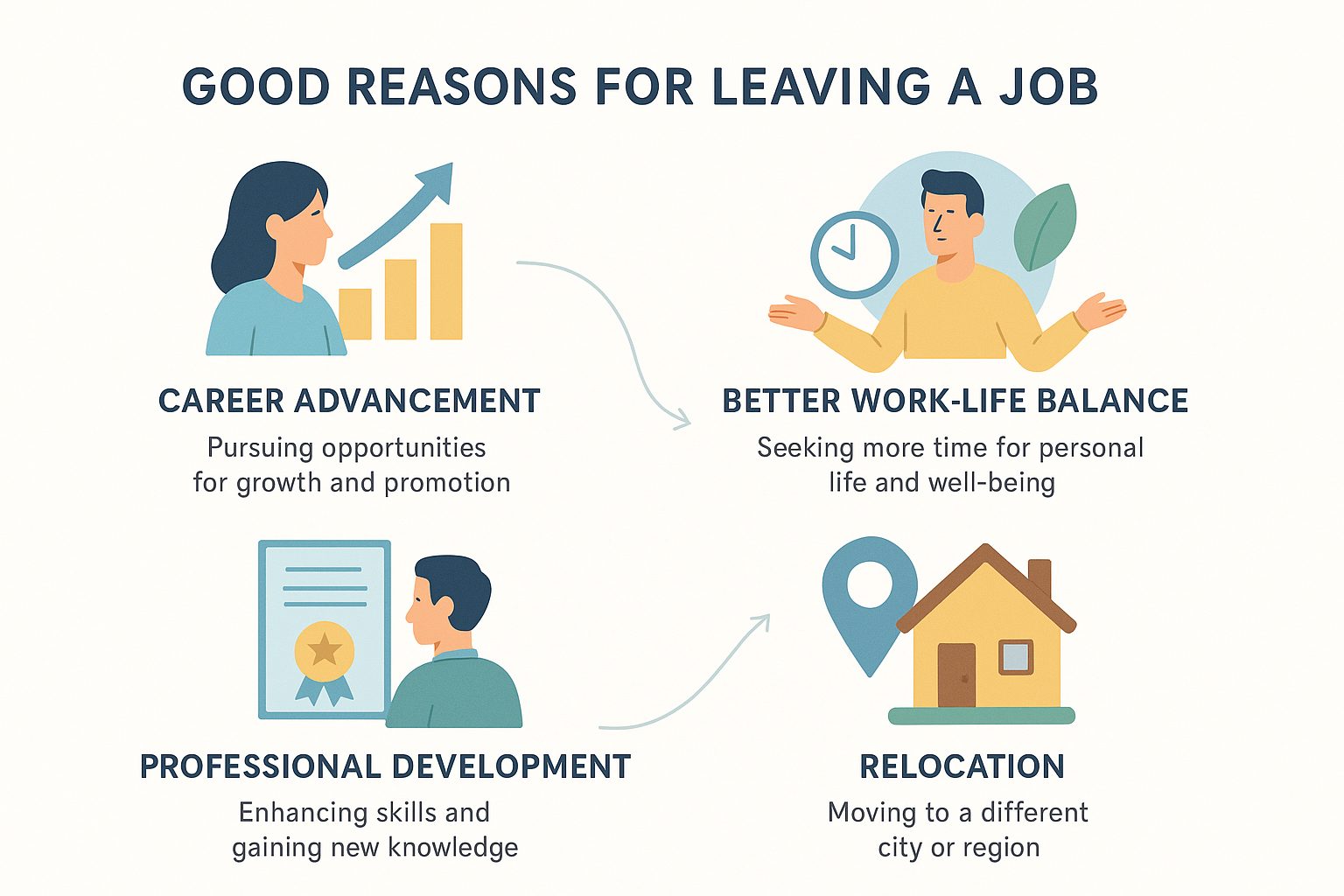
Leaving a job is a major decision, and understanding the reasons behind it is essential both for employees and recruiters. Evaluating these reasons helps potential employers gauge the motivations and future aspirations of candidates. When articulated well, these explanations can demonstrate self-awareness and logical career planning. It shows maturity in addressing career transitions and reveals motivations that align with potential roles. From pursuing growth opportunities to addressing personal reasons, explaining leaving a job can strengthen one’s position during interviews. Here, we dive deeper into how to articulate these reasons effectively when discussing with potential employers.
How to Explain Reasons to Potential Employers
When faced with the interview question about reasons for leaving a job, employers are not just probing for gossip, they’re keen on understanding your motivations and ensuring job alignment. Articulating good reasons for leaving is crucial. Begin by framing your explanation positively. For instance, if leaving was due to a stagnant role, highlight your eagerness for new challenges. Use specifics like how your previous job title did not allow you to fully employ your skills or pursue further ambitions. This demonstrates forward-thinking and portrays ambition. It’s about showing that you’re not leaving merely out of dissatisfaction but towards better prospects.
Common reasons for leaving a job include limited growth opportunities, lack of job satisfaction, or seeking better work-life balance. Explain these reasons persuasively by focusing on upcoming goals rather than just past grievances. For example, if personal reasons, like family commitments, influenced your decision, illustrate how this change will help you contribute more effectively in your next role. Employers value honesty, but what matters more is how that honest revelation aligns with their values and needs.
Preparation is key. Before any interview, review the job description thoroughly and align your answer accordingly. If you’re leaving for reasons beyond control, like company restructuring, highlight adaptability and readiness to embrace new roles or industries. Using examples from your job experience that showcase resilience in face of change can solidify your narrative as a candidate who sees opportunity in challenges. Recruiters want candidates who recognize signs they need change and take constructive steps towards fulfilling roles.
Moreover, employ the art of storytelling. Transform your experiences into engaging anecdotes rather than plain facts. Explain how previous job experiences shaped your career trajectory and how your lessons learned brought you to seek out their company specifically. Incorporate relatable content; recruiters appreciate candidates who can identify and articulate their professional journey clearly. Keeping your answers aligned with the company’s goals and culture can make a strong impression that you’re a fit for the team.
Always incorporate feedback into your explanation. If your reasons include seeking growth or skill advancement, mention feedback received from previous roles that encouraged this pursuit. It reflects willingness to learn and a proactive attitude, qualities highly sought after by many employers. Practicing these explanations can boost your confidence, ensuring you convey your reasons with sincerity and professionalism, reducing any potential ambiguity for recruiters.
Finally, ensure your motivations don’t remain ambiguous. Demonstrate clarity and absolute readiness to embark on your next career journey. Transition remarks like, “I want to find a place where I can contribute to long-term goals and grow with the company,” can effectively close your explanation. Remaining authentic while addressing the reasons validates your comprehensive approach to career planning. By thoroughly explaining your reasons for leaving your previous role, you can foster a transparent and engaging conversation, ultimately enhancing your appeal as a promising applicant.
Company Restructuring: A Catalyst for Career Shifts
When companies undergo restructuring, it often acts as a catalyst prompting employees to reconsider their career paths. Such organizational changes can impact roles, responsibilities, and even company culture, pushing individuals to adapt. While some view these changes as opportunities for growth, others may find it necessary to shift their careers to align with their personal and professional goals. Exploring the effects of restructuring on career dynamics offers valuable insights into how professionals navigate these transitions, fostering development and confidence in their abilities.
Adapting to Organisational Changes and Opportunities
Amidst company restructuring, employees face a pivotal moment where they need to adapt to evolving organizational changes and seize new opportunities. Restructuring, often seen as a daunting upheaval, can transform into a bold opportunity for professional growth. When an organization embarks on this journey, roles may shift and hierarchies get redefined, prompting employees to adjust to a new company dynamic. The key lies in how one decides to adapt to these organizational changes. Recognizing restructuring as a catalyst, rather than a setback, empowers employees to find openings that align with personal aspirations and career goals, thus reimagining their professional journey for the better.
Embracing change requires a mindset shift towards growth and development. Individuals must cultivate confidence to navigate through the complexities that restructuring might unleash. While the immediate impact could seem daunting, adopting a perspective of resilience and adaptability positions employees to discover valuable opportunities that might not have been accessible before. As companies reconfigure their structure, new roles and responsibilities often emerge, demanding skill diversification. By aligning personal development with organizational objectives, employees can tap into these fresh prospects, climbing towards previously uncharted career heights. The professional landscape evolves, offering a canvas where workers can redefine their paths with a fresh vision. For those willing to harness the full potential of organizational changes, continuous learning becomes essential. Proactively pursuing training, development programs, and skill enhancement opportunities makes adapting easier, turning challenges into stepping stones. Employees should engage with mentors or peers who can provide insights into navigating restructuring successfully. By doing so, they prepare themselves not only for immediate changes but also for sustained growth throughout their careers. This proactive approach demonstrates keen foresight, an undeniable asset during times of comprehensive change. Moreover, organizational shifts can necessitate a general recalibration of professional objectives. Workers often face a choice to adapt within the company or leverage their newly-honed skills elsewhere. Whichever path they choose, the decision should be informed by personal career ambitions and the company’s evolving culture and expectations.
Taking ownership of one’s career path during restructuring fosters a culture of resilience. It builds a professional identity that thrives in uncertain conditions. Employees who excel at this become invaluable assets, contributing innovatively to their organization’s renewed mission. Furthermore, effective communication with management during restructuring enhances adaptation. By actively engaging in dialogue about organizational goals and how individual roles fit into the bigger picture, employees gain clarity. This alignment is crucial in building confidence and securing positions that satisfy both the company’s strategic needs and the individual’s professional desires.
Beyond foundational skills, many professionals look to broaden their understanding of specific industries. A programme like A Level Business Studies can provide a comprehensive overview of business operations, market dynamics, and strategic management. This can be invaluable for those aiming for leadership roles or contemplating entrepreneurial ventures.
Employees shouldn’t hesitate to voice aspirations and identify pathways for growth, turning potential disruptions into gateways for career advancement. Ultimately, company restructuring, though initially daunting, can be an agent of transformation for employees at all levels. As individuals adapt, they gain resilience and insight, essential in today’s dynamic job market. Encouraging this adaptive mindset reflects positively on both personal development and professional success. By embracing change, actively seeking opportunities for growth, and continuously refining skills, employees can navigate restructuring not just to survive but to thrive professionally. Such strategic adaptation ultimately enriches their career experience, fostering an environment where both the company and its employees emerge stronger and more aligned for future challenges.
When navigating organisational restructuring, employees can adopt several strategies to turn potential challenges into promising opportunities. Here are some practical steps to consider:
- Embrace a growth mindset to remain open and receptive to change.
- Enhance your skill set through professional development and training.
- Seek mentorship or guidance from experienced colleagues.
- Communicate effectively with management to express concerns and suggestions.
- Build a strong network within the organization to stay informed and connected.
- Prioritize flexibility and adaptability in your workflow.
- Set clear, achievable goals to maintain focus and motivation.
- Practice self-care to manage stress and maintain well-being.
These strategies will enhance your ability to adapt and thrive amidst organisational changes, empowering your professional journey even during times of transition.
Effective Communication: Framing Your Departure Positively
Leaving a job is a significant career decision that requires careful consideration. Key to making this transition smooth is effective communication, ensuring you frame your departure positively with past and future employers. By articulating your motivations clearly and explaining how your goals align with new opportunities, you can navigate interviews with confidence. This approach not only enhances your image to recruiters but also maintains professional relationships and opens doors to fulfilling career paths. The focus here is on how to communicate these reasons during interviews effectively, ensuring your departure is seen as a step towards growth.
How to Articulate Your Motivations During Interviews
In the competitive job market, effective communication is paramount, especially when discussing your departure during interviews. It’s essential to articulate clearly why you’re leaving your previous job and how this transition aligns with your career goals. When you’re asked to explain your motivations, start by framing your departure positively. Highlight the constructive elements of your decision to leave, such as seeking opportunities for personal and professional growth. This showcases your proactive approach and positions you as a goal-oriented candidate. Employers value candidates who seek continuous improvement, and effectively communicating this can set you apart. When facing interview questions about why you left your last job, ensure your explanations resonate with the company’s culture and values. Tailor your responses by researching the company beforehand and identifying areas where your goals align with theirs. For instance, if you’re motivated by career growth and the new role offers learning opportunities, emphasize these aspects.
Demonstrating that your departure was driven by a desire to better align your career with your personal aspirations is compelling. It’s not enough to just state your motivations; link them with concrete examples of how you intend to achieve these goals with the potential employer. Another key aspect is addressing any gaps or changes in your career trajectory with transparency. Being upfront about these shifts shows integrity and a genuine commitment to finding the right job match. Employers appreciate candidates who can explain past decisions clearly and demonstrate what they’ve learned from those experiences. Use these moments to discuss how you were able to adapt and grow, turning potential negatives into positive narratives that further explain your goals. By being articulate about your motivations, you indicate a level of self-awareness and planning crucial for any role.
Effective communication also involves using specific examples from past roles to highlight your achievements and how they relate to your current goals. When you provide examples, it helps employers visualize the practical application of your skills and experiences in their business context. Discussing your performance, such as projects completed or career objectives met, reinforces your potential to contribute positively to your new job.
These narratives should underline how your departure from your previous job was a strategic move toward enhancing your professional journey, not just a way out. Finally, conclude your interview answers by reiterating your enthusiasm about the potential role and how it aligns with your long-term career aspirations. Utilize phrases that demonstrate your readiness to contribute to the company’s goals positively. This reflects a forward-thinking attitude and shows that you envision a future within the organization, making you an attractive candidate for long-term investment. Your ability to effectively communicate these sentiments underscores the sincerity of your decision to leave your previous job and helps build a strong foundation for professional relationships in your new career chapter.
Understanding the top reasons employees leave their jobs offers recruiters valuable insights into workforce dynamics, enabling them to tailor their recruitment strategies effectively. By addressing common concerns such as lack of career advancement, poor company culture, or inadequate compensation, recruiters can refine their offerings to attract and retain top talent. These insights not only enhance employee satisfaction but also bolster company reputation. For recruiters eager to transform insights into action, engaging with employee feedback and emphasizing transparent communication can make a significant difference. Consider leveraging these findings to foster a more appealing and sustainable work environment.
Frequently Asked Questions – FAQs
What are the primary reasons professionals leave their jobs?
Professionals typically leave their jobs due to a lack of career growth, unsatisfactory compensation, poor workplace culture, health concerns, and family responsibilities. Each of these reasons impacts employees’ decisions to seek new opportunities.
How can understanding why employees leave be beneficial for recruiters?
Understanding why employees leave can help recruiters develop better recruitment and retention strategies by addressing common concerns. This leads to improved employee satisfaction and long-term retention of talent.
How do career growth aspirations influence an employee’s decision to leave a job?
Employees seek roles that offer opportunities for skill development and advancement. When these aspirations are unmet, they may feel their careers have stagnated, prompting them to explore other opportunities offering new challenges and growth.
How can workplace culture influence job retention?
A positive and inclusive workplace culture can help retain employees by ensuring they feel valued and respected. Conversely, a toxic environment may push employees to leave in search of a better cultural fit elsewhere.
What role does compensation play in the decision to leave a job?
Competitive pay and benefits are crucial for retaining talent. If employees feel their compensation falls short of industry standards or doesn’t reflect their contributions, they may seek better remuneration opportunities.