Working on construction sites means dealing with the elements every single day. Rain, mud, standing water, early mornings — it’s all part of the job in the UK. For most workers, wet feet are something you just accept. It’s uncomfortable, frustrating, and constant, but it’s seen as unavoidable.
That was exactly the situation behind the creation of dryonsite®.
The Problem on Site
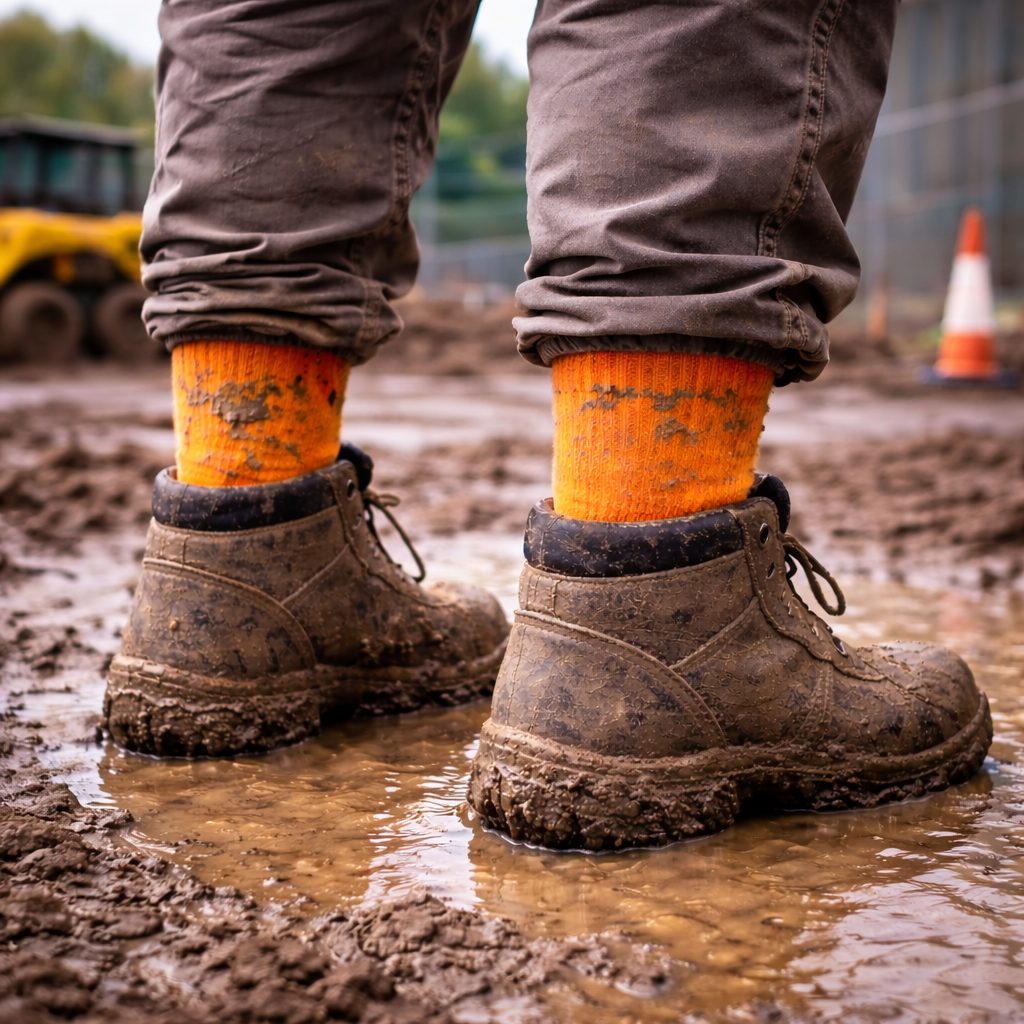
The idea didn’t come from a lab or a big company — it came from real experience on site. A gateman, spending long hours exposed to the weather, kept running into the same problem day after day. Within hours of starting a shift, moisture would find its way into his boots. By midday, socks were damp. By the end of the day, his feet were completely soaked.
It wasn’t just uncomfortable — it affected everything. Wet feet made it harder to focus, harder to stay comfortable, and harder to get through long shifts without feeling drained. Like most workers, he tried the usual fixes. Thicker socks, doubling up, switching brands. Nothing solved the core issue. Cotton socks would absorb water and hold onto it. Even decent boots couldn’t fully stop water getting in during harsh conditions.
That’s when the thinking changed.
Instead of trying to manage wet feet, the focus became simple: stop water from getting in at all.
How dryonsite Was Created
That idea became the foundation of dryonsite, a brand built specifically to handle real construction site conditions. Not fashion, not general-purpose clothing — but gear designed for people working in mud, rain, and long shifts outdoors.
What started as a personal solution quickly became something more. It wasn’t about creating a product for the sake of it, but about solving a problem that thousands of workers deal with every single day, all year round.
The Solution: Waterproof and Breathable Socks
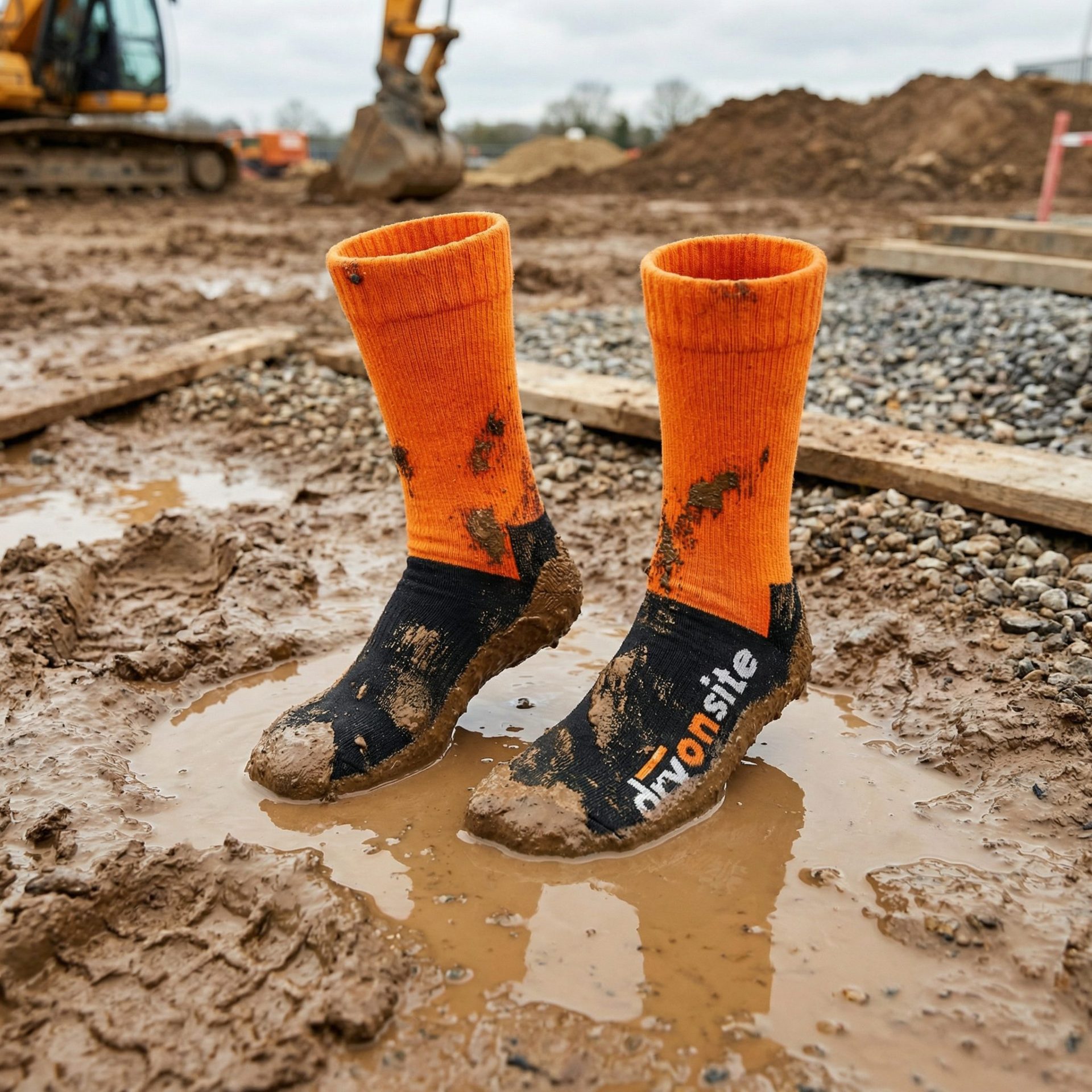
The solution was a different kind of sock. Instead of standard materials, dryonsite waterproof work socks were designed using a layered system that actually works in tough environments, combining waterproof protection with breathability. A soft inner layer for comfort, a waterproof membrane to block external moisture, and a durable outer layer strong enough for daily site use. They are also finished in a bright orange hi-vis colour, making them easy to spot and aligned with the visibility standards often seen across construction sites.
What makes this approach effective is that the waterproof layer isn’t just a barrier — it’s also breathable. The membrane is designed to stop external water from getting in, while still allowing heat and moisture from inside the sock to escape. This means your feet stay dry from both directions. Instead of trapping sweat like traditional materials, it helps regulate temperature and prevents that damp, uncomfortable feeling that usually builds up over a long shift.
As more workers started using them, the difference was immediate. People who were used to finishing shifts with soaked feet suddenly found themselves staying dry throughout the day, regardless of the season. In constantly wet conditions, that small change has a big impact. It means better comfort, more focus, and less distraction from the job at hand.
Why It Matters on Site
What started as a simple idea quickly turned into something bigger. dryonsite began gaining attention across sites, not through marketing hype, but through real use. Workers talk, and when something actually works, word spreads fast. Instead of being just another product, it became something people relied on — gear built from real experience, for real conditions.
The reality is that wet feet aren’t just a minor inconvenience. Over time, they lead to blisters, irritation, and constant discomfort that wears you down. In the UK, where rain and damp conditions are common throughout the year, the problem doesn’t go away with the seasons. According to the Health and Safety Executive, having the right equipment and clothing is a key part of maintaining safe and effective working conditions. What you wear on your feet plays a bigger role than most people realise.
Many workers still rely on standard socks without thinking twice, but these are often part of the problem. Cotton absorbs moisture quickly and holds onto it, meaning once your feet are wet, they stay wet. Layering multiple pairs doesn’t solve it either — in many cases, it just traps moisture inside. The difference with dryonsite waterproof work socks is that they prevent the issue from happening in the first place by acting as a barrier between your feet and the environment.
Of course, boots still matter, and having the right pair makes a difference. But even high-quality boots can let water in over time, especially in demanding conditions. Combining them with socks designed specifically for construction work creates a much more reliable setup. It’s not about relying on one piece of gear — it’s about building a system that works together.
Preparation also plays a role. Rotating gear, allowing it to dry properly between shifts, and making sure everything fits correctly all contribute to staying comfortable on site. Small adjustments like these can make a noticeable difference over time.
Final Thoughts
What makes dryonsite stand out is its origin. It wasn’t created as a generic product or a trend — it was built from the ground up to solve a problem that thousands of workers deal with every day. That’s why it resonates. It reflects real conditions, real frustrations, and a real solution.
Today, dryonsite is growing beyond just an idea into a recognised name among workers who understand the importance of staying dry and comfortable on site. What started with one person trying to fix a daily problem is now turning into a brand focused on improving working conditions across the industry.
For those still dealing with wet feet as part of their routine, the solution doesn’t have to be complicated. Gear designed specifically for site conditions makes all the difference. You can find more about waterproof work socks built for construction environments at dryonsite.co.uk.
At the end of the day, construction work will always involve tough environments. The weather won’t change, and site conditions will always be demanding. But improving your day often comes down to solving the small problems that add up over time. And when something as constant as wet feet is no longer an issue, everything else becomes that bit easier.