Wetrooms continue to grow in popularity across UK housing, hospitality and commercial projects, but installation failures remain a stubborn issue. In many cases, the problem is not the tile finish or drainage detail. It starts with poor waterproofing behind the surface.
Wetrooms remain in demand, but failures are still happening
Wetrooms have become a familiar feature in both residential and commercial construction. They suit modern layouts, support accessible design and appeal to clients looking for a clean, long-lasting finish.
But while demand has increased, so have reports of failures. When a wetroom starts to leak, shows signs of damp or requires early remedial work, the cause is often less visible than the damage itself. In many cases, it comes back to waterproofing.
More installs mean higher expectations on the site
As wetrooms become more common, expectations have shifted. Clients are not only looking for a bathroom that looks good at handover. They expect it to perform well over time, particularly in high-use environments.
That places more pressure on contractors. A wetroom has to do more than meet the visual brief. It needs to remain watertight under daily use, resist long-term moisture exposure and avoid the sort of failure that leads to complaints, call-backs and disruption.
Water ingress remains a major cause of failure
Water ingress is still one of the most serious risks in any wetroom installation. Once moisture gets beyond the tiled finish, the impact can quickly move beyond a minor defect.
Leaks can affect adjoining rooms, damage boards and substrates, stain ceilings below and create wider structural issues if left unresolved. The cost of remediation can rise quickly, especially when the fault is not picked up until months after completion.
That delay is part of the problem. Waterproofing failures are not always immediate. A wetroom may appear sound at first, only for repeated water exposure to reveal weak points later on. By then, fixing the issue is rarely straightforward.
Why waterproofing still goes wrong
In most cases, failure is not caused by one major error. It tends to result from a combination of avoidable problems during installation.
Incomplete tanking is a common issue. Some systems are only applied to selected areas rather than creating full protection across the wet zone. In other cases, contractors are working with lower-quality or outdated methods that leave more room for inconsistency.
Time pressure also plays a part. On busy sites, waterproofing can be treated as a routine stage rather than a critical one. That is often when details are missed, coverage is compromised, and future problems are built in before tiling even begins.
What proper tanking should involve
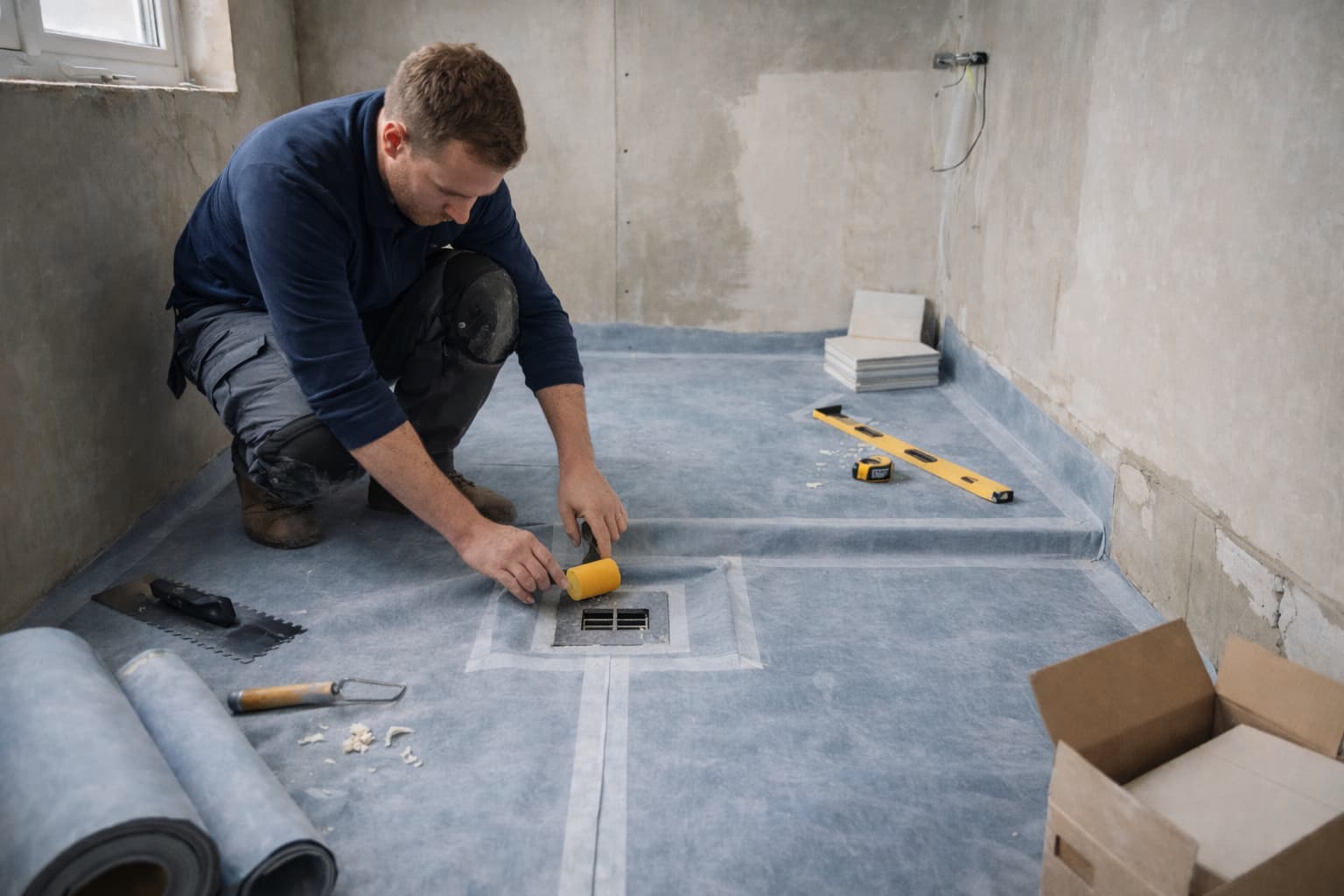
Proper tanking is about creating a continuous waterproof barrier across floors and walls, not simply protecting the most obvious splash areas. Junctions, edges and transitions are often where water finds its way through, which is why partial coverage is rarely enough.
A reliable waterproofing approach also needs to cope with long-term use. Wetrooms are exposed to constant moisture, regular cleaning and the normal movement that comes with any building. Tanking needs to be robust enough to perform under those conditions, not just on completion day.
Why complete systems are gaining ground
Impey Showers is a UK-based manufacturer specialising in wetroom solutions, and its role in the sector reflects a broader shift in thinking. Proper tanking is no longer seen as a secondary step. It is increasingly recognised as the foundation of a successful wetroom installation.
Complete systems are gaining favour because they reduce risk. Rather than relying on a patchwork approach, contractors are looking for waterproofing methods that provide consistent coverage and support a more reliable result on site.
A practical shift in waterproofing methods
Modern tanking systems are also changing how waterproofing is delivered in practice. Sheet membrane systems, for example, offer a different approach from traditional paint-on products.
Self-adhesive membranes can provide full waterproof coverage across floors and walls while helping reduce the risk of uneven application or missed sections. They also remove curing time from the process, allowing immediate tiling and helping installers keep work moving.
That matters for contractors. A faster application is useful, but only when it comes with greater consistency and less chance of human error.
Why are more contractors choosing complete tanking systems
As wetroom demand continues to grow, many contractors are turning to complete tanking systems to reduce risk and improve installation efficiency, with solutions such as Impey Showers.
This is less about adding complexity and more about avoiding preventable failures. Where waterproofing is concerned, a complete system offers a more dependable route than partial coverage or mixed methods.
What sits behind the tiles matters most
Waterproofing remains the foundation of any successful wetroom. Shortcuts at this stage may not show immediately, but they often lead to more serious problems later.
For contractors, the message is straightforward. The long-term success of a wetroom depends as much on what is hidden behind the finish as what is visible on the surface.
In wetroom installations, what is behind the tiles matters more than what is on them.