1. Quick Answer
Some construction-related metal components may seem inconspicuous, but they actually rely heavily on fabrication consistency. Any slight deviation in part angles, hole locations, flange dimensions, or straightness can turn into fit-up issues on site. So, for the project team, the earlier they control the accuracy, the lower the risk of rework in the future.
2. Small Shop Errors = Big Site Delays
Fit-up issues often begin before the parts arrive at the site
If parts cannot be installed on site, the problem is not necessarily the installation method. In many cases, the problem has already started during the fabrication process. Common deviations in bend angles, flange dimensions, hole locations, and straightness in sheet metal fabrication shops may not appear obvious during production, but they will be magnified during on-site assembly.
A slight deviation in the shop may result in delays of several hours or even longer on site.
A slight deviation in the shop can also cause major problems on site. For example, workers may be left waiting, and replacement parts, trimming, re-drilling, and temporary adjustments may be required. These issues will affect both the schedule and the cost. You can learn more about solutions and equipment at raymaxtech .com.
3. Which construction-related metal components are most sensitive to fabrication accuracy
Flashing: directly related to the waterproofing performance of the building. The accuracy of the bend angle and the smoothness of the edges determine whether it can be accurately matched with the fixings and roof slope. If the bend angle accuracy or edge smoothness of the flashing is poor, many problems may occur on site, such as an inability to fit tightly with the roof or wall, incomplete joints between flashing pieces, difficulty sealing the joints, and, in severe cases, deformation, surface damage, or waterproofing failure caused by forced on-site adjustment.
Brackets: These types of parts usually need to be coordinated with the main structure and provide accurate positioning references for subsequent installation components. They are very sensitive to hole location, bend angle, and the verticality and flatness of the mounting surface.
Access panels: In addition to accurate dimensions, attention must also be paid to smooth opening and closing, uniform edge gaps, and a flat, visually clean surface.
Facade-related parts: They need to match both the main structure and the required visual appearance. Even a small angle drift can be significantly magnified on a curtain wall several meters high.
Metal covers: commonly used for shielding equipment, finishing edges, protecting connectors, and improving appearance. They are very sensitive to diagonal accuracy, flange dimensions, and straightness.
Formed support parts: These parts must provide a solid foundation for the installation of subsequent components, so they require high straightness and diagonal accuracy.
Duct-related formed components: highly dependent on interface consistency. In particular, flange flatness must be controlled to avoid uneven interfaces during installation.
The more interfaces a component needs to match, the more important consistency becomes
When a component needs to be assembled with other structural components, even small deviations can become critical. Many times, the fact that a single part can be installed does not mean that the entire batch will be problem-free. What is truly valuable to the project is that the entire batch can maintain stability and consistency.
4. How to reduce rework in the construction supply chain with better process control
Repeatability is more important than occasionally getting it right
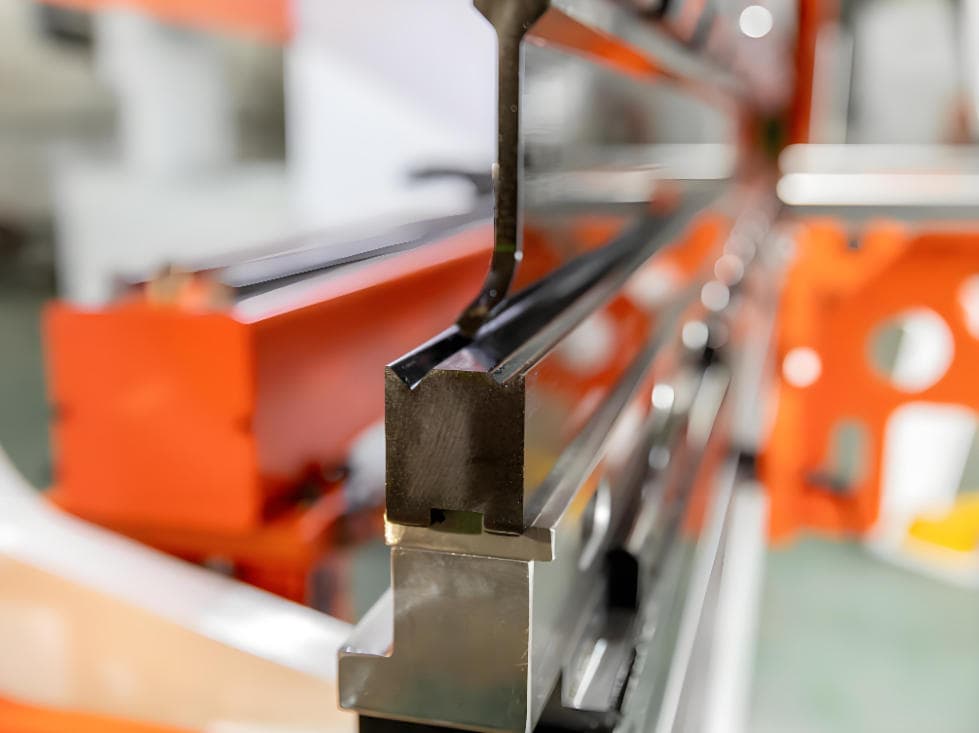
In the construction supply chain, while a single qualified part is important, what truly tests delivery capability is the ability to achieve sustained and stable batch consistency. This is crucial for the subsequent on-site installation efficiency, and it is closely related to Press Brake Repeatability vs Accuracy.
Key dimensions must be checked thoroughly before the parts leave the workshop
Before the parts leave the shop, we must carefully inspect their key mating surfaces, key angles, and installation-related dimensions. Solving problems before leaving the factory is significantly cheaper than repairing them on-site.
Better process control will improve delivery reliability
When the supplier’s process control is more stable, it means that the scrap rate is significantly reduced, which can reduce rework and project delays. High dimensional consistency of the parts means that more communication and coordination costs can be saved.
5. A practical checklist for suppliers and project teams
Which dimensions will directly affect installation?
Hole locations, flange dimensions, key angles, mounting surfaces, joint-gap control dimensions, and opening trim dimensions are all key fit-up dimensions, and their accuracy directly affects subsequent installation.
Which parts are most sensitive to on-site rework?
On-site rework on components such as flashing, brackets/supports, access panels, curtain wall/facade-related metal parts, metal covers, formed support parts, and duct/HVAC-related formed components not only takes a long time, but may also affect appearance, sealing, durability, and subsequent operations.
Are you only checking the first-off part without checking batch consistency?
This is a key test of whether the project team is professional. High first-off part accuracy does not mean that the entire batch is stable. What should truly be clarified is whether the supplier has conducted regular spot checks based on key dimensions.
Have the key fit-up dimensions been identified?
It is necessary to clarify the installation dimensions of key components with the supplier, rather than relying solely on the drawings. In addition, we should also specify the product’s key assembly dimensions, assembly positions, inspection methods, and allowable tolerance range in the drawings, technical agreements, or inspection requirements.
Does the supplier understand the downstream installation requirements?
Suppliers must be informed of what the fabricated parts will be used for assembly in the future. Before fabrication, it is necessary to fully understand the characteristics of the building structure, support conditions, and allowable tolerance range for installation.
6. Conclusion
When fabricating construction-related metal components, it is not enough to just complete the parts; it is also necessary to consider whether they can be installed properly with other components in the future. The accuracy and consistency of the parts determine the final installation efficiency, rework rate, and schedule stability. Only by controlling accuracy and consistency well at an early stage can installation, acceptance, and delivery proceed more smoothly later.