Ask a mechanical engineer what an actuator is and you’ll get a precise answer. Ask someone on a construction site and you might get a blank look, even though actuators are almost certainly operating somewhere on that site right now. They’re the kind of component that gets specified, installed, and then largely ignored because when they work properly there’s nothing to notice.
That invisibility is a reasonable indicator of good specification. It’s also why understanding them properly matters, because the applications they serve in construction, infrastructure, and building services have expanded significantly, and the decisions made during specification have long-term consequences that aren’t always obvious at procurement stage.
The Mechanism in Plain Terms
An actuator converts energy into mechanical motion. That’s the broad definition and it encompasses everything from a simple solenoid valve to a complex servo drive. In construction and building services contexts, the most relevant category is the electric linear actuator: a motor-driven mechanism that produces controlled straight-line movement.
The basic arrangement is a DC or AC motor driving a lead screw. The drive nut on that screw is prevented from rotating, so as the screw turns, the nut travels along it. The rod attached to the nut extends or retracts, applying push or pull force to whatever it’s connected to. The result is precise, repeatable, controllable linear movement from an electrical input signal.
What makes this useful across such a wide range of applications is the combination of properties it delivers: force in a compact form factor, position accuracy that can be maintained under load, compatibility with electronic control systems, and an absence of the fluid leakage and pressure maintenance requirements that come with hydraulic and pneumatic alternatives.
Where They Appear in Construction and Building Systems
In building services, actuators are working constantly in systems that most occupants never think about.
HVAC control is probably the highest-volume application in commercial construction. Variable air volume systems use actuators to continuously adjust damper positions in response to occupancy sensors, temperature monitoring, and air quality data. A large commercial building might have hundreds of these operating simultaneously. The quality of position control directly affects both energy efficiency and indoor environmental quality, which makes this a specification decision with real ongoing consequences rather than a one-time procurement choice.
Automated window and ventilation systems use actuators to operate roof lights, high-level vents, and facade elements that would be impractical to reach manually. In smoke control systems, this becomes a life safety application: the actuators need to operate reliably in a fire event when conditions are hostile and the consequences of failure are severe. These applications have specific standards attached to them and the actuator specification needs to reflect those requirements, not just the basic force and stroke parameters.
Access control and security barriers are another building construction application. Automated gates, rising bollards, vehicle barriers, pedestrian access control mechanisms, all of these use actuators at specifications matched to the force requirements of the specific installation and the duty cycle the application demands.
Infrastructure and Civil Engineering Applications
Beyond buildings, actuators appear across infrastructure in contexts where the reliability requirements are more demanding still.
Water and wastewater management infrastructure uses heavy-duty actuators to operate sluice gates, penstock valves, and flow control mechanisms on treatment works and flood defence installations. These systems often operate under remote or automated control in environments that are permanently damp, frequently exposed to corrosive conditions, and sometimes subject to significant hydraulic loads. The actuator specification for a flood barrier gate is a substantially different exercise from specifying a damper actuator in a ventilated ceiling void.
Bridge and highway infrastructure uses actuators in moveable bridge mechanisms, automated access barriers, and maintenance access systems. The duty cycles here are often low but the force requirements can be considerable, and the environmental exposure is typically severe.
Electric vs Pneumatic and Hydraulic
The construction industry still uses pneumatic and hydraulic actuation in many applications, and there are contexts where those technologies remain the right choice. Pneumatics can deliver high force at low cost in applications where precise positioning isn’t required. Hydraulics handle very high force applications where electric alternatives would be impractically large.
But the direction of travel in specification practice has been toward electric actuation for a wide range of applications that previously used fluid power. The reasons are practical rather than theoretical: electric actuators integrate directly with building management systems and PLC controls without an intermediate translation layer; they don’t require compressed air distribution infrastructure or hydraulic fluid management; they produce position feedback that can be monitored and logged; and they don’t carry the energy waste associated with compressed air leakage, which is endemic in pneumatic systems and represents a real operational cost.
For building services applications in particular, compatibility with BMS architecture has become close to a baseline requirement, and electric actuators with appropriate communication protocols satisfy this in a way that pneumatic alternatives simply can’t match.
Specification: What Actually Matters
Getting actuator specification right requires working through a short list of parameters that determine whether the selected unit performs as expected over its service life.
Force rating needs to account for the actual load the actuator will work against, including any shock loading or dynamic forces the application involves, not just the static load under normal conditions. Running an actuator consistently near its rated maximum shortens its operational life in ways that create maintenance and replacement costs that weren’t in the original budget.
Stroke length needs to match the travel distance of the application with appropriate margin. An actuator that runs out of travel before the mechanism reaches its end position is a common specification error that’s expensive to correct in an installed system.
Duty cycle is the parameter that most distinguishes industrial and building services applications from light commercial ones. How many operating cycles per hour, how long is each cycle, how much time does the actuator have to cool between cycles? These questions determine whether the thermal rating of the selected unit is adequate for actual operating conditions.
Environmental protection rating needs to match the actual installation environment. IP65 is adequate for most indoor building services applications. Outdoor infrastructure, coastal locations, and washdown environments require higher ratings. The cost difference between correctly and incorrectly specified environmental protection is small at procurement and significant over the installation’s service life.
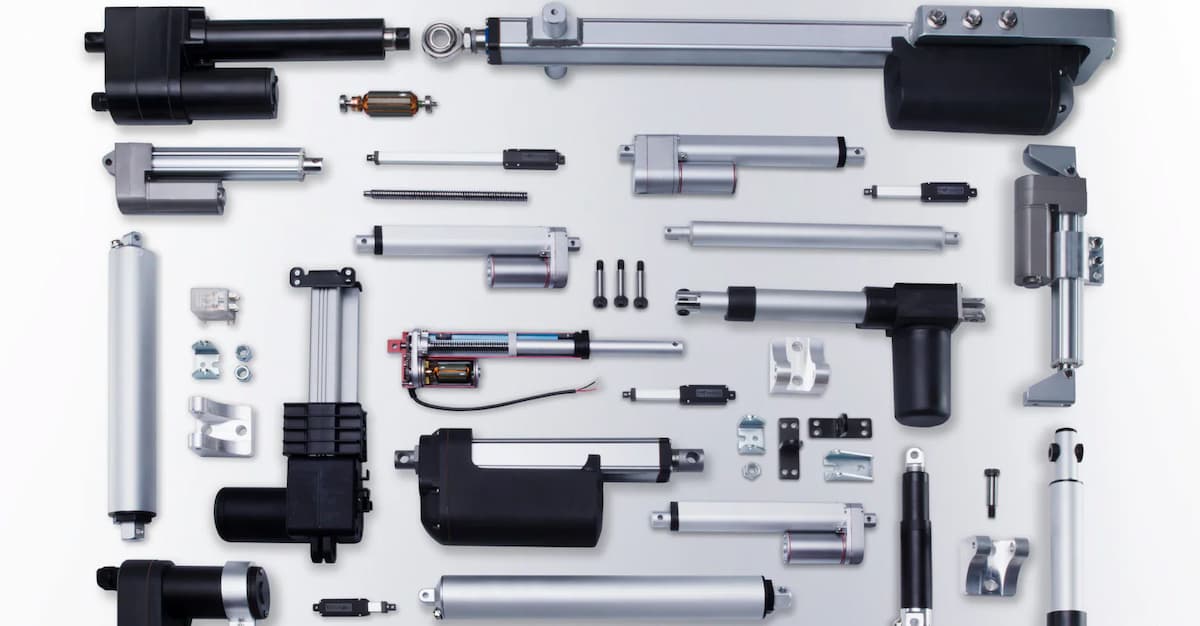
The range of actuators available from specialist suppliers covers this specification range comprehensively, from compact units for building services damper control through to heavy-duty mechanisms for infrastructure applications. The value of working with a supplier that understands the construction and infrastructure context is that the specification conversation starts from the right place rather than requiring the buyer to do all the translation work between their application requirements and a product designed for a different context.
The Maintenance Consideration
One aspect of actuator specification that doesn’t get enough attention at design stage is access for maintenance and replacement.
An actuator installed inside a building services void, behind a panel, or within a structural element that provides no practical access for servicing creates a maintenance liability that manifests years after the installation is forgotten. The unit will eventually need attention. Getting to it will be either difficult, expensive, or both.
Planning maintenance access from the outset costs almost nothing in terms of design effort and can save significant amounts in whole-life building maintenance costs. It’s the kind of consideration that distinguishes specification that accounts for the full lifecycle of an installation from specification that stops at commissioning.
Motion systems that work reliably over time are almost always the result of specification decisions made carefully at the start. The actuator is a component that rarely gets discussed in client briefings or architectural presentations. It should get more attention than it does.