UK glaziers, architects and specifiers are fielding more questions about American “hurricane windows” year on year. Holiday-home clients returning from Florida, insurance brokers reviewing coastal exposure, and self-builders chasing premium specification reach for the same shorthand: Miami-Dade approval. Few UK trade professionals carry a working translation of what those approvals test, where they apply, and how they map onto the BS EN standards we already build to.
Why It Matters Here
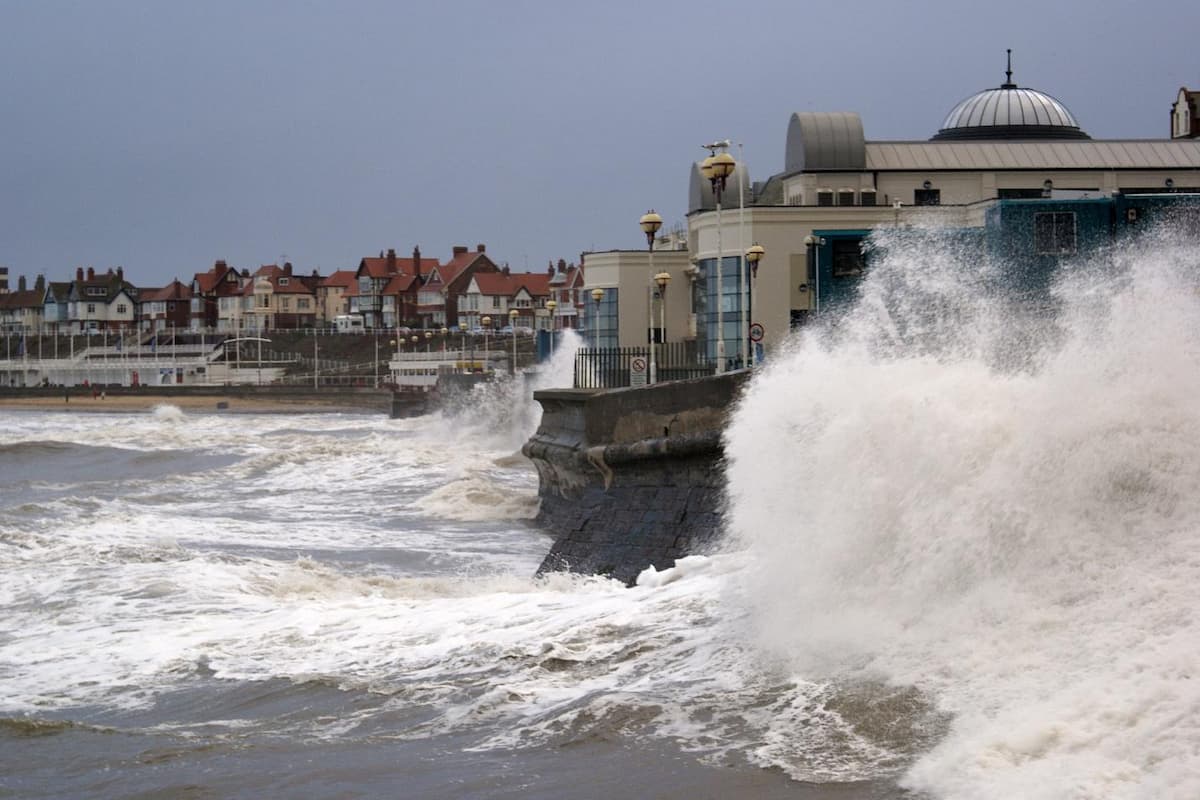
Britain has no hurricanes, but Florida-grade glazing comes up in UK trade conversations more often than it did five years ago. Storm Eunice gusted to 122 mph at the Needles in February 2022. Storm Arwen tore roofs off homes across Northumberland and County Durham in November 2021. Where structural failure followed, builders saw the cascade post-Hurricane Andrew literature describes: a single breached opening, sudden internal pressurisation, then roof uplift. Florida glaziers and engineers spent thirty years engineering against that cascade and produced the most rigorous fenestration test regime in the world. Knowing how it works sharpens client conversations about resilience, supply, and the limits of what a Kitemarked window will do.
Miami-Dade NOA in Plain Terms
The Notice of Acceptance, or NOA, is a product-level approval issued by Miami-Dade County’s Product Control Division. No clean UK analogue exists. A BSI Kitemark confirms a manufacturer’s quality system meets a standard. CE or UKCA marking covers harmonised declarations of performance. An NOA does both, then ties a specific product configuration to a five-year acceptance: the frame profile, the glass make-up, the hardware, the fixings, and the maximum dimensions. The Product Control Division backs each acceptance with witnessed laboratory testing, factory inspections from an IAS-accredited third party each year, and a public document stating the design pressures and sizes the assembly may be sold against.
NOA approvals stay product-and-configuration specific. Change the interlayer thickness or the corner construction, and the manufacturer retests. Each NOA round runs to roughly £12,000–£40,000 in testing fees before submission costs. That gatekeeping is why Miami-Dade-approved products carry a distinct price premium across the U.S. market.
The Wind-Borne Debris Region (WBDR)
Florida’s Building Code divides the state by geography. The High Velocity Hurricane Zone (HVHZ) covers Miami-Dade and Broward Counties, the south-eastern coast, and demands NOA-grade testing on external fenestration. Outside that zone, the Wind-Borne Debris Region applies wherever design wind speed reaches 130 mph within a mile of the coast, or 140 mph anywhere. WBDR triggers a less brutal but still serious test regime; non-WBDR areas of Florida fall back on standard ASTM testing.
The UK rule for “where do enhanced wind requirements kick in” lives in BS EN 1991-1-4 (Eurocode 1: wind actions) combined with the National Annex’s basic wind velocity map. The structural calculation is rigorous, but it stops at pressure resistance. British codes contain no wind-borne-debris geographical trigger, because debris fields have not been a UK design driver.
The Three-Test Sequence
HVHZ approval runs a single damaged specimen through three tests in sequence, defined under the Florida Building Code’s Testing Application Standards (TAS):
- TAS 201, Missile Impact. Technicians fire a 9 lb (4.1 kg) Southern Yellow Pine 2×4 at 50 fps (34 mph) into the glass and again near the frame. The interlayer must hold the fragments in place; no penetration is allowed. The closest BS EN analogue, EN 12600, swings a pendulum-mounted leather bag of steel shot, a softer and slower impactor built to classify human-safety glazing rather than test airborne debris.
- TAS 202, Static Pressure, Air & Water. The damaged window takes a uniform load to design pressure, a water test at two-thirds design pressure, and an air-leak test. UK trade will recognise the methodology from BS EN 12211 (wind resistance), BS EN 1027 (watertightness), and BS EN 1026 (air permeability), performed here on a specimen the missile has already hit.
- TAS 203, Cyclic Pressure Loading. Testers run 9,000 alternating positive and negative pressure cycles at ±1.5× design pressure with simulated wind-driven rain, on that same damaged specimen. HVHZ tolerances permit no tear in the interlayer larger than 5? × 1/16?. No BS EN protocol covers cyclic post-impact fatigue testing.
Pass the sequence and you have evidence the laminate keeps the envelope sealed through a several-hour Category-4 event after taking a structural debris strike. Products that sail through static ASTM testing can still fail TAS 203 on fatigue alone: corner joints open and edge delamination spreads.
What the Standards Actually Buy You
An NOA is product-and-configuration specific. Quoting “Miami-Dade approved” without the document reference is meaningless. Ask the supplier for the NOA number and verify it on the public Miami-Dade Product Control register; suppliers operating inside the zone, such as Miami-Dade impact window installers, quote NOA numbers as standard practice on every product line. The NOA states the design pressures, sizes, glazing make-up, and fixing schedule the county approved; deviate from those and the approval no longer covers the installation.
The U.S. tests measure envelope retention under repeated debris and pressure cycling. That is a different design intent from BS EN 14449 (laminated glass quality), EN 12600 (pendulum safety class), and PAS 24 (manual attack security). A glazing system holding one of those marks tells you nothing about how it would behave under another.
Manufacturers who serve the U.S. hurricane market, including PGT WinGuard, CGI, Eagle, ECO Window Systems, and Custom Window Systems, will not hold BS EN test data without a separate test campaign. Bringing a Miami-Dade-approved unit into a UK Building Control submission is a fresh commercial decision for the manufacturer, not a paperwork shuffle for the importer.
The Direction of Travel
UK building codes contain no wind-borne-debris regime today, but specifiers and brokers are starting to ask different questions. Insurers price storm exposure harder than they did five years ago. Met Office climate scientists project more frequent named storms across the North Atlantic. Since the Building Safety Act, Building Control officers and Approved Inspectors expect traceable, third-party-verified product performance on a much broader range of building elements. The Miami-Dade NOA framework is public, product-specific, configuration-locked, and audited each year. If British codes ever move toward enhanced fenestration approval, the NOA model is one of the more useful precedents to study. Reading the language now lets you give clients a straight answer.
Author: William Cortez
Bio: William has spent 15 years running impact window and door installations across South Florida, from single-family retrofits in Plantation to high-rise unit replacements on the barrier islands. His field expertise covers Miami-Dade NOA permitting, HVHZ code compliance, and the structural quirks of pre-Andrew (1992) construction. He writes about hurricane protection, building codes, and what homeowners actually need to know before they sign a contract.