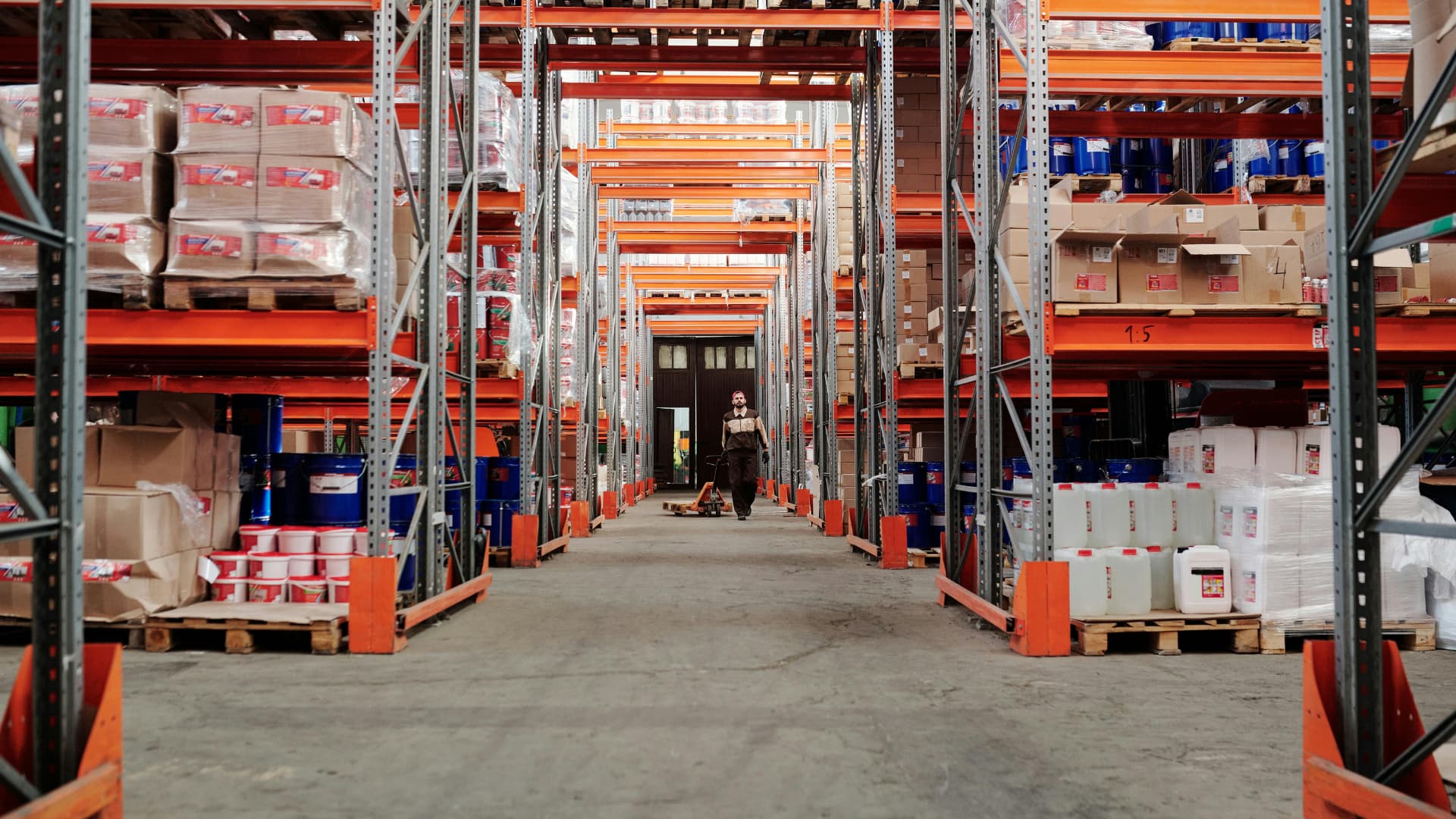
When a new warehouse or distribution centre reaches practical completion, the snagging lists are long. Flooring, fire suppression, dock levellers, lighting – the big-ticket items command attention. What often gets left until the final days, or missed entirely, is something far smaller but legally significant: the load notices on the racking.
It’s an easy oversight. Pallet racking is typically one of the last trades on site, and signage tends to be treated as a finishing touch rather than a compliance requirement. But under current UK guidance – including the standards set by the Storage Equipment Manufacturers Association (SEMA) – every racking installation should carry clearly displayed load notices showing the safe working load for each bay and level. Without them, an operator cannot demonstrate that staff have been given the information they need to load the system safely.
What a Load Notice Actually Does
A load notice isn’t decorative. It communicates the maximum load per shelf level, the maximum bay load, and often the beam spacing – information that’s critical for any warehouse where forklift operators or pick staff are making loading decisions throughout the day.
The problem is that racking installers often supply generic notices, or none at all, leaving the warehouse operator to source compliant signage retrospectively. At that point, the fit-out contractor has left the site, the racking installer has moved on, and whoever is left has to piece together the specifications from drawings or manufacturer data sheets. It creates unnecessary administrative burden and, in some cases, leaves the facility technically non-compliant during its opening weeks.
The Construction Handover Gap
This is, at its core, a handover problem – and one the construction industry is well placed to solve. Principal contractors overseeing warehouse fit-outs are increasingly including signage requirements within their scope of work rather than leaving them to the occupier. Specifying compliant warehouse signs as part of the racking package, or commissioning them through a specialist supplier before practical completion, closes the gap neatly.
It also removes ambiguity. When signage is specified alongside the racking – with bay configurations, load ratings and sign positions documented – there’s a clear audit trail. Health and safety inspectors, insurers and the occupier all benefit from that transparency.
Getting the Specification Right
Load notices for pallet racking need to withstand the warehouse environment: fork strike, humidity, cleaning regimes and, in chilled facilities, temperature fluctuation. A printed paper label in a plastic sleeve won’t last. Properly manufactured signs use robust materials designed for the environment, with print quality that remains legible years after installation.
For larger distribution centres, consistency matters too. Racking systems often span multiple bays and levels across vast floorplates, and signs need to be uniform, clearly positioned and readable from the floor. Bespoke sign manufacturers can produce notices matched precisely to the racking layout, which is considerably more useful than a one-size-fits-all approach.
Colour coding by zone or load capacity is increasingly common in larger facilities, giving forklift operators an immediate visual cue without needing to read precise figures at height or distance.
A Simple Win for Contractors
For construction professionals managing warehouse projects, building compliant signage into the handover package is a straightforward way to add value and reduce client risk. It demonstrates attention to operational detail that extends beyond the build itself – and it’s the kind of thing that tends to be remembered when the client comes back with the next project.
In a sector where the margins are tight and the snagging lists are long, it’s one less thing to worry about on handover day.