A sofa is rarely just another piece of furniture. In most living rooms, it is the largest upholstered element in the space and often the piece around which the entire scheme is built. Its proportions influence the layout, its upholstery affects the colour palette, and its shape can determine whether a room feels balanced, generous and considered – or unnecessarily crowded.
Whether furnishing a newly renovated house or refreshing an existing living space, choosing the right sofa is therefore as much about architecture and proportion as it is about comfort.
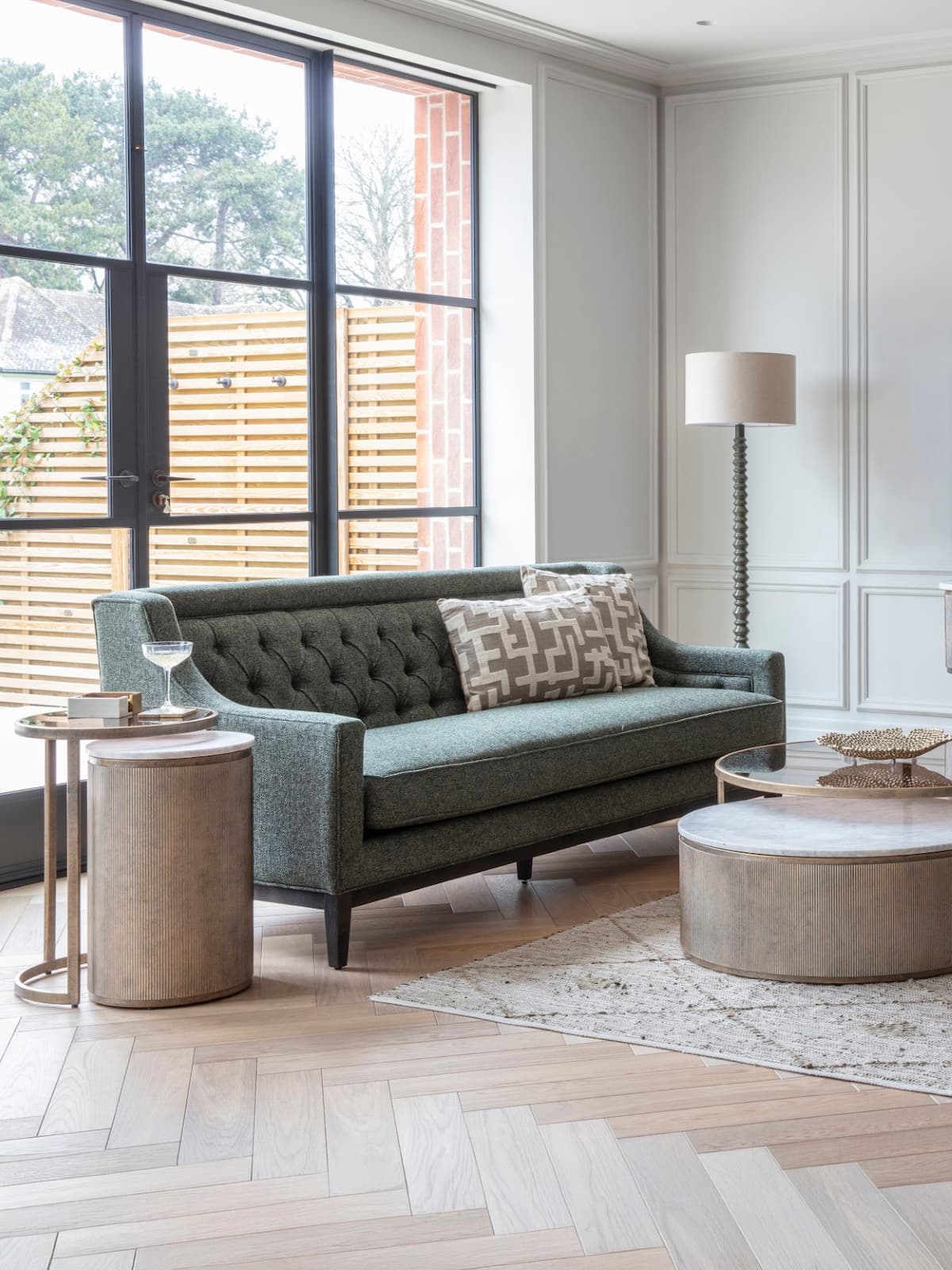
Start With Scale, Not Style
It is easy to begin with fabric, colour or shape, but dimensions should come first. A sofa that looks perfectly proportioned in a showroom can feel oversized once placed in a smaller living room, while an overly compact design may appear lost in a large open-plan space.
Measure the room carefully and consider more than the width of the wall. Allow enough space for circulation around the sofa and take into account doors, windows, radiators, fireplaces and other pieces of furniture.
When comparing luxury sofas, look at the full dimensions of each piece, including seat depth and arm width. Two sofas described as three-seaters can have very different proportions and create completely different effects within the same room.
Access is equally important. Before ordering a larger sofa, check hallways, doorways, staircases and lifts to make sure the piece can actually reach its final position.
Think About How the Room Is Used
A formal drawing room and an everyday family living room require different things from a sofa. A more structured design can create a tailored, architectural look, while deeper seats and softer cushioning tend to suit relaxed spaces intended for reading, watching television or spending long evenings with family.
It is also worth thinking beyond the sofa itself. In a room used for entertaining, a sofa combined with armchairs and occasional seating may create a more sociable arrangement than simply choosing the largest possible model.
The aim is not to fill the room with seating, but to create a comfortable conversation area with enough space between each piece for the arrangement to feel intentional.
Use Upholstery to Introduce Texture
Fabric has a significant influence on the character of a sofa. Velvet brings depth and richness, leather can introduce a more structured quality, while textured upholstery adds softness and visual interest without necessarily relying on strong colour or pattern.
Bouclé remains particularly effective in neutral interiors because its looped texture introduces depth to cream, ivory and natural tones. Sculptural bouclé sofas can work especially well alongside materials such as oak, travertine, marble, smoked glass and brushed metal, where the contrast between soft and hard surfaces creates a more layered interior.
Rather than selecting upholstery in isolation, consider how it will interact with flooring, curtains, rugs and existing furniture. A neutral sofa can feel sophisticated rather than plain when surrounded by contrasting textures.
Avoid Making Everything Match
Some of the most successful contemporary interiors combine furniture from different collections rather than relying on a complete matching suite.
A curved sofa might sit beside an angular stone coffee table. A more structured design can be softened with a rounded side table or tactile rug. Continuity can be created by repeating a timber tone, metal finish or colour elsewhere in the room rather than buying every piece in the same style.
This creates an interior that feels collected and individual rather than overly coordinated.
Consider the Sofa From Every Angle
In open-plan homes, the sofa is often positioned away from a wall. Its back and side profile therefore become just as important as its front.
A well-designed sofa can help divide a larger space naturally, establishing a living zone without the need for screens or architectural partitions. Curved sofas are particularly effective here because they create a softer transition between dining, living and circulation areas.
Consider what the sofa faces too. A fireplace, garden view, artwork or architectural feature may deserve just as much attention as a television.
Let the Sofa Set the Proportions of the Room
Once the main sofa is chosen, many of the remaining decisions become easier. The coffee table can be selected in proportion to its length, the rug can anchor the entire seating arrangement, and lighting can be positioned according to the height and scale of the upholstery.
In larger interiors, fewer substantial pieces often create a calmer and more sophisticated result than filling every surface with small furniture and accessories.
Choose for the Room You Have
Trends inevitably influence furniture design, but a sofa is usually a long-term purchase. Proportion, comfort, construction and material should therefore carry more weight than a short-lived fashion.
The best sofa is not necessarily the largest or most dramatic. It is the one that feels naturally connected to the architecture of the room, supports the way the space is used and provides a strong foundation for the furniture, lighting and materials around it.
When those elements come together, the sofa becomes more than somewhere to sit. It establishes the scale, rhythm and atmosphere of the entire living room.