Business rates rarely make headlines outside trade press, but the changes taking effect on 1 April 2026 are different, and construction professionals who rely on a coworking desk or serviced office for client meetings are among those most likely to feel it. According to the House of Commons Library’s briefing on the 2026 revaluation, every non-domestic property in England is having its rateable value reassessed from that date, with the current two-tier multiplier system replaced by five separate bands, and “ratepayers’ bills will change, sometimes substantially.”
For a contractor, consultant or small architecture practice that doesn’t keep a permanent boardroom and instead books space as needed, that shift is worth planning around now rather than after the first invoice lands. Many firms in this position already compare providers when they need somewhere presentable for a tender presentation or a client sign-off, and it’s worth putting meeting room hire in Bromley and similar independent venues into that comparison alongside the usual coworking options, since the two are about to be affected very differently by this reform.
What’s Actually Changing in April 2026
The headline change is straightforward: England’s business rates multipliers are being restructured from two bands into five, with a new premium band for the largest properties. Alongside that sits a quieter but more significant shift already underway at the Valuation Office Agency, which has moved away from assessing coworking and serviced office buildings as a collection of individually taxed units, toward treating many of them as a single taxable property.
That distinction matters more than it sounds, and it’s a familiar pattern to anyone in construction who’s dealt with a rates assessment on a mixed-use or multi-let building. Under the old approach, an operator paid rates broadly in line with which desks and rooms were occupied. Under the new approach, the operator can be liable for rates across the whole building, void space included, regardless of how full it actually is.
Why This Hits Coworking and Meeting Room Hire Specifically
Flexible workspace is heavily concentrated in London and the South East, which account for the large majority of the UK’s flex office inventory according to industry reporting on the sector. That means the impact of this change isn’t evenly spread. It lands hardest exactly where meeting room hire through coworking spaces is most common, including many of the business hubs construction firms use for client-facing work when a site cabin or a home office won’t do.
Individual tenants and day users also lose something they didn’t necessarily know they had: because the operator, not the occupant, is now the ratepayer, small firms booking desks or rooms inside these buildings can no longer claim Small Business Rate Relief the way they might in a standalone office. Operators facing higher fixed costs on empty space have limited options, and passing some of that cost on through membership fees or day rates is the most obvious one.
What This Could Mean for Firms Booking Meeting Space
None of this is guaranteed to hit every coworking meeting room booking immediately, transitional relief schemes exist precisely to soften the first few years of a revaluation. But it’s a reasonable moment for any construction business that regularly books meeting space, for tender presentations, design reviews, client walkthroughs of drawings or planning consultations, to ask a question they might not have asked before: is a coworking membership or day pass still the most cost-effective way to get a room, or does it make more sense to book directly from a venue that isn’t carrying the same rates exposure?
Dedicated venues, particularly those outside the flexspace sector entirely, price a day rate around the room itself, catering and equipment, rather than around a membership model exposed to building-wide rates changes. For a firm presenting to a client or a planning committee, that predictability is worth something on its own.
What to Ask Before You Book, Either Way
A few questions help make a fair comparison between a coworking meeting room and a dedicated venue:
- Is the price a simple day or hourly rate, or part of a membership that could change? Membership-based pricing is more exposed to a provider’s own cost pressures than a straightforward day rate.
- What’s actually included? Wi-Fi, screens for presenting drawings or renders, catering and parking should be clear upfront, whichever type of venue you’re comparing.
- How flexible is the booking? Coworking spaces often win on short notice, useful when a site meeting runs long and a follow-up needs booking fast; dedicated venues usually need more lead time but offer more room for a larger or more formal presentation.
- Does the room suit the meeting, or just the building? A meeting room built into a shared coworking floor isn’t always private or quiet enough for a sensitive client or contractual discussion.
- Is parking included or extra? This matters more for construction meetings than most, given how often attendees are travelling from a site rather than a nearby office.
A Venue Outside the Coworking Model
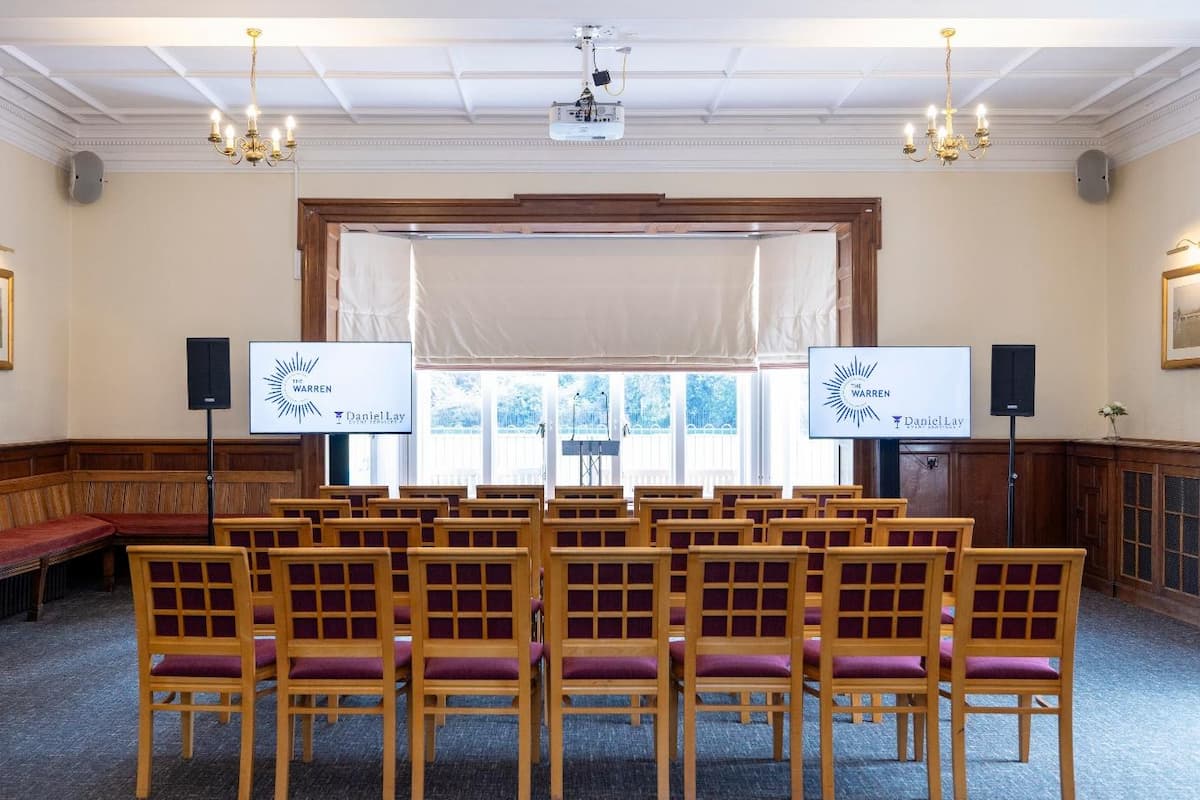
Independent venues sit outside this particular squeeze because their business model was never built around shared-desk occupancy in the first place. The Warren, a Grade II listed manor set in 22 acres near Bromley, is one example, offering meeting and boardroom space priced by the day rather than through a membership, with catering, Wi-Fi and free parking built into the rate.
It’s not a like-for-like replacement for a coworking desk on a Tuesday afternoon, but for a tender presentation, a project review or a client sign-off, it’s the kind of comparison worth making now, before April’s changes start showing up in coworking day rates.
Frequently Asked Questions
What’s the difference between booking a meeting room at a coworking space versus a dedicated venue?
A coworking meeting room is usually one of several bookable spaces inside a shared building, priced by the hour or bundled into a membership. A dedicated venue sells the room itself as the product, typically with catering, parking and equipment included in a single day rate rather than added as extras.
Is it cheaper to hire a meeting room through a coworking space or a dedicated venue?
It depends on how often you need the space. Coworking works out cheaper for occasional, short bookings with no catering involved. For a full-day session with several attendees, a dedicated venue’s all-inclusive day rate often compares favourably once catering and equipment are added to a coworking booking separately.
What’s the difference between hiring a meeting room and booking a day delegate rate?
Hiring a meeting room typically means paying for the room alone, with catering and AV equipment charged separately unless stated otherwise. A day delegate rate bundles the room, refreshments, a working lunch and standard equipment into one price, which is usually simpler to budget for a full-day event.
How do boardroom rental options at dedicated venues compare to those at hotel business centres?
Dedicated venues tend to work out more cost-effective for a full day, since parking, catering and equipment are more likely to already be included in the rate. Hotel business centres suit a short meeting or when overnight accommodation is also needed, but extras are more commonly priced separately.
When is it worth paying a premium for a dedicated corporate venue over a hotel meeting room?
It’s generally worth it when the setting itself matters, for a tender presentation, a design review with a demanding client, or a planning consultation where a distinctive, well-equipped space adds something a standard hotel conference room doesn’t. For a short internal catch-up, the extra cost is harder to justify.
What’s the difference between renting a boardroom versus a standard conference room?
A boardroom is a smaller, more formal space built around a single table, suited to executive meetings or sign-offs. A conference room is typically larger and more adaptable, able to seat more people in theatre or classroom style, and better suited to presentations or design reviews with a wider project team.
The Practical Takeaway
Business rates reform isn’t a reason to abandon coworking altogether, for plenty of bookings it will remain the most convenient option, particularly for short-notice site catch-ups. But for construction firms that book meeting space regularly enough to notice a price change, April 2026 is a reasonable prompt to compare the coworking day rate against what a dedicated venue actually charges, rather than assuming the familiar option is still the cheaper one.